|
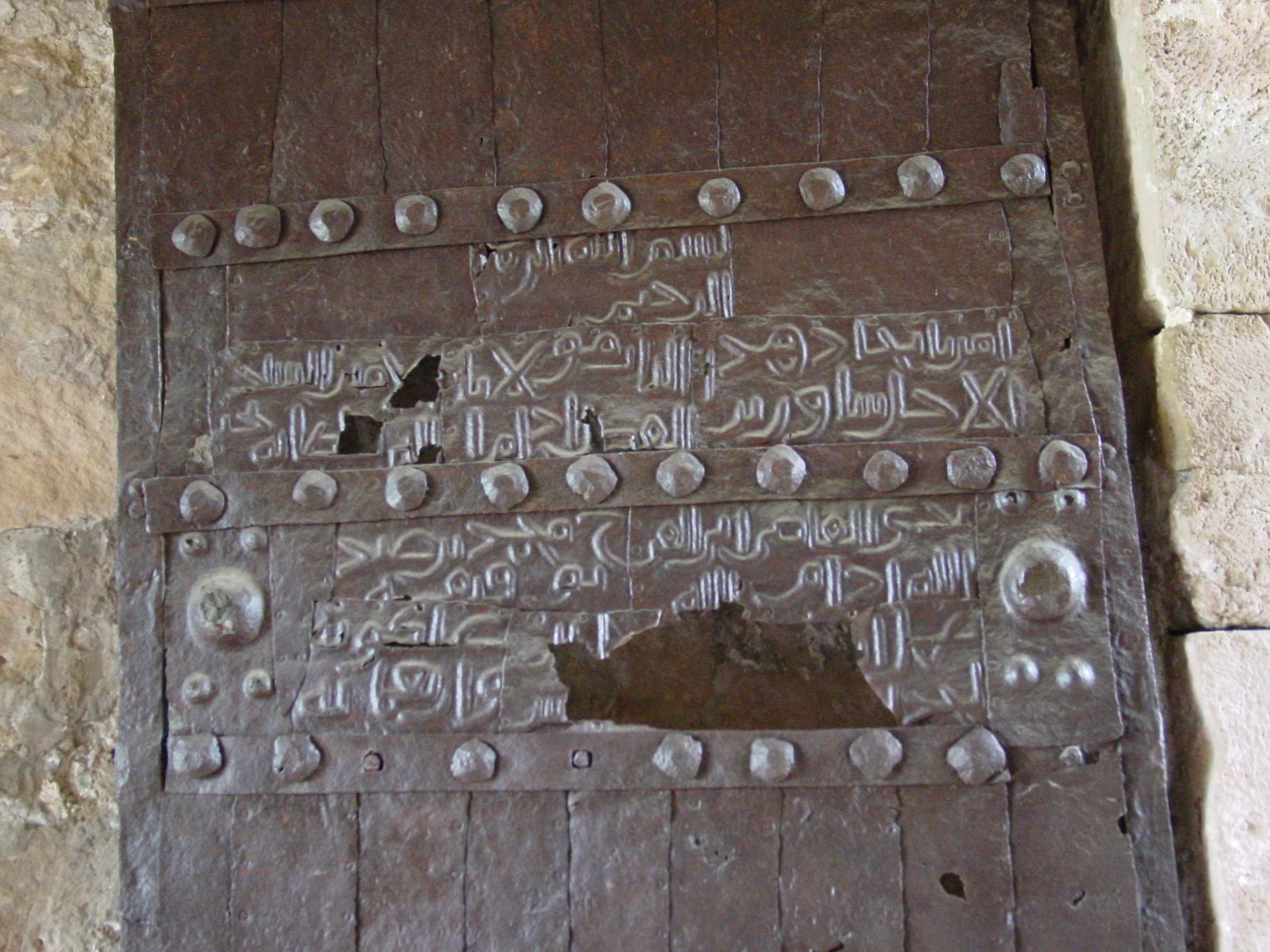
Ganja, Azerbaijan
Ganja (; ) is Azerbaijan's List of cities in Azerbaijan, third largest city, with a population of around 335,600.Azərbaycan Respublikası. — 2. Azərbaycan Respublikasının iqtisadi və inzibati rayonları. — 2.4. Azərbaycan Respublikasının iqtisadi və inzibati rayonlarının ərazisi, əhalisinin sayı və sıxlığı, səhifə 66. /Azərbaycanın əhalisi (statistik bülleten) Müəllifi: State Statistics Committee, Azərbaycan Respublikasının Dövlət Statistika Komitəsi. Buraxılışa məsul şəxs: Rza Allahverdiyev. Bakı — 2015, 134 səhifə. The city has been a historic and cultural center throughout most of its existence. It was the capital of the Ganja Khanate until 1804; after Qajar Iran ceded it to the Russian Empire following the Treaty of Gulistan in 1813, it became part of the administrative divisions of the Georgia Governorate, Georgia-Imeretia Governorate, Tiflis Governorate, and Elizavetpol Governorate. Following the dissolution of the Russian Emp ... [...More Info...] [...Related Items...] OR: [Wikipedia] [Google] [Baidu] [Amazon] |
Azerbaijan
Azerbaijan, officially the Republic of Azerbaijan, is a Boundaries between the continents, transcontinental and landlocked country at the boundary of West Asia and Eastern Europe. It is a part of the South Caucasus region and is bounded by the Caspian Sea to the east, Russia's republic of Dagestan to the north, Georgia (country), Georgia to the northwest, Armenia and Turkey to the west, and Iran to the south. Baku is the capital and largest city. The territory of what is now Azerbaijan was ruled first by Caucasian Albania and later by various Persian empires. Until the 19th century, it remained part of Qajar Iran, but the Russo-Persian wars of Russo-Persian War (1804–1813), 1804–1813 and Russo-Persian War (1826–1828), 1826–1828 forced the Qajar Empire to cede its Caucasian territories to the Russian Empire; the treaties of Treaty of Gulistan, Gulistan in 1813 and Treaty of Turkmenchay, Turkmenchay in 1828 defined the border between Russia and Iran. The region north o ... [...More Info...] [...Related Items...] OR: [Wikipedia] [Google] [Baidu] [Amazon] |
Elizavetpol Governorate
The Elizavetpol Governorate, also known after 1918 as the Ganja Governorate, was a province ('' guberniya'') of the Caucasus Viceroyalty of the Russian Empire, with its capital in Yelisavetpol (present-day Ganja). The area of the governorate stretched and was composed of 1,275,131 inhabitants in 1916. The Elizavetpol Governorate bordered the Erivan Governorate to the west, the Tiflis Governorate and Zakatal Okrug to the north, the Dagestan Oblast to the northeast, the Baku Governorate to the east, and Iran to the south. Geography The area of the governorate includes the southern slope of the main Caucasus range in the northeast, where Mount Bazardüzü and other peaks rise above the snow-line; the arid steppes beside the Kura river, reaching 1000 ft. of altitude in the west and sinking to 100–200 ft. in the east, where irrigation is necessary; and the northern slopes of the Transcaucasian escarpment and portions of the Armenian Highlands, which is intersected towards i ... [...More Info...] [...Related Items...] OR: [Wikipedia] [Google] [Baidu] [Amazon] |
Soviet Union
The Union of Soviet Socialist Republics. (USSR), commonly known as the Soviet Union, was a List of former transcontinental countries#Since 1700, transcontinental country that spanned much of Eurasia from 1922 until Dissolution of the Soviet Union, it dissolved in 1991. During its existence, it was the list of countries and dependencies by area, largest country by area, extending across Time in Russia, eleven time zones and sharing Geography of the Soviet Union#Borders and neighbors, borders with twelve countries, and the List of countries and dependencies by population, third-most populous country. An overall successor to the Russian Empire, it was nominally organized as a federal union of Republics of the Soviet Union, national republics, the largest and most populous of which was the Russian SFSR. In practice, Government of the Soviet Union, its government and Economy of the Soviet Union, economy were Soviet-type economic planning, highly centralized. As a one-party state go ... [...More Info...] [...Related Items...] OR: [Wikipedia] [Google] [Baidu] [Amazon] |
Brill Publishers
Brill Academic Publishers () is a Dutch international academic publisher of books, academic journals, and Bibliographic database, databases founded in 1683, making it one of the oldest publishing houses in the Netherlands. Founded in the South Holland city of Leiden, it maintains its headquarters there, while also operating offices in Boston, Paderborn, Vienna, Singapore, and Beijing. Since 1896, Brill has been a public limited company (). Brill is especially known for its work in subject areas such as Oriental studies, classics, religious studies, Jewish studies, Islamic studies, Asian studies, international law, and human rights. The publisher offers traditional print books, academic journals, primary source materials online, and publications on microform. In recent decades, Brill has expanded to Electronic publishing, digital publishing with ebooks and online resources including databases and specialty collections varying by discipline. History Founding by Luchtmans, 16 ... [...More Info...] [...Related Items...] OR: [Wikipedia] [Google] [Baidu] [Amazon] |
Adurbadagan
Adurbadagan (Middle Persian: ''Ādurbādagān/Āδarbāyagān'', Parthian: ''Āturpātākān'') was a northwestern province in the Sasanian Empire, corresponding almost entirely to the present-day Azerbaijan region in Iran. Governed by a ''marzban'' ("margrave"), it functioned as an important frontier (and later religious) region against the neighbouring country of Armenia. The capital of the province was Ganzak. Etymology ''Ādurbādagān'' is the Middle Persian spelling of the Parthian ''Āturpātākān'', which is derived from the name of the former satrap of the area, Atropates (Āturpāt). It is attested in Georgian as ''Adarbadagan'' and in Armenian as ''Atrpatakan''. Geography While Middle Persian texts are vague and incomprehensible about the geography of Adurbadagan, New Persian and Arabic texts are clearer. According to the 9th-century Persian geographer Ibn Khordadbeh, the following cities were part of the province; Ardabil, Bagavan, Balwankirgh, Barza, Barza ... [...More Info...] [...Related Items...] OR: [Wikipedia] [Google] [Baidu] [Amazon] |
Ganzak
Ganzak ( ''Ganzak'', ''Gazaka'', Latin language, Latin: ''Gaza'', ''Gazaca'', ''Ganzaga'', Arabic language, Arabic: جانزاك ''Janzaq'', جازنا ''Jazna'', ''Gandzak''), is an ancient town founded in northwestern Iran. The city stood somewhere south of Lake Urmia, and it has been postulated that the Persian people, Persian nobleman Atropates chose the city as his capital. The exact location, according to Vladimir Minorsky, Minorsky, Schippmann, and Mary Boyce, Boyce, is identified as being the ruins (37.011555°N, 46.193187°E) at Leylan, Malekan County in the Miandoab plain.M. BoyceGanzak in Encyclopaedia Iranica, vol. 10, 2001. Etymology The word ''ganzak'' means "treasury", and is of Median language, Median origin (''wikt:Reconstruction:Old Median/ganǰəm, ganǰəm''). It was adopted into Persian language, Persian by the Achaemenid Empire, as the name is related to the Persian word for "treasury", گنج ''ganj''. History Ganzak was built by the Achaemenids and w ... [...More Info...] [...Related Items...] OR: [Wikipedia] [Google] [Baidu] [Amazon] |
Folk Etymology
Folk etymology – also known as (generative) popular etymology, analogical reformation, (morphological) reanalysis and etymological reinterpretation – is a change in a word or phrase resulting from the replacement of an unfamiliar form by a more familiar one through popular usage. The form or the meaning of an archaic, foreign, or otherwise unfamiliar word is reinterpreted as resembling more familiar words or morphemes. The term ''folk etymology'' is a loan translation from German ''Volksetymologie'', coined by Ernst Förstemann in 1852. Folk etymology is a productive process in historical linguistics, language change, and social interaction. Reanalysis of a word's history or original form can affect its spelling, pronunciation, or meaning. This is frequently seen in relation to loanwords or words that have become archaic or obsolete. Folk/popular etymology may also refer to a popular false belief about the etymology of a word or phrase that does not lead to a change in t ... [...More Info...] [...Related Items...] OR: [Wikipedia] [Google] [Baidu] [Amazon] |
Medieval Era
In the history of Europe, the Middle Ages or medieval period lasted approximately from the 5th to the late 15th centuries, similarly to the post-classical period of global history. It began with the fall of the Western Roman Empire and transitioned into the Renaissance and the Age of Discovery. The Middle Ages is the middle period of the three traditional divisions of Western history: classical antiquity, the medieval period, and the modern period. The medieval period is itself subdivided into the Early, High, and Late Middle Ages. Population decline, counterurbanisation, the collapse of centralised authority, invasions, and mass migrations of tribes, which had begun in late antiquity, continued into the Early Middle Ages. The large-scale movements of the Migration Period, including various Germanic peoples, formed new kingdoms in what remained of the Western Roman Empire. In the 7th century, North Africa and the Middle East—once part of the Byzantine Empire—came un ... [...More Info...] [...Related Items...] OR: [Wikipedia] [Google] [Baidu] [Amazon] |
Armenian Language
Armenian (endonym: , , ) is an Indo-European languages, Indo-European language and the sole member of the independent branch of the Armenian language family. It is the native language of the Armenians, Armenian people and the official language of Armenia. Historically spoken in the Armenian highlands, today Armenian is also widely spoken throughout the Armenian diaspora. Armenian is written in its own writing system, the Armenian alphabet, introduced in 405 AD by Saint Mesrop Mashtots. The estimated number of Armenian speakers worldwide is between five and seven million. History Classification and origins Armenian is an independent branch of the Indo-European languages. It is of interest to linguists for its distinctive phonological changes within that family. Armenian exhibits Centum and satem languages, more satemization than centumization, although it is not classified as belonging to either of these subgroups. Some linguists tentatively conclude that Armenian, Greek ... [...More Info...] [...Related Items...] OR: [Wikipedia] [Google] [Baidu] [Amazon] |
Arabic
Arabic (, , or , ) is a Central Semitic languages, Central Semitic language of the Afroasiatic languages, Afroasiatic language family spoken primarily in the Arab world. The International Organization for Standardization (ISO) assigns language codes to 32 varieties of Arabic, including its standard form of Literary Arabic, known as Modern Standard Arabic, which is derived from Classical Arabic. This distinction exists primarily among Western linguists; Arabic speakers themselves generally do not distinguish between Modern Standard Arabic and Classical Arabic, but rather refer to both as ( "the eloquent Arabic") or simply ' (). Arabic is the List of languages by the number of countries in which they are recognized as an official language, third most widespread official language after English and French, one of six official languages of the United Nations, and the Sacred language, liturgical language of Islam. Arabic is widely taught in schools and universities around the wo ... [...More Info...] [...Related Items...] OR: [Wikipedia] [Google] [Baidu] [Amazon] |
Encyclopædia Iranica
''Encyclopædia Iranica'' is a project whose goal is to create a comprehensive and authoritative English-language encyclopedia about the history, culture, and civilization of Iranian peoples from prehistory to modern times. Scope The ''Encyclopædia Iranica'' is dedicated to the study of Iranian civilization in the wider Middle East, the Caucasus, Southeastern Europe, Central Asia, and the Indian subcontinent. The academic reference work will eventually cover all aspects of Iranian history and culture as well as all Iranian languages and literatures, facilitating the whole range of Iranian studies research from archeology to political sciences. It is a project founded by Ehsan Yarshater in 1973 and currently carried out at Columbia University's Center for Iranian Studies. It is considered the standard encyclopedia of the academic discipline of Iranistics. The scope of the encyclopedia goes beyond modern Iran (also known as ''"Persia"'') and encompasses the entire Iranian ... [...More Info...] [...Related Items...] OR: [Wikipedia] [Google] [Baidu] [Amazon] |
New Persian
New Persian (), also known as Modern Persian () is the current stage of the Persian language spoken since the 8th to 9th centuries until now in Greater Iran and surroundings. It is conventionally divided into three stages: Early New Persian (8th/9th centuries), Classical Persian (10th–18th centuries), and Contemporary Persian (19th century to present). Dari is a name given to the New Persian language since the 10th century, widely used in Arabic (see Istakhri, al-Maqdisi and ibn Hawqal) and Persian texts. Since 1964, Dari has been the official name in Afghanistan for the Persian spoken there. Classification New Persian is a member of the Western Iranian group of the Iranian languages, which make up a branch of the Indo-European languages in their Indo-Iranian subdivision. The Western Iranian languages themselves are divided into two subgroups: Southwestern Iranian languages, of which Persian is the most widely spoken, and Northwestern Iranian lan ... [...More Info...] [...Related Items...] OR: [Wikipedia] [Google] [Baidu] [Amazon] |