Ilyushin Il-28 on:
[Wikipedia]
[Google]
[Amazon]
The Ilyushin Il-28 (;
"Designations of Soviet and Russian Military Aircraft and Missiles."
''designation-systems.net,'' 2008. Retrieved: 22 August 2011. and
 One unusual design feature of the Il-28 was that the wings and tail were split horizontally through the centre of the wing, while the fuselage was split vertically at the centreline, allowing the separate parts to be built individually and fitted out with systems before being bolted together to complete assembly of the aircraft.Winchester 2006, p. 113. This slightly increased the weight of the aircraft structure, but eased manufacture and proved to be more economical.Green and Swanborough 1988, p. 45.Gunston 1995, p. 114.
The first prototype, powered by two imported Nenes, made its maiden flight on 8 July 1948, with Vladimir Kokkinaki at the controls. Testing was successful, with the Il-28 demonstrating good handling and reaching a speed of 833 km/h (518 mph). It was followed on 30 December 1948 by the second prototype, with Soviet built RD-45 engines replacing the Nenes.Green and Swanborough 1988, p. 46. After the completion of state tests in early 1949 the aircraft was ordered into large scale production on 14 May 1949, with the Klimov VK-1, an improved version of the RD-45 to be used in order to improve the aircraft's performance.Nemecek 1986, p. 173.Gordon, Komissarov and Komissarov 2004, p. 117. The first pre-production aircraft with VK-1 engines flew on 8 August 1949, and featured reshaped engine nacelles to reduce drag, while the radome for the navigation radar was moved from the rear fuselage to just aft of the nosewheel.
Full production in three factories started in September 1949, with service deliveries starting in early 1950, allowing 25 Il-28s to be displayed at the Moscow May Day parade of 1950 (as ordered by
One unusual design feature of the Il-28 was that the wings and tail were split horizontally through the centre of the wing, while the fuselage was split vertically at the centreline, allowing the separate parts to be built individually and fitted out with systems before being bolted together to complete assembly of the aircraft.Winchester 2006, p. 113. This slightly increased the weight of the aircraft structure, but eased manufacture and proved to be more economical.Green and Swanborough 1988, p. 45.Gunston 1995, p. 114.
The first prototype, powered by two imported Nenes, made its maiden flight on 8 July 1948, with Vladimir Kokkinaki at the controls. Testing was successful, with the Il-28 demonstrating good handling and reaching a speed of 833 km/h (518 mph). It was followed on 30 December 1948 by the second prototype, with Soviet built RD-45 engines replacing the Nenes.Green and Swanborough 1988, p. 46. After the completion of state tests in early 1949 the aircraft was ordered into large scale production on 14 May 1949, with the Klimov VK-1, an improved version of the RD-45 to be used in order to improve the aircraft's performance.Nemecek 1986, p. 173.Gordon, Komissarov and Komissarov 2004, p. 117. The first pre-production aircraft with VK-1 engines flew on 8 August 1949, and featured reshaped engine nacelles to reduce drag, while the radome for the navigation radar was moved from the rear fuselage to just aft of the nosewheel.
Full production in three factories started in September 1949, with service deliveries starting in early 1950, allowing 25 Il-28s to be displayed at the Moscow May Day parade of 1950 (as ordered by
 ;Il-28U
:Unarmed training version fitted with new nose housing cockpit for instructor, while the trainee sat in the normal cockpit. First flown 18 March 1950.Gordon and Komissarov 1997, p. 11.
;Il-28R
:Three-seat tactical photo reconnaissance version, with extra fuel in bomb bay and tip-tanks, and with one forward firing cannon removed. Fitted with revised undercarriage to deal with heavier weights. First flew 19 April 1950.Green and Swanborough 1988, p. 49.Gordon and Komissarov 1997, p. 14.
;Il-28RTR
:
;Il-28U
:Unarmed training version fitted with new nose housing cockpit for instructor, while the trainee sat in the normal cockpit. First flown 18 March 1950.Gordon and Komissarov 1997, p. 11.
;Il-28R
:Three-seat tactical photo reconnaissance version, with extra fuel in bomb bay and tip-tanks, and with one forward firing cannon removed. Fitted with revised undercarriage to deal with heavier weights. First flew 19 April 1950.Green and Swanborough 1988, p. 49.Gordon and Komissarov 1997, p. 14.
;Il-28RTR
:

 ;
* Iraqi Air Force
:Received twelve Il-28s, two Il-28Us and two Il-28BM target tugs starting in January 1959. Some additional aircraft may have been acquired from Egypt in the 1960s. All destroyed or grounded after
;
* Iraqi Air Force
:Received twelve Il-28s, two Il-28Us and two Il-28BM target tugs starting in January 1959. Some additional aircraft may have been acquired from Egypt in the 1960s. All destroyed or grounded after 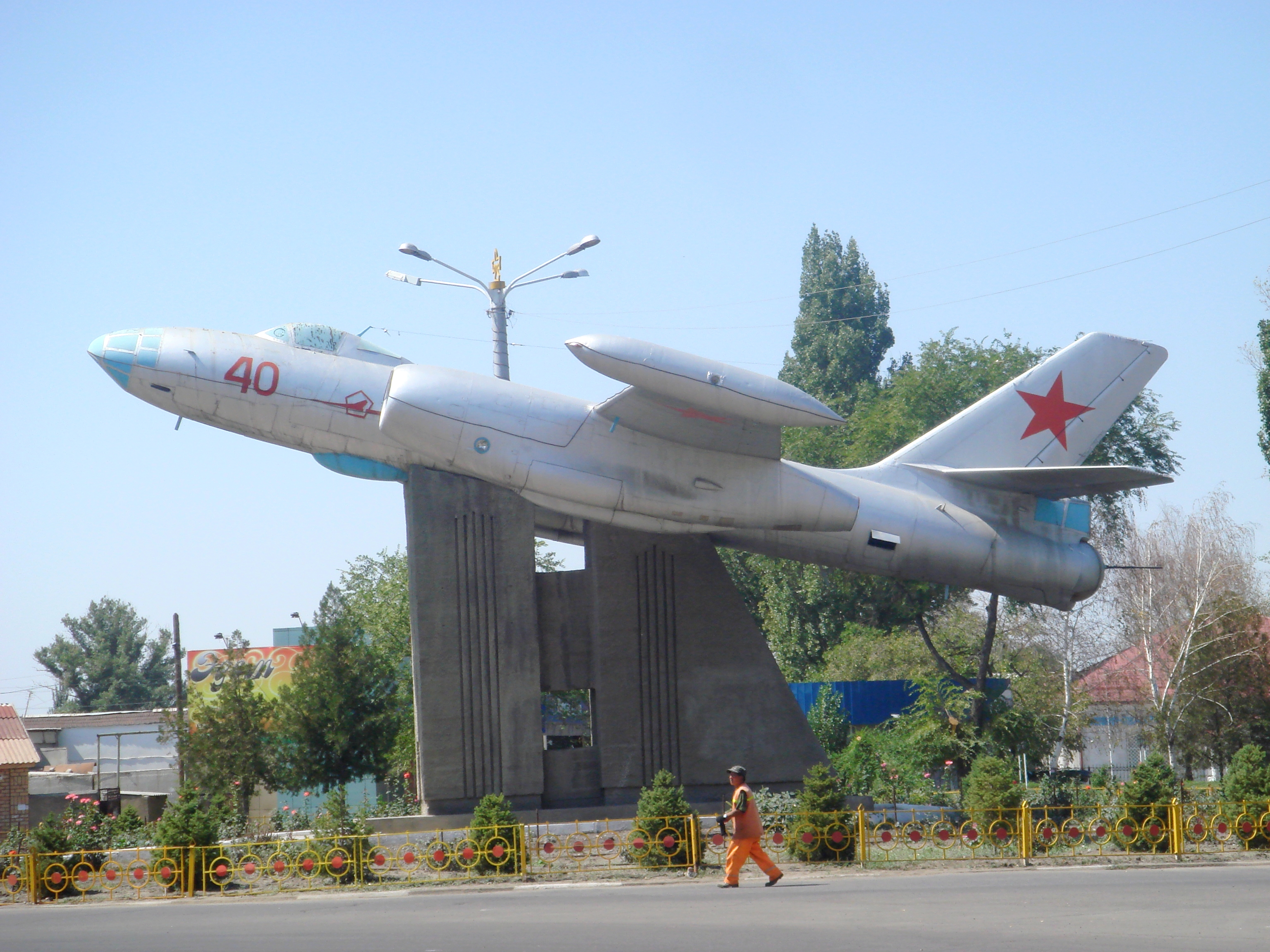 ;
:About 1,500 served with the
;
:About 1,500 served with the
Walkaround Il-28 Beagle for Hodynskoye pole, Moscow, Russia
''Russia's New 2-Jet Bomber'' by Chamlers Goodlin, one of the earliest articles printed in the US on the Il-28 with cutaway drawing, published 1951
{{Authority control Il-028 1940s Soviet bomber aircraft Aircraft first flown in 1948 High-wing aircraft Twinjets Aircraft with retractable tricycle landing gear
NATO reporting name
NATO uses a system of code names, called reporting names, to denote military aircraft and other equipment used by post-Soviet states, former Warsaw Pact countries, China, and other countries. The system assists military communications by providi ...
: Beagle) is a jet bomber
A bomber is a military combat aircraft that utilizes
air-to-ground weaponry to drop bombs, launch aerial torpedo, torpedoes, or deploy air-launched cruise missiles.
There are two major classifications of bomber: strategic and tactical. Strateg ...
of the immediate postwar period that was originally manufactured for the Soviet Air Forces
The Soviet Air Forces (, VVS SSSR; literally "Military Air Forces of the Union of Soviet Socialist Republics"; initialism VVS, sometimes referred to as the "Red Air Force") were one of the air forces of the Soviet Union. The other was the Sovie ...
. It was the Soviet Union
The Union of Soviet Socialist Republics. (USSR), commonly known as the Soviet Union, was a List of former transcontinental countries#Since 1700, transcontinental country that spanned much of Eurasia from 1922 until Dissolution of the Soviet ...
's first such aircraft to enter large-scale production. It was also licence-built in China
China, officially the People's Republic of China (PRC), is a country in East Asia. With population of China, a population exceeding 1.4 billion, it is the list of countries by population (United Nations), second-most populous country after ...
as the Harbin H-5. Total production in the USSR was 6,316 aircraft, and over 319 H-5s were built. Only 187 examples of the HJ-5 training variant were manufactured. The only H-5s in service currently are approximately 80 aircraft which operate with the Korean People's Air Force.
The Il-28 has the USAF
The United States Air Force (USAF) is the Air force, air service branch of the United States Department of Defense. It is one of the six United States Armed Forces and one of the eight uniformed services of the United States. Tracing its ori ...
/DoD reporting name "Type 27"Parsch, Andreas and Aleksey V. Martynov"Designations of Soviet and Russian Military Aircraft and Missiles."
''designation-systems.net,'' 2008. Retrieved: 22 August 2011. and
NATO reporting name
NATO uses a system of code names, called reporting names, to denote military aircraft and other equipment used by post-Soviet states, former Warsaw Pact countries, China, and other countries. The system assists military communications by providi ...
"Beagle", while the Il-28U trainer variant has the USAF/DoD reporting name "Type 30" and NATO reporting name Mascot.Gunston 1995, pp. XXX–XXXI.
Design and development
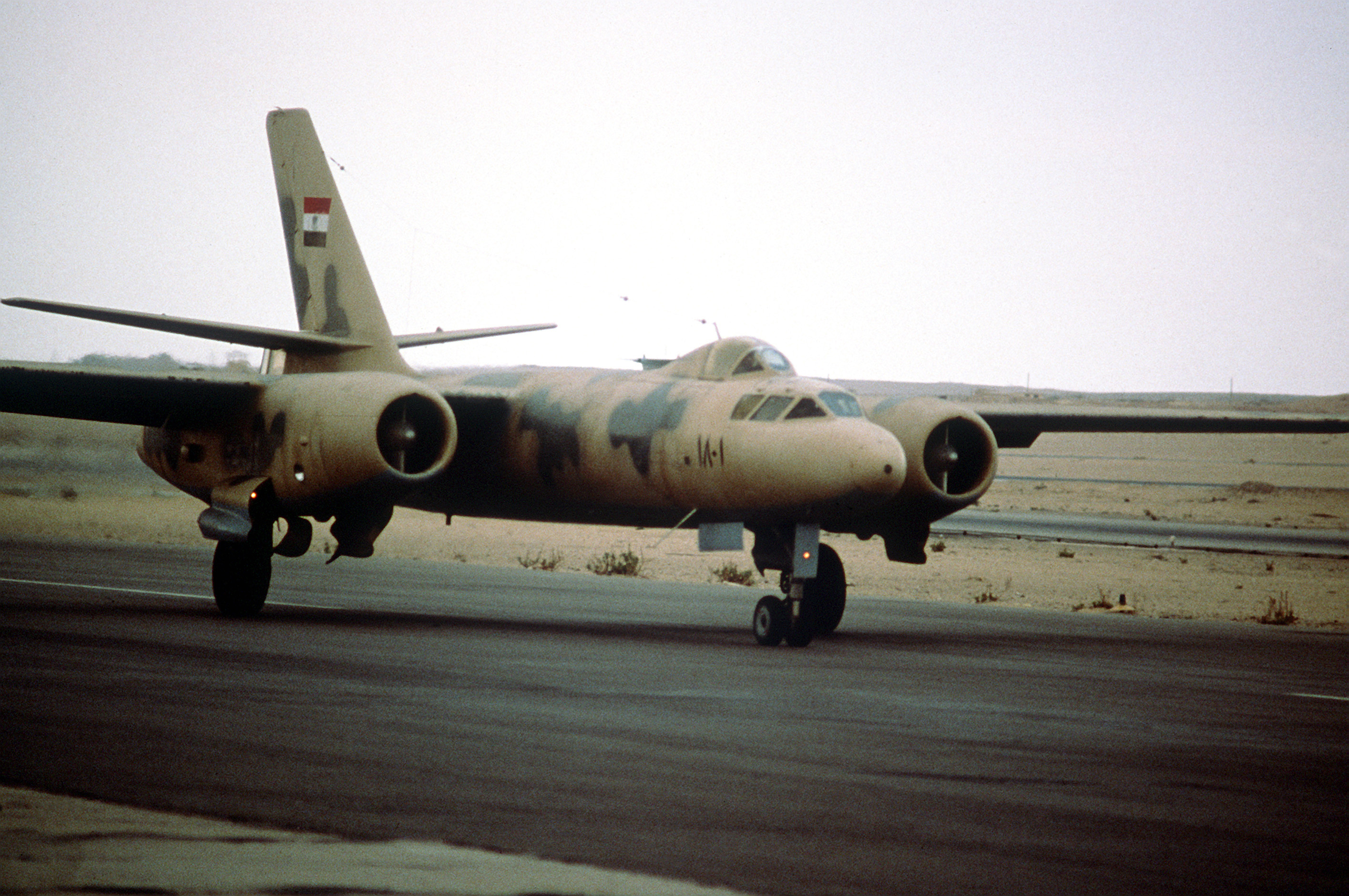
After a number of attempts at a four-engined bomber (the Lyulka TR-1 powered Ilyushin Il-22 and the unbuilt Rolls-Royce Derwent powered Ilyushin Il-24), the Ilyushin Design Bureau began development of a new jet-powered tactical bomber in late 1947. Western intelligence focused on the four-engine developments while the twin-engine Ilyushin Il-28 was created to meet a requirement for a bomber to carry a bombload at .Green and Swanborough 1988, p. 44.Gunston 1995, p. 417. The new design took advantage of the sale of a number of Rolls-Royce Nene jet engines by Great Britain to the Soviet Union, which allowed Soviet engineers to quickly produce an unlicensed copy of the Nene, the RD-45, with Ilyushin designing the new bomber around two RD-45s. The Il-28 was smaller than the previous designs and carried a crew of only three (pilot, navigator and gunner). It was also smaller than the competing design from the Tupolev design bureau, the three-engined (i.e. two Nenes and a Rolls-Royce Derwent) Tupolev Tu-73, which had been started long before the Ilyushin project, and flew before the design of the Il-28 was approved. The Il-28 design was conventional in layout, with high, unswept wings and a swept horizontal tail and fin. The engines were carried in bulky nacelles slung directly under the wings. The nosewheel retracted rearwards, while the mainwheels retracted forwards into the engine nacelles. The crew of three were accommodated in separate, pressurised compartments. The navigator, who also acted as bombardier, was accommodated in the glazed nose compartment and was provided with an OPB-5 bombsight based on the American Norden bombsight of the Second World War, while the pilot sat under a sideways opening bubble canopy with an armoured windscreen. The gunner sat in a separate compartment at the rear of the fuselage, operating a power driven turret armed with two Nudelman-Suranov NS-23 23 mm cannons with 250 rounds each. In service, the turret was sometimes removed as a weight saving measure.Winchester 2006, p. 112. While the pilot and navigator sat on ejector seats, the gunner had to parachute out of a hatch in the floor in the event of an emergency. Two more fixed, forward-firing 23 mm cannon with 100 rounds each were mounted under the nose and fired by the pilot, while a bomb bay was located in the fuselage, capable of holding four 100 kg (220 lb) bombs in individual containers, or single large bombs of up to 3,000 kg (6,600 lb) slung from a beam in the bomb bay.Green and Swanborough 1988, pp. 45–46.Gordon, Komissarov and Komissarov 2004, pp. 140–144.
One unusual design feature of the Il-28 was that the wings and tail were split horizontally through the centre of the wing, while the fuselage was split vertically at the centreline, allowing the separate parts to be built individually and fitted out with systems before being bolted together to complete assembly of the aircraft.Winchester 2006, p. 113. This slightly increased the weight of the aircraft structure, but eased manufacture and proved to be more economical.Green and Swanborough 1988, p. 45.Gunston 1995, p. 114.
The first prototype, powered by two imported Nenes, made its maiden flight on 8 July 1948, with Vladimir Kokkinaki at the controls. Testing was successful, with the Il-28 demonstrating good handling and reaching a speed of 833 km/h (518 mph). It was followed on 30 December 1948 by the second prototype, with Soviet built RD-45 engines replacing the Nenes.Green and Swanborough 1988, p. 46. After the completion of state tests in early 1949 the aircraft was ordered into large scale production on 14 May 1949, with the Klimov VK-1, an improved version of the RD-45 to be used in order to improve the aircraft's performance.Nemecek 1986, p. 173.Gordon, Komissarov and Komissarov 2004, p. 117. The first pre-production aircraft with VK-1 engines flew on 8 August 1949, and featured reshaped engine nacelles to reduce drag, while the radome for the navigation radar was moved from the rear fuselage to just aft of the nosewheel.
Full production in three factories started in September 1949, with service deliveries starting in early 1950, allowing 25 Il-28s to be displayed at the Moscow May Day parade of 1950 (as ordered by Joseph Stalin
Joseph Vissarionovich Stalin (born Dzhugashvili; 5 March 1953) was a Soviet politician and revolutionary who led the Soviet Union from 1924 until Death and state funeral of Joseph Stalin, his death in 1953. He held power as General Secret ...
when it was ordered into production in 1949).Green and Swanborough 1988, pp. 47–49.Gordon, Komissarov and Komissarov 2004, p. 118. The Il-28 soon became the standard tactical bomber in the Soviet forces and was widely exported.
Operational history
The Il-28 was widely exported, serving in the air arms of some 20 nations ranging from theWarsaw Pact
The Warsaw Pact (WP), formally the Treaty of Friendship, Co-operation and Mutual Assistance (TFCMA), was a Collective security#Collective defense, collective defense treaty signed in Warsaw, Polish People's Republic, Poland, between the Sovi ...
to various Middle-Eastern and African air forces. Egypt
Egypt ( , ), officially the Arab Republic of Egypt, is a country spanning the Northeast Africa, northeast corner of Africa and Western Asia, southwest corner of Asia via the Sinai Peninsula. It is bordered by the Mediterranean Sea to northe ...
was an early customer, and targeting Egyptian Il-28s on the ground was a priority for the Royal Air Force
The Royal Air Force (RAF) is the Air force, air and space force of the United Kingdom, British Overseas Territories and Crown Dependencies. It was formed towards the end of the World War I, First World War on 1 April 1918, on the merger of t ...
during the Suez Crisis
The Suez Crisis, also known as the Second Arab–Israeli War, the Tripartite Aggression in the Arab world and the Sinai War in Israel, was a British–French–Israeli invasion of Egypt in 1956. Israel invaded on 29 October, having done so w ...
and later by the Israeli Air Force during the Six-Day War
The Six-Day War, also known as the June War, 1967 Arab–Israeli War or Third Arab–Israeli War, was fought between Israel and a coalition of Arab world, Arab states, primarily United Arab Republic, Egypt, Syria, and Jordan from 5 to 10June ...
, and Yom Kippur War
The Yom Kippur War, also known as the Ramadan War, the October War, the 1973 Arab–Israeli War, or the Fourth Arab–Israeli War, was fought from 6 to 25 October 1973 between Israel and a coalition of Arab world, Arab states led by Egypt and S ...
.
Egyptian Il-28s also took part in the North Yemen Civil War, starting in 1963. In addition to attacks on the royalist forces, they also bombed the Saudi cities of Jizan, Najran, and Khamis Mushait. Two Egyptian Il-28s may have been shot down near Sanaa
Sanaa, officially the Sanaa Municipality, is the ''de jure'' capital and largest city of Yemen. The city is the capital of the Sanaa Governorate, but is not part of the governorate, as it forms a separate administrative unit. At an elevation ...
by Royal Saudi Air Force
The Royal Saudi Air Force (RSAF; ) is the military aviation, aviation branch of the Armed Forces of Saudi Arabia, Saudi Arabian Armed Forces.
The Royal Saudi Air Force currently has wings, squadrons, and a special forces unit dedicated to comba ...
Hawker Hunter
The Hawker Hunter is a transonic British jet propulsion, jet-powered fighter aircraft that was developed by Hawker Aircraft for the Royal Air Force (RAF) during the late 1940s and early 1950s. It was designed to take advantage of the newly dev ...
s flown by British pilots, in 1966.
The Soviet Union was in the process of providing the type for local assembly in Cuba
Cuba, officially the Republic of Cuba, is an island country, comprising the island of Cuba (largest island), Isla de la Juventud, and List of islands of Cuba, 4,195 islands, islets and cays surrounding the main island. It is located where the ...
when this was halted by the Cuban Missile Crisis
The Cuban Missile Crisis, also known as the October Crisis () in Cuba, or the Caribbean Crisis (), was a 13-day confrontation between the governments of the United States and the Soviet Union, when American deployments of Nuclear weapons d ...
, after which Nikita Khrushchev
Nikita Sergeyevich Khrushchev (– 11 September 1971) was the General Secretary of the Communist Party of the Soviet Union, First Secretary of the Communist Party of the Soviet Union from 1953 to 1964 and the Premier of the Soviet Union, Chai ...
agreed to remove them. The type also saw limited use in Vietnam
Vietnam, officially the Socialist Republic of Vietnam (SRV), is a country at the eastern edge of mainland Southeast Asia, with an area of about and a population of over 100 million, making it the world's List of countries and depende ...
and with the Afghan forces in Afghanistan
Afghanistan, officially the Islamic Emirate of Afghanistan, is a landlocked country located at the crossroads of Central Asia and South Asia. It is bordered by Pakistan to the Durand Line, east and south, Iran to the Afghanistan–Iran borde ...
. Four ex-Egyptian and two ex-Soviet Il-28s (all with Egyptian crews) were operated by the Nigerian Air Force in the Biafra Wars. Finland
Finland, officially the Republic of Finland, is a Nordic country in Northern Europe. It borders Sweden to the northwest, Norway to the north, and Russia to the east, with the Gulf of Bothnia to the west and the Gulf of Finland to the south, ...
also had four examples of this type delivered between 1961 and 1966 for target-towing duties. They remained in service until the 1980s.
The Soviet Union had relegated the Il-28 to second-line duties by the late-1950s. The supersonic Yak-28 was introduced in the early 1960s to take over the Beagle's low-level attack role; some Il-28 variants lingered in Soviet service into the 1980s. The last Soviet-built examples were still flying in Egypt into the 1990s.
The People's Republic of China received over 250 Soviet-built Il-28s from 1952,Gordon and Komissarov 1997, p. 20. and when the Sino-Soviet split
The Sino-Soviet split was the gradual worsening of relations between the People's Republic of China (PRC) and the Union of Soviet Socialist Republics (USSR) during the Cold War. This was primarily caused by divergences that arose from their ...
occurred in the late 1950s, it decided to place the Il-28 into production, despite no manufacturing license being obtained.Gordon and Komissarov 2008, p. 113. Chinese-built aircraft differed from the original Soviet aircraft in that they have a redesigned wing structure, abandoning the horizontal manufacturing break, saving at the cost of a more difficult construction. Chinese aircraft also used a different tail turret based on that of the Tupolev Tu-16, and fitted with faster-firing AM-23 cannons.Gordon and Komissarov 2008, pp. 113–114.
Chinese-built Il-28s designated H-5 and built by HAMC were still flying in the 1990s with several hundreds in China itself, and a smaller number in North Korea
North Korea, officially the Democratic People's Republic of Korea (DPRK), is a country in East Asia. It constitutes the northern half of the Korea, Korean Peninsula and borders China and Russia to the north at the Yalu River, Yalu (Amnok) an ...
and Romania
Romania is a country located at the crossroads of Central Europe, Central, Eastern Europe, Eastern and Southeast Europe. It borders Ukraine to the north and east, Hungary to the west, Serbia to the southwest, Bulgaria to the south, Moldova to ...
. The three main Chinese versions are the H-5 bomber, followed by the HJ-5 trainer, and the H-5R (HZ-5) long range (in comparison to the reconnaissance version of the Shenyang J-6) reconnaissance aircraft, and later, the HD-5 ECM/ ESM version. The latter two types have been phased out.
The type is known to still be in active service with the North Korean Air Force, although little is known as to whether they are a mix of survivors from the batch of 24 Soviet-manufactured aircraft delivered in the 1960s and some of the newer Chinese-built H-5 variant, or are solely H-5s. Some of these are probably used for spares to maintain a small group of around a dozen serviceable aircraft. They give North Korea a means of bombing targets in South Korea and Western Japan, although they would be vulnerable to modern anti air missiles and interceptors.
Several Ilyushin Il-28s are preserved in museums and as monuments in Russia, Germany, Hungary and in other countries.
Variants
Soviet Union variants
Note: Order of variants determined chronologically by production/development dates. ;Il-28 :Basic three-seat bomber version, powered by two VK-1 engines.Gordon, Komissarov and Komissarov 2004, pp. 118–119.
;Il-28U
:Unarmed training version fitted with new nose housing cockpit for instructor, while the trainee sat in the normal cockpit. First flown 18 March 1950.Gordon and Komissarov 1997, p. 11.
;Il-28R
:Three-seat tactical photo reconnaissance version, with extra fuel in bomb bay and tip-tanks, and with one forward firing cannon removed. Fitted with revised undercarriage to deal with heavier weights. First flew 19 April 1950.Green and Swanborough 1988, p. 49.Gordon and Komissarov 1997, p. 14.
;Il-28RTR
:ELINT
Signals intelligence (SIGINT) is the act and field of intelligence-gathering by interception of ''signals'', whether communications between people (communications intelligence—abbreviated to COMINT) or from electronic signals not directly u ...
version of Il-28R.Gordon, Komissarov and Komissarov 2004, p. 122.
;Il-28REB
:Electronic warfare, electronic jamming version, fitted with wingtip electronic pods housed in the former wing tanks.
;Il-28T
:Torpedo bomber
A torpedo bomber is a military aircraft designed primarily to attack ships with aerial torpedoes. Torpedo bombers came into existence just before the World War I, First World War almost as soon as aircraft were built that were capable of carryin ...
version for the Soviet Naval Aviation able to accommodate two small or one large torpedo (including RAT-52 rocket propelled torpedoes) in a lengthened weapons bay.Gordon and Komissarov 1997, p. 14–16.
;Il-28N
:Nuclear bomber for the Soviet Air Force with modified bomb-bay and revised avionics. (N - ''Nositel'' - carrier, also known as Il-28A - ''Atomnyy'' - atomic).Gordon and Komissarov 1997, p. 17.
;Il-28P
:Unarmed civil conversion for Aeroflot
PJSC AeroflotRussian Airlines (, ), commonly known as Aeroflot ( or ; , , ), is the flag carrier and the largest airline of Russia. Aeroflot is headquartered in the Central Administrative Okrug, Moscow, with its hub being Sheremetyevo Interna ...
, used as jet conversion trainer and to carry high priority cargo (i.e. newspaper matrices to allow simultaneous printing of ''Pravda
''Pravda'' ( rus, Правда, p=ˈpravdə, a=Ru-правда.ogg, 'Truth') is a Russian broadsheet newspaper, and was the official newspaper of the Central Committee of the Communist Party of the Soviet Union, when it was one of the most in ...
'' and ''Izvestia
''Izvestia'' ( rus, Известия, r=Izvestiya, p=ɪzˈvʲesʲtʲɪjə, "The News") is a daily broadsheet newspaper in Russia. Founded in February 1917, ''Izvestia'', which covered foreign relations, was the organ of the Supreme Soviet of th ...
'' in Moscow, Sverdlovsk and Novosibirsk
Novosibirsk is the largest city and administrative centre of Novosibirsk Oblast and the Siberian Federal District in Russia. As of the 2021 Russian census, 2021 census, it had a population of 1,633,595, making it the most populous city in Siber ...
). Also designated Ilyushin Il-20.Gunston 1995, p. 115.Stroud 1968, pp. 126–127.
;Il-28S
:Proposed swept-wing version with more powerful Klimov VK-5 engines. Unbuilt.
;Il-28RM
: Modified Il-28R with VK-5 engine. One prototype built plus two similarly converted bombers (which carried no special designation) but no production.
;Il-28TM
:Il-28T with VK-5. One converted, no production.
;Il-28PL
:High-speed anti-submarine conversion of Il-28 bomber or Il-28T torpedo bomber. Capable of carrying dropping sonobuoys or acoustic homing torpedoes on direction of other anti-submarine assets.Gordon and Komissarov 1997, p. 18.
;Il-28Sh
:Ground attack (''Shturmovik'') conversion of Il-28 with 12 underwing pylons for rocket pods. Small number converted which saw limited service.Gordon, Komissarov and Komissarov 2004, p. 128.
;Il-28ZA
:Atmospheric sampling version.
;Il-28M
:Target drone conversion of Il-28. Also known as M-28.
Czechoslovak variants
;B-228 :Czechoslovak designation of Soviet built Il-28s.Gordon, Komissarov and Komissarov 2004, p. 136. ;CB-228 :Czechoslovak designation of Soviet built Il-28Us.Chinese variants
;H-5 :(''Hongzhaji'' - bomber) - Standard three-seat tactical bomber. The structure of the two halves of the Soviet Union's Il-28 aircraft was changed to a common structure. The engine uses WP-5. The tail turret using H-6s caused some changes in the tail structure. ;H-5A :Speculative designation of for nuclear capable H-5 variant.Gordon and Komissarov 2008, p. 115. ;HD-5: :(''Hongzhaji Dian'' - bomber/electronic reconnaissance) Chinese ECM jammer version.Gordon and Komissarov 2008, p. 117. ;HJ-5 :(''Hongzhaji Jiaolianji'' - bomber trainer) Chinese trainer version with similar layout to Il-28U.Gordon and Komissarov 2008, pp. 115–116 ;HZ-5 :(''Hongzhaji Zhenchaji'' - bomber/reconnaissance) Tactical reconnaissance aircraft. Fitted with underwing drop tanks instead of tip tanks of Il-28R. ;B-5 :Export designation of the H-5. ;B-5R :Export version of HZ-5. ;BT-5 :Export version of the HJ-5. ;H-5 Ying :(''Ying'' - eagle) Avionics testbed for Xian JH-7 programme.Gordon and Komissarov 2008, p. 118. ;H-5B :Speculative designation for unflown H-5 testbed for WS-5 turbofan engines.Operators
Current
; * Korean People's Army Air Force - 80 Il-28 and H-5 as of 2023.Former
; * Afghan Air Force :54 aircraft acquired (including four Il-28U examples) from 1957. Only trainers were retained beyond 1994.Goebel, Greg. ''Air Vectors''. Retrieved: 22 August 2011. All grounded during the civil war in the 1990s. Some were displayed during military parades such as the one in 1984. ; * Albanian Air Force : Aviation Regiment 4020 operated one Il-28 acquired in 1957 attached to ''2 Skuadrilja'' (2nd Squadron). This aircraft was traded for an H-5, the Chinese version of the Soviet Il-28, in 1971 and retired from service in 1992. ; * Algerian Air Force :Fourteen Il-28s were ordered from the USSR in 1965-1966. At least twelve of them were donated to Egypt following theSix-Day War
The Six-Day War, also known as the June War, 1967 Arab–Israeli War or Third Arab–Israeli War, was fought between Israel and a coalition of Arab world, Arab states, primarily United Arab Republic, Egypt, Syria, and Jordan from 5 to 10June ...
.
;
* Bulgarian Air Force
:14 Il-28Rs and one Il-28U received in 1955 and retired in 1974.
;
* Hundreds of these aircraft were operated by the People's Liberation Army Air Force
The People's Liberation Army Air Force, also referred to as the Chinese Air Force () or the People's Air Force (), is the primary aerial warfare service of the People's Liberation Army. The PLAAF controls most of the PLA's air assets, includi ...
and People's Liberation Army Navy Air Force. Originally equipped with Soviet-built aircraft, the Chinese began full production of the H-5 by 1965. All Il-28s are retired as of 2011.
* Second Aviation School
;
* Cuban Air Force
:A total of 42 were received in 1962, but soon returned to the Soviet Union as a result of the Cuban Missile Crisis
The Cuban Missile Crisis, also known as the October Crisis () in Cuba, or the Caribbean Crisis (), was a 13-day confrontation between the governments of the United States and the Soviet Union, when American deployments of Nuclear weapons d ...
.Gordon and Komissarov 1997, p. 21.
;
* Czechoslovak Air Force
:Il-28 and Il-28Us locally designated B-228 and CB-228 which operated from 1954 until 1973. 90 Il-28s, 30 Il-28RTs and an unknown number of Il-28Us were delivered.
;
* East German Air Force
:Operated 12 Il-28s and one Il-28U aircraft, primarily on target tug and engine testing duties between 1954 and 1982.
;
* Egyptian Air Force
:Received 70 Czechoslovakian-built Il-28s in 1956, shortly before the Suez Crisis
The Suez Crisis, also known as the Second Arab–Israeli War, the Tripartite Aggression in the Arab world and the Sinai War in Israel, was a British–French–Israeli invasion of Egypt in 1956. Israel invaded on 29 October, having done so w ...
. The IDF rated the Il-28 as a high priority target during the Six-Day War.
;
* Finnish Air Force
:Received four aircraft (one IL-28 and three Il-28Rs), coded NH-1..4, in the 1960s. The aircraft were used as target tugs and for maritime reconnaissance and patrolling as well as aerial mapping until 1981. The code letters of the type (NH) originated from Neuvostoliittolainen Hinauskone (Soviet towplane) but since they also matched initials of the Soviet leader Nikita Khrushchev
Nikita Sergeyevich Khrushchev (– 11 September 1971) was the General Secretary of the Communist Party of the Soviet Union, First Secretary of the Communist Party of the Soviet Union from 1953 to 1964 and the Premier of the Soviet Union, Chai ...
(spelled Hruštšov in Finnish), their usual nickname was ''Nikita''.
;
* Hungarian People's Army Air Force
;
*Indonesian Air Force
The Indonesian Air Force (, sometimes shortened as IDAF / IdAF) is the Air force, aerial branch of the Indonesian National Armed Forces. The Indonesian Air Force is headquartered in Jakarta, Indonesia, and is headed by the Chief of Staff of th ...
: 21st Air Squadron based at Kemayoran Air Force Base, Jakarta received 12 Il-28s acquired in 1961. Aircraft were used during Operation Trikora in 1962 (the conquest of Western New Guinea
Western New Guinea, also known as Papua, Indonesian New Guinea, and Indonesian Papua, is the western half of the island of New Guinea, formerly Dutch and granted to Indonesia in 1962. Given the island is alternatively named Papua, the region ...
). All of the aircraft were grounded in 1969 and retired in 1970.
*Indonesian Navy
The Indonesian Navy (, TNI-AL) is the Navy, naval branch of the Indonesian National Armed Forces. It was founded on 10 September 1945 and has a role to patrol Indonesia's lengthy coastline, to enforce and patrol the territorial waters and Exclus ...
:Received more than 30 Il-28T torpedo-bombers and six Il-28U trainers in 1961. They were based at Surabaya
Surabaya is the capital city of East Java Provinces of Indonesia, province and the List of Indonesian cities by population, second-largest city in Indonesia, after Jakarta. Located on the northeastern corner of Java island, on the Madura Strai ...
, in what is now Juanda International Airport. The last one was retired in 1972.Gordon and Komissarov 1997, p. 23.
;
* Iraqi Air Force
:Received twelve Il-28s, two Il-28Us and two Il-28BM target tugs starting in January 1959. Some additional aircraft may have been acquired from Egypt in the 1960s. All destroyed or grounded after Desert Storm
, combatant2 =
, commander1 =
, commander2 =
, strength1 = Over 950,000 soldiers3,113 tanks1,800 aircraft2,200 artillery systems
, page = https://www.govinfo.gov/content/pkg/GAOREPORTS-PEMD-96- ...
.
;
*Royal Moroccan Air Force
The Royal Moroccan Air Force (; ; ) is the air force of the Moroccan Armed Forces.
History
The Moroccan air force was formed on 14 May 1956 as the Sherifian Royal Aviation ().
Its modern installations and bases were inherited from France (Bass ...
:Morocco operated two Il-28s.
;
* Nigerian Air Force
;
* Yemen Arab Republic Air Force
:Four Il-28s donated by Libya
Libya, officially the State of Libya, is a country in the Maghreb region of North Africa. It borders the Mediterranean Sea to the north, Egypt to Egypt–Libya border, the east, Sudan to Libya–Sudan border, the southeast, Chad to Chad–L ...
in October 1972.
;
* Pakistani Air Force
:Operated a number of H-5s under the designation B-56. These aircraft served alongside American-built Martin B-57s. The H-5s were not popular with Pakistani pilots, and they were eventually traded back to China in exchange for more Shenyang F-6s.
;
*Polish Air Force
The Polish Air Force () is the aerial warfare Military branch, branch of the Polish Armed Forces. Until July 2004 it was officially known as ''Wojska Lotnicze i Obrony Powietrznej'' (). In 2014 it consisted of roughly 26,000 military personnel an ...
: Received 72 Il-28s, 15 Il-28Rs and 16 Il-28Us. The first aircraft arrived in 1952, last was retired in 1977.
** 7 ''Pułk Lotnictwa Bombowo-Rozpoznawczego'' was based in Powidz.
** 21 ''Pułk Rozpoznania Taktycznego'' operated Il-28R variant and was based in Sochaczew
Sochaczew () is a town in central Poland, with 33,456 inhabitants (as of 2023). In the Masovian Voivodeship (since 1999), formerly in Skierniewice Voivodeship (1975–1998). It is the capital of Sochaczew County and is located approximately west ...
.
** 33 ''Pułk Lotnictwa Bombowego'' was based in Modlin.
* Polish Navy
;
* Romanian Air Force
:About 22 Il-28s, three Il-28Rs and eight Il-28Us, both Soviet- and Chinese-built, operated from 1955. All remaining Il-28s were retired from service by June 2001.
;
* Somali Air Force, 4 units prior to 1977.
;
* People's Democratic Republic of Yemen Air Force
:Received a single Il-28, one Il-28R and two Il-28Us from the USSR around 1972.
;
:About 1,500 served with the Soviet Air Forces
The Soviet Air Forces (, VVS SSSR; literally "Military Air Forces of the Union of Soviet Socialist Republics"; initialism VVS, sometimes referred to as the "Red Air Force") were one of the air forces of the Soviet Union. The other was the Sovie ...
and the Soviet Navy
The Soviet Navy was the naval warfare Military, uniform service branch of the Soviet Armed Forces. Often referred to as the Red Fleet, the Soviet Navy made up a large part of the Soviet Union's strategic planning in the event of a conflict with t ...
( Soviet Naval Aviation), with operations beginning in 1950. Front line operations continued through the 1950s, with a few examples remaining into the 1980s. A small number of demilitarized aircraft were provided to Aeroflot
PJSC AeroflotRussian Airlines (, ), commonly known as Aeroflot ( or ; , , ), is the flag carrier and the largest airline of Russia. Aeroflot is headquartered in the Central Administrative Okrug, Moscow, with its hub being Sheremetyevo Interna ...
.
;
* Syrian Air Force
:Syria operated six Il-28s. Two were destroyed during the Six-Day War. The other four were dumpedGordan, Yefim, and Dmitry Komissarov. "Syria Pg.164." Soviet and Russian Military Aircraft in the Middle East. N.p.: Hikoki, 2013. 164-65. Print. in airbases around Syria.Gordon and Komissarov 1997, p. 24. Replaced in 1980s by Su-24
The Sukhoi Su-24 (NATO reporting name: Fencer) is a supersonic, night fighter, all-weather tactical bomber developed in the Soviet Union. The aircraft has a variable-sweep wing, Twinjet, twin engines and a side-by-side seating arrangement for it ...
;
*Vietnam People's Air Force
The Vietnam People's Air Force (VPAF; ), officially the Air Defence - Air Force Service (ADAF Service; ) or the Vietnam Air Force (), is the Aerial warfare, aerial, Anti-aircraft warfare, air and Space warfare, space defence service branch of ...
Retired.
Specifications (Il-28)
See also
References
Notes
Bibliography
* Bernád, Dénes. "Rumanian 'Beagles': The Ilyushin Il-28 in Rumanian Service". ''Air Enthusiast'', No. 78, November/December 1998, pp. 68–72. ISSN 0143-5450. * * * Gordon, Yefim and Dmitry Komissarov. ''Chinese Aircraft: China's Aviation Industry since 1951''. Manchester, UK: Hikoki Publications, 2008. . * Gordon, Yefim and Dmitry Komissarov. "Soviet Canberra: Ilyushin's incredible Il-28". ''Air Enthusiast'', No. 71, September/October 1997, pp. 8–24. ISSN 0143-5450. * Gordon, Yefim, Dmitry Komissarov and Sergei Komissarov. ''OKB Ilyushin: A History of the Design Bureau and Its Aircraft''. Hinckley, Leicestershire, UK: Midland Publishing, 2004. . * Green, William and Gordon Swanborough. "Il-28 ... A Quadragenarian Ilyushin". '' Air Enthusiast'', Thirty-six, May–August 1988, pp. 39–51. ISSN 0143-5450. * Gunston, Bill. ''The Osprey Encyclopedia of Russian Aircraft 1975–1995''. London: Osprey, 1995. . * Nemecek, Vaclav. ''The History of Soviet Aircraft from 1918''. London: Willow Books, 1986. . * * Stroud, John. ''Soviet Transport Aircraft since 1945''. London: Putnam, 1968. . * Sweetman, Bill and Bill Gunston. ''Soviet Air Power: An Illustrated Encyclopedia of the Warsaw Pact Air Forces Today''. London: Salamander Books, 1978. . * Taylor, John W. R. ''Jane's All The World's Aircraft 1982–83''. London: Jane's Yearbooks, 1982. . * Winchester, Jim, ed. "Ilyushin Il-28 'Beagle'." ''Military Aircraft of the Cold War'' (The Aviation Factfile). London: Grange Books plc, 2006. .External links
Walkaround Il-28 Beagle for Hodynskoye pole, Moscow, Russia
''Russia's New 2-Jet Bomber'' by Chamlers Goodlin, one of the earliest articles printed in the US on the Il-28 with cutaway drawing, published 1951
{{Authority control Il-028 1940s Soviet bomber aircraft Aircraft first flown in 1948 High-wing aircraft Twinjets Aircraft with retractable tricycle landing gear