|
Warren, Massachusetts
Warren is a town in Worcester County, Massachusetts, United States. The population was 4,975 at the 2020 census. The town contains the villages of Warren and West Warren. History Warren was first settled in 1664 and was officially incorporated on January 16, 1741, as the town of Western.Sylvia Buck, ''Warren, Town in the Making, 1741-1991'' Originally a part of Quaboag Plantation, the town now known as Warren was part of Brookfield for 68 years until it was renamed Western. Warren includes land petitioned from both the Quaboag Plantation and the "Kingsfield", which included parts of Palmer and Brimfield. On March 13, 1834, the town was renamed Warren in honor of General Joseph Warren, who died at the Battle of Bunker Hill during the American Revolutionary War. The need to rename the town came about due to confusion of the name "Western" with the town of Weston, Massachusetts. According to the ''History of Warren Massachusetts'' by Olney I. Darling, Western was rena ... [...More Info...] [...Related Items...] OR: [Wikipedia] [Google] [Baidu] [Amazon] |
Worcester County, Massachusetts
Worcester County ( ) is a County (United States), county in the U.S. state of Massachusetts. At the 2020 United States census, 2020 census, the population was 862,111, making it the second-most populous county in Massachusetts. Being 1,510.6 square miles of land area, it is the largest county in Massachusetts by geographic area. The largest city and traditional county seat, shire town is Worcester, Massachusetts, Worcester. Worcester County is part of the Worcester, MA-CT MSA, Worcester, MA–CT metropolitan statistical area and the Boston-Worcester-Providence combined statistical area. History Worcester County was formed from the eastern portion of colonial Hampshire County, Massachusetts, Hampshire County, the western portion of the original Middlesex County, Massachusetts, Middlesex County and the extreme western portion of the original Suffolk County, Massachusetts, Suffolk County. When the government of Worcester County was established on April 2, 1731, Worcester was cho ... [...More Info...] [...Related Items...] OR: [Wikipedia] [Google] [Baidu] [Amazon] |
Quaboag Plantation
Quaboag Plantation was a plantation founded in 1660 in Central Massachusetts that now makes up parts of the towns of Warren and New Braintree, as well as the whole towns of Brookfield, West Brookfield, North Brookfield, and East Brookfield. In 1673, the plantation broke up as the various towns that made up its land became incorporated. History Back as early as 1636, William Pynchon began to have personal and business relationships with the Quaboag Indians (whom the settlement is named after) that lasted 40 years. In 1660, his son John took over business at his Springfield plantation and wanted to build a new plantation that was about halfway between Boston and Springfield, to shorten a long trip that was normally done by ship. John purchased the land in what is now the lands of the Brookfields, Warren, and New Braintree. 20 families from Ipswich, Massachusetts came to settle the new land for the Colony. A garrison was built as well to protect the Europeans from the Natives. The ... [...More Info...] [...Related Items...] OR: [Wikipedia] [Google] [Baidu] [Amazon] |
Massasoit
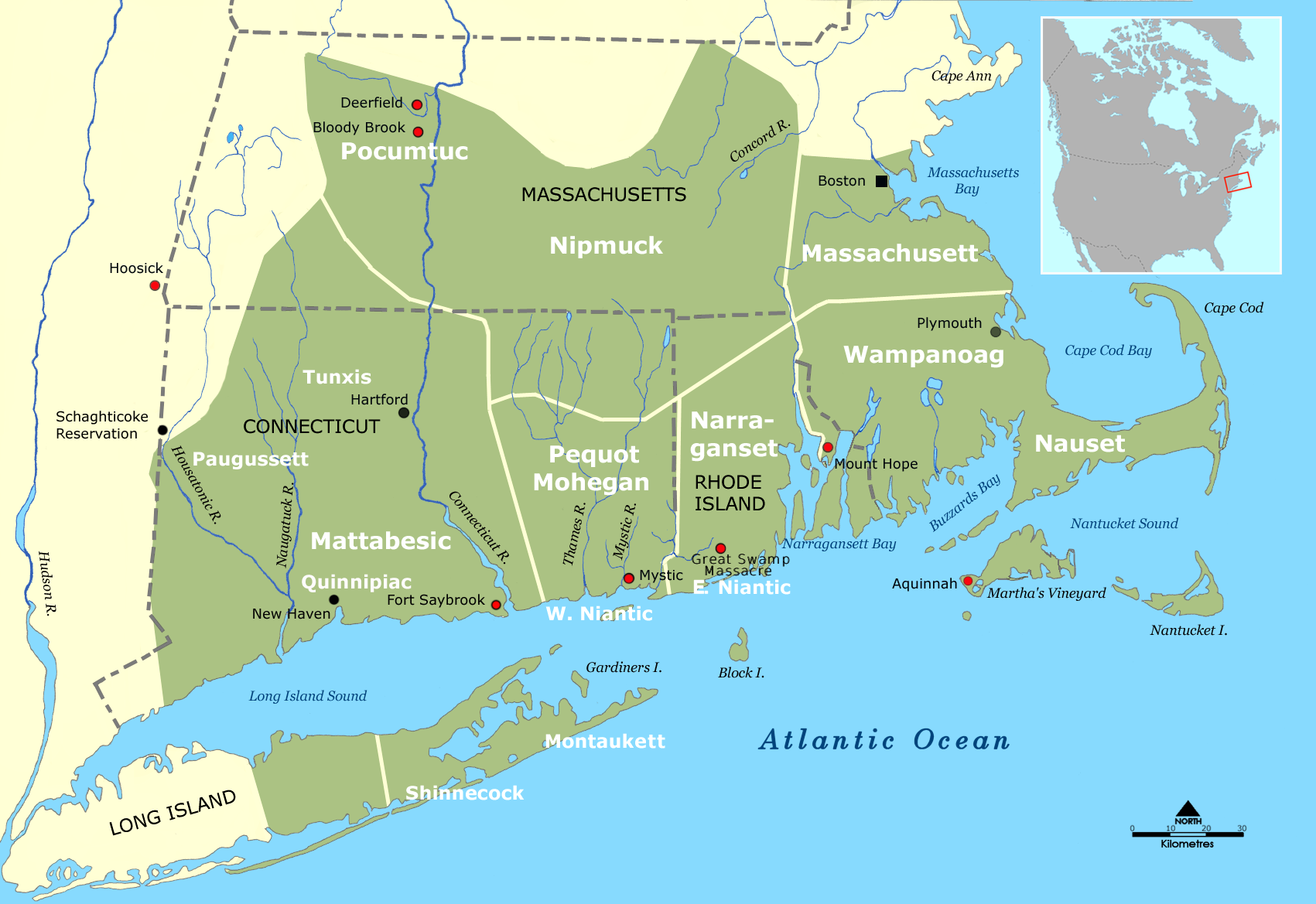
Massasoit Sachem ( ) or Ousamequin (1661)"Native People" (page), "Massasoit (Ousamequin) Sachem" (section),''MayflowerFamilies.com'', web pag was the sachem or leader of the Wampanoag confederacy. ''Massasoit'' means ''Great Sachem''. Although Massasoit was only his title, English colonists mistook it as his name and it stuck. Massasoit's people had been seriously weakened by a series of epidemics and were vulnerable to attacks by the Narragansetts, and he formed an alliance with the colonists at Plymouth Colony for defense against them. It was through his assistance that the Plymouth Colony avoided starvation during the early years. English at Plymouth At the time of the pilgrims' arrival in Plymouth, the realm of the Wampanoag, also known as the Pokanokets, included parts of Rhode Island and much of southeastern Massachusetts. Massasoit lived in Sowams, a village at Pokanoket in Warren, Rhode Island. He held the allegiance of lesser Pokanoket sachems. In 1621, he sent Squa ... [...More Info...] [...Related Items...] OR: [Wikipedia] [Google] [Baidu] [Amazon] |
Salem, Massachusetts
Salem ( ) is a historic coastal city in Essex County, Massachusetts, United States, located on the North Shore (Massachusetts), North Shore of Greater Boston. Continuous settlement by Europeans began in 1626 with English colonists. Salem was one of the most significant seaports trading commodities in Colonial history of the United States, early American history. Prior to the dissolution of county governments in Massachusetts in 1999, it served as one of two county seats for Essex County, alongside Lawrence, Massachusetts, Lawrence. Today, Salem is a residential and tourist area that is home to the House of Seven Gables, Salem State University, Pioneer Village (Salem, Massachusetts), Pioneer Village, the Salem Maritime National Historic Site, Salem Willows, Salem Willows Park, and the Peabody Essex Museum. It features historic residential neighborhoods in the Federal Street District and the Charter Street Historic District. [...More Info...] [...Related Items...] OR: [Wikipedia] [Google] [Baidu] [Amazon] |
Roger Williams
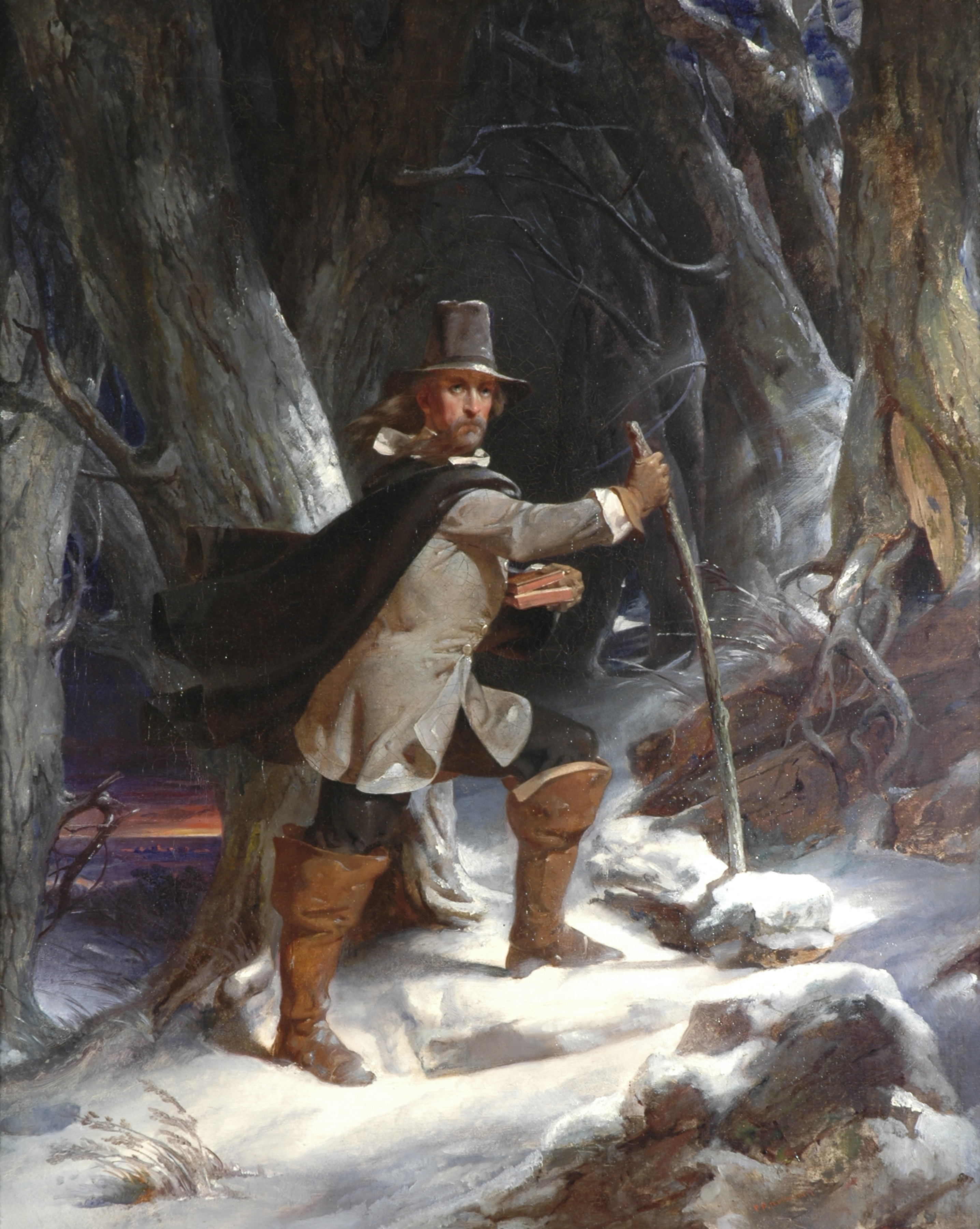
Roger Williams (March 1683) was an English-born New England minister, theologian, author, and founder of the Colony of Rhode Island and Providence Plantations, Providence Plantations, which became the Colony of Rhode Island and Providence Plantations and later the Rhode Island, State of Rhode Island. He was a staunch advocate for religious liberty, separation of church and state, and fair dealings with the Native Americans. Initially a Puritan minister, his beliefs evolved and he questioned the authority of the Puritan church in enforcing religious conformity. He was expelled by the Puritan leaders from the Massachusetts Bay Colony, and he established Providence Plantations in 1636 as a refuge offering what he termed "liberty of conscience" making Rhode Island the first government in the Western civilization, Western world to guarantee Freedom of religion, religious freedom in its founding charter. His ideas on religious tolerance and civil government directly influenced the ... [...More Info...] [...Related Items...] OR: [Wikipedia] [Google] [Baidu] [Amazon] |
Plymouth Colony
Plymouth Colony (sometimes spelled Plimouth) was the first permanent English colony in New England from 1620 and the third permanent English colony in America, after Newfoundland and the Jamestown Colony. It was settled by the passengers on the '' Mayflower'' at a location that had previously been surveyed and named by Captain John Smith. The settlement served as the capital of the colony and developed as the town of Plymouth, Massachusetts. At its height, Plymouth Colony occupied most of what is now the southeastern portion of Massachusetts. Many of the people and events surrounding Plymouth Colony have become part of American folklore, including the American tradition of Thanksgiving and the monument of Plymouth Rock. Plymouth Colony was founded by a group of Protestant Separatists initially known as the Brownist Emigration, who came to be known as the Pilgrims. The colony established a treaty with Wampanoag chief Massasoit which helped to ensure its success; in this ... [...More Info...] [...Related Items...] OR: [Wikipedia] [Google] [Baidu] [Amazon] |
Massachusetts Bay Colony
The Massachusetts Bay Colony (1628–1691), more formally the Colony of Massachusetts Bay, was an English settlement on the east coast of North America around Massachusetts Bay, one of the several colonies later reorganized as the Province of Massachusetts Bay. The lands of the settlement were in southern New England, with initial settlements on two natural harbors and surrounding land about apart—the areas around Salem, Massachusetts, Salem and Boston, Massachusetts, Boston, north of the previously established Plymouth Colony. The territory nominally administered by the Massachusetts Bay Colony covered much of central New England, including portions of Massachusetts, Maine, New Hampshire, and Connecticut. The Massachusetts Bay Colony was founded by the owners of the Charter of the Massachusetts Bay Company, Massachusetts Bay Company, including investors in the failed Dorchester Company, which had established a short-lived settlement on Cape Ann in 1623. The colony began in 1 ... [...More Info...] [...Related Items...] OR: [Wikipedia] [Google] [Baidu] [Amazon] |
Rhode Island
Rhode Island ( ) is a state in the New England region of the Northeastern United States. It borders Connecticut to its west; Massachusetts to its north and east; and the Atlantic Ocean to its south via Rhode Island Sound and Block Island Sound; and shares a small maritime border with New York, east of Long Island. Rhode Island is the smallest U.S. state by area and the seventh-least populous, with slightly more than 1.1 million residents . The state's population, however, has continually recorded growth in every decennial census since 1790, and it is the second-most densely populated state after New Jersey. The state takes its name from the eponymous island, though most of its land area is on the mainland. Providence is its capital and most populous city. Native Americans lived around Narragansett Bay before English settlers began arriving in the early 17th century. Rhode Island was unique among the Thirteen British Colonies in having been founded by ... [...More Info...] [...Related Items...] OR: [Wikipedia] [Google] [Baidu] [Amazon] |
Warren, Rhode Island
Warren is a town in Bristol County, Rhode Island, United States. The population was 11,147 at the 2020 census. History Warren was the site of the Pokanoket Indian settlement of Sowams located on a peninsula within the Pokanoket region. The region consisted of over 60 settlements under the authority of Chief Massasoit (sometimes called Osamequin) who controlled the land from Plymouth to the eastern shores of Narragansett Bay. English colonists Edward Winslow and Stephen Hopkins (Mayflower passenger), Stephen Hopkins from Plymouth Colony first visited there in July, 1621. Winslow and John Hampden saved Massasoit's life two years later and gained an important ally and lifelong friend. The colonists set up a trading post by 1632 on the banks of the Kickemuit River where they traded English goods for furs and other items. Roger Williams was banished from Salem, Massachusetts, in January, 1636, and fled to Sowams, becoming ill on the way. He was sheltered by Massasoit in Sowams un ... [...More Info...] [...Related Items...] OR: [Wikipedia] [Google] [Baidu] [Amazon] |
Weston, Massachusetts
Weston is an affluent town in Middlesex County, Massachusetts, United States, located approximately west of Boston. At the time of the 2020 United States census, the population of Weston was 11,851. Weston was incorporated in 1713, and protection of the town's historic resources is driven by the Weston Historical Commission and Weston Historical Society. The town has one Local Historic District, 10 National Register Districts, 26 Historic Areas, and seven houses individually listed on the National Register of Historic Places. Weston's predominance as a residential community is reflected in its population density, which is among the lowest of Boston's suburbs near or within Massachusetts Route 128, Route 128. More than 2,000 acres, or 18 percent of the town's total acreage, have been preserved as parks, fields, wetlands, and forests, with 90 miles of trails for hiking, horseback riding, and cross-country skiing. Thirty-seven scenic roads, as defined by Massachusetts law, maintai ... [...More Info...] [...Related Items...] OR: [Wikipedia] [Google] [Baidu] [Amazon] |
American Revolutionary War
The American Revolutionary War (April 19, 1775 – September 3, 1783), also known as the Revolutionary War or American War of Independence, was the armed conflict that comprised the final eight years of the broader American Revolution, in which American Patriot (American Revolution), Patriot forces organized as the Continental Army and commanded by George Washington defeated the British Army during the American Revolutionary War, British Army. The conflict was fought in North America, the Caribbean, and the Atlantic Ocean. The war's outcome seemed uncertain for most of the war. However, Washington and the Continental Army's decisive victory in the Siege of Yorktown in 1781 led King George III and the Kingdom of Great Britain to negotiate an end to the war in the Treaty of Paris (1783), Treaty of Paris two years later, in 1783, in which the British monarchy acknowledged the independence of the Thirteen Colonies, leading to the establishment of the United States as an independent and ... [...More Info...] [...Related Items...] OR: [Wikipedia] [Google] [Baidu] [Amazon] |
Battle Of Bunker Hill
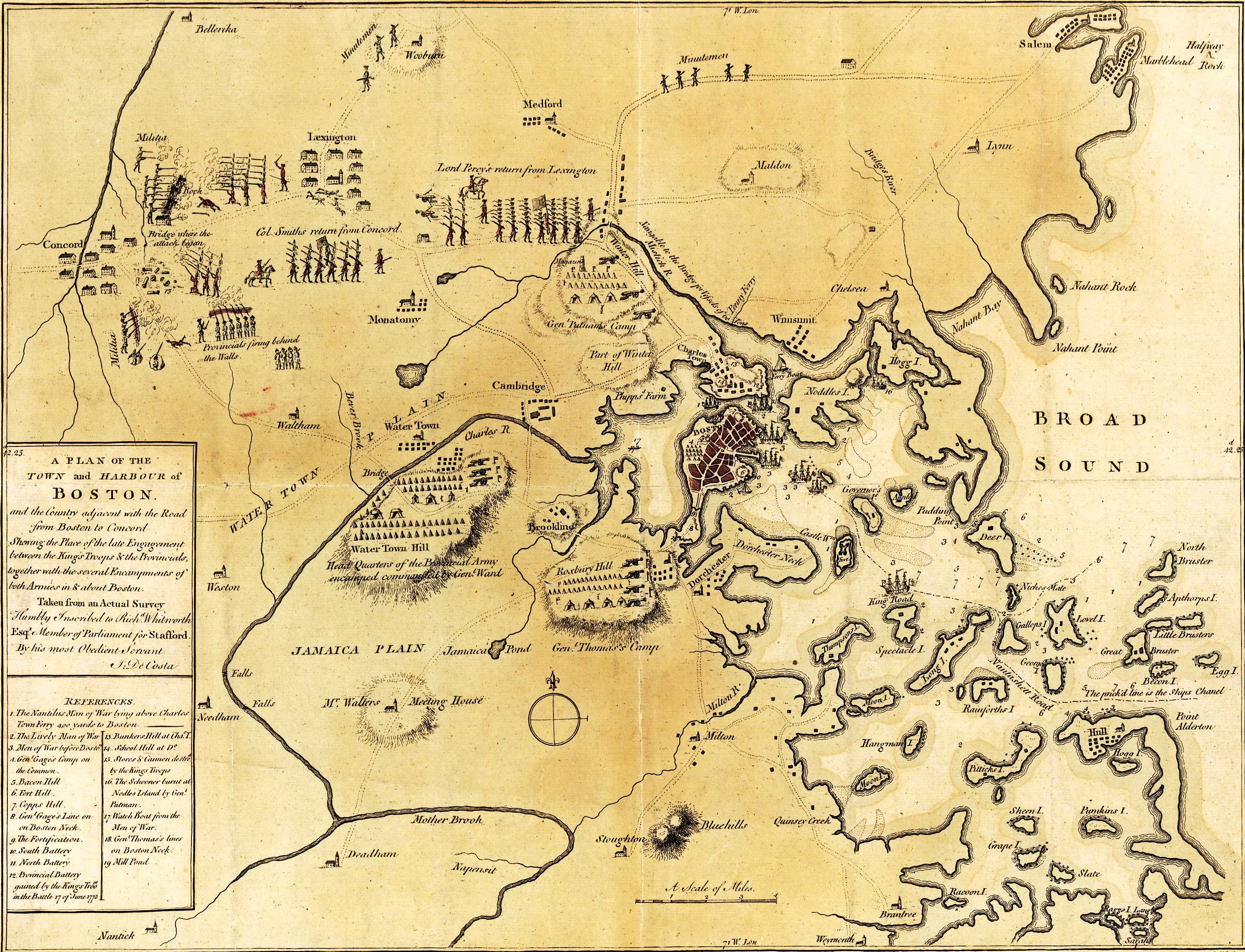
The Battle of Bunker Hill was fought on June 17, 1775, during the Siege of Boston in the first stage of the American Revolutionary War. The battle is named after Bunker Hill in Charlestown, Boston, Charlestown, Massachusetts, which was peripherally involved. It was the original objective of both the colonial and British troops, though the majority of combat took place on the adjacent hill, which became known as Breed's Hill. On June 13, 1775, the leaders of the colonial forces besieging Boston learned that the British were planning to send troops out from the city to fortify the unoccupied hills surrounding the city, which would give them control of Boston Harbor. In response, 1,200 colonial troops under the command of William Prescott stealthily occupied Bunker Hill and Breed's Hill. They constructed a strong redoubt on Breed's Hill overnight, as well as smaller fortified lines across the Charlestown Peninsula. By daybreak of June 17, the British became aware of the presen ... [...More Info...] [...Related Items...] OR: [Wikipedia] [Google] [Baidu] [Amazon] |