|
Ulu Temburong National Park
Ulu Temburong National Park is the first national park to be established in Brunei, protected since 1991. The park is in Temburong District in eastern Brunei, and covers about 40% of the district in the south at . It is within the Batu Apoi Forest Reserve. The park contains unspoiled jungle and is known as the "Green Jewel of Brunei", described as "the finest example of the sultanate's successful forest protection policy". The principal rivers are the Temburong and Belalong Rivers. It is an important ecotourism centre in Brunei and hosts the Ulu Ulu Resort. The Peradayan Forest Reserve is also located in the district. Geography Ulu Temburong National Park is situated in the extreme east of Brunei Darussalam, in the Temburong District. It is bounded by three other districts and the Sarawak state of Malaysia. It is a lowland rainforest covering an area of . The park area is in the upper region of the eastern part of Brunei. The southern part consists of a hilly region with mou ... [...More Info...] [...Related Items...] OR: [Wikipedia] [Google] [Baidu] [Amazon] |
Brunei Darussalam
Brunei, officially Brunei Darussalam, is a country in Southeast Asia, situated on the northern coast of the island of Borneo. Apart from its coastline on the South China Sea, it is completely surrounded by the Malaysian state of Sarawak, with its territory bifurcated by the Sarawak district of Limbang District, Limbang. Brunei is the only sovereign state entirely on Borneo; the remainder of the island is divided between its multi-landmass neighbours of Malaysia and Indonesia. , the country had a population of 455,858, of whom approximately 180,000 resided in the Capital city, capital and largest city of Bandar Seri Begawan. Its official language is Malay language, Malay, and Islam is the state religion of the country, although Religion in Brunei, other religions are nominally tolerated. The government of Brunei is an absolute monarchy ruled by the Sultan, and it implements a fusion of English common law and jurisprudence inspired by Islam, including sharia. At the Bruneian Emp ... [...More Info...] [...Related Items...] OR: [Wikipedia] [Google] [Baidu] [Amazon] |
Borneo Lowland Rain Forests
The Borneo lowland rain forests is an ecoregion, within the tropical and subtropical moist broadleaf forests biome, of the large island of Borneo in Southeast Asia. It supports approximately 15,000 plant species, 380 bird species and several mammal species. The Borneo lowland rain forests is diminishing due to logging, hunting and conversion to commercial land use. Location and description The Borneo lowland rain forests cover an area of 428,438 square kilometers, about 57% of Borneo's land area. They cover most of the island below 1000 meters elevation. Borneo is divided between Indonesia, Malaysia, and Brunei, and the lowland rainforests extend into all three countries. Other ecoregions cover portions of lowland Borneo, including the Borneo peat swamp forests, Southwest Borneo freshwater swamp forests, and Sundaland heath forests. These other lowland ecoregions formed over specific soil conditions, and are home to distinct communities of plants and animals. The Sunda Shelf m ... [...More Info...] [...Related Items...] OR: [Wikipedia] [Google] [Baidu] [Amazon] |
Fern
The ferns (Polypodiopsida or Polypodiophyta) are a group of vascular plants (plants with xylem and phloem) that reproduce via spores and have neither seeds nor flowers. They differ from mosses by being vascular, i.e., having specialized tissues that conduct water and nutrients, and in having life cycles in which the branched sporophyte is the dominant phase. Ferns have complex leaf, leaves called megaphylls that are more complex than the microphylls of clubmosses. Most ferns are leptosporangiate ferns. They produce coiled Fiddlehead fern, fiddleheads that uncoil and expand into fronds. The group includes about 10,560 known extant species. Ferns are defined here in the broad sense, being all of the Polypodiopsida, comprising both the leptosporangiate (Polypodiidae (plant), Polypodiidae) and eusporangiate ferns, the latter group including horsetails, Psilotaceae, whisk ferns, marattioid ferns, and ophioglossoid ferns. The fern crown group, consisting of the leptosporangiates and ... [...More Info...] [...Related Items...] OR: [Wikipedia] [Google] [Baidu] [Amazon] |
Palm (plant)
The Arecaceae () is a family of perennial, flowering plants in the monocot order Arecales. Their growth form can be climbers, shrubs, tree-like and stemless plants, all commonly known as palms. Those having a tree-like form are colloquially called palm trees. Currently, 181 genera with around 2,600 species are known, most of which are restricted to tropical and subtropical climates. Most palms are distinguished by their large, compound, evergreen leaves, known as fronds, arranged at the top of an unbranched stem, except for the Hyphaene genus, who has branched palms. However, palms exhibit an enormous diversity in physical characteristics and inhabit nearly every type of habitat within their range, from rainforests to deserts. Palms are among the best known and most extensively cultivated plant families. They have been important to humans throughout much of history, especially in regions like the Middle East and North Africa. A wide range of common products and foods are d ... [...More Info...] [...Related Items...] OR: [Wikipedia] [Google] [Baidu] [Amazon] |
Ixora
''Ixora'' is a genus of flowering plants in the family Rubiaceae. It is the only genus in the tribe ''Ixoreae''. It consists of tropical evergreen trees and shrubs and holds around 544 species. Though native to the tropical and subtropical areas throughout the world, its centre of diversity is in Tropical Asia. ''Ixora'' also grows commonly in subtropical climates in the United States, such as Florida where it is commonly known as West Indian jasmine. Name ''Ixora'' is Latinized from Sanskrit '' Ishwara'', one of the names of the Hindu god Shiva. The genus was formally created by Linnaeus in 1753, as it was noted by Hendrik van Rheede that the flowers of what he noted as ''schetti'' (and named by Rheede as ''Ixora coccinea'') were offered in temples in the Malabar. Other common names include viruchi, kiskaara, kepale, rangan, kheme, ponna, chann tanea, techi, pan, siantan, jarum-jarum/jejarum, cây trang thái, jungle flame, jungle geranium, and cruz de Malta, among others. ... [...More Info...] [...Related Items...] OR: [Wikipedia] [Google] [Baidu] [Amazon] |
Araceae
The Araceae are a family of monocotyledonous flowering plants in which flowers are borne on a type of inflorescence called a spadix. The spadix is usually accompanied by, and sometimes partially enclosed in, a spathe (or leaf-like bract). Also known as the arum family, members are often colloquially known as aroids. This family of 114 genera and about 3,750 known species is most diverse in the New World tropics, although also distributed in the Old World tropics and northern temperate regions. Description Within the Araceae, species are often rhizomatous or tuberous; many are epiphytic, creeping lianas or vining plants, and the leaves and tissues of the entire plant nearly always contains irritating calcium oxalate crystals or raphides, in varying degrees. The foliage can vary considerably from species to species. The majority of species produce an inflorescence consisting of a spadix (which some compare to a corn cob, in appearance), which is nearly always surrounded ... [...More Info...] [...Related Items...] OR: [Wikipedia] [Google] [Baidu] [Amazon] |
Gesneriaceae
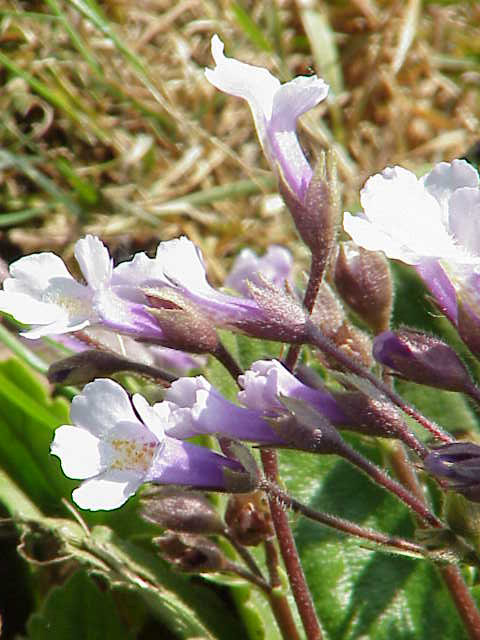
Gesneriaceae, the gesneriad family, is a family (biology), family of flowering plants consisting of about 152 genera and ca. 3,540 species in the tropics and subtropics of the Old World (almost all Didymocarpoideae) and the New World (most Gesnerioideae), with a very small number extending to temperate areas. Many species have colorful and showy flowers and are cultivated as ornamental plants. Etymology The family name is based on the genus ''Gesneria'', which honours Switzerland, Swiss naturalist and humanism, humanist Conrad Gessner. Description Most species are herbaceous plant, herbaceous perennial plant, perennials or subshrubs but a few are woody shrubs or small trees. The phyllotaxy is usually opposite and decussate, but leaves have a spiral or alternate arrangement in some groups. As with other members of the Lamiales the flowers have a (usually) zygomorphic corolla whose petals are fused into a tube and there is no one character that separates a gesneriad from any o ... [...More Info...] [...Related Items...] OR: [Wikipedia] [Google] [Baidu] [Amazon] |
Begonias
''Begonia'' is a genus of perennial flowering plants in the family Begoniaceae. The genus contains more than 2,000 different plant species. The Begonias are native to moist subtropical and tropical climates. Some species are commonly grown indoors as ornamental houseplants in cooler climates. In cooler climates some species are cultivated outside in summertime for their bright colorful flowers, which have petals but no sepals. Description With 2,002 species, ''Begonia'' is one of the largest genera of flowering plants. The species are terrestrial (sometimes epiphytic) herbs or undershrubs, and occur in subtropical and tropical moist climates, in South and Central America, Africa, and southern Asia. Terrestrial species in the wild are commonly upright- stemmed, rhizomatous, or tuberous. The plants are monoecious, with unisexual male and female flowers occurring separately on the same plant; the male contains numerous stamens, and the female has a large inferior ovary and ... [...More Info...] [...Related Items...] OR: [Wikipedia] [Google] [Baidu] [Amazon] |
Gingers
Ginger (''Zingiber officinale'') is a flowering plant whose rhizome, ginger root or ginger, is widely used as a spice and a folk medicine. It is an herbaceous perennial that grows annual pseudostems (false stems made of the rolled bases of leaves) about one meter tall, bearing narrow leaf blades. The inflorescences bear flowers having pale yellow petals with purple edges, and arise directly from the rhizome on separate shoots. Ginger is in the family Zingiberaceae, which also includes turmeric (''Curcuma longa''), cardamom (''Elettaria cardamomum''), and galangal. Ginger originated in Maritime Southeast Asia and was likely domesticated first by the Austronesian peoples. It was transported with them throughout the Indo-Pacific during the Austronesian expansion ( BP), reaching as far as Hawaii. Ginger is one of the first spices to have been exported from Asia, arriving in Europe with the spice trade, and was used by ancient Greeks and Romans. The distantly related dicots in ... [...More Info...] [...Related Items...] OR: [Wikipedia] [Google] [Baidu] [Amazon] |
Rattan
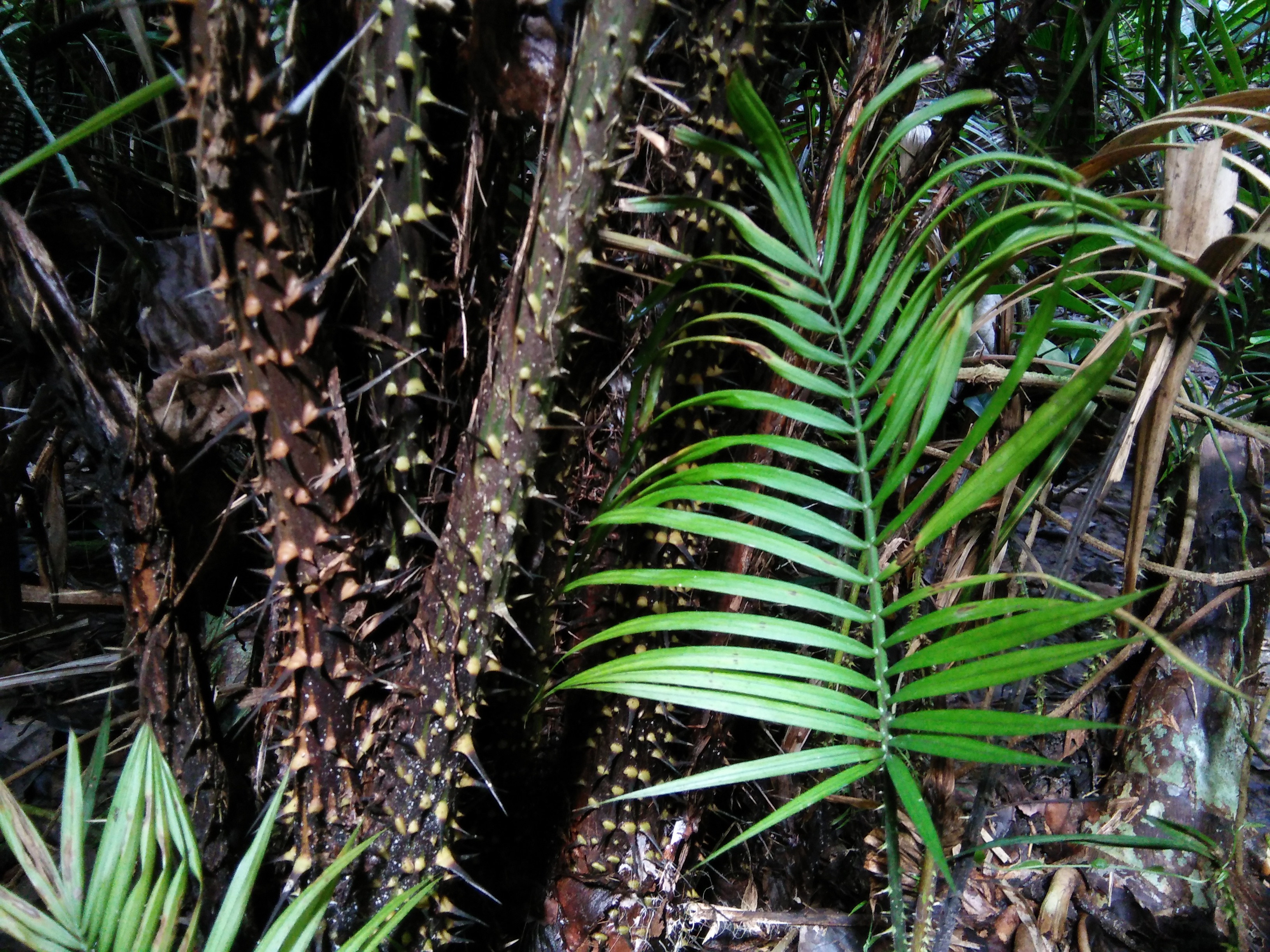
Rattan, also spelled ratan (from Malay language, Malay: ''rotan''), is the name for roughly 600 species of Old World climbing palms belonging to subfamily Calamoideae. The greatest diversity of rattan palm species and genera are in the closed-Canopy (biology), canopy Old-growth forest, old-growth tropical forests of Southeast Asia, though they can also be found in other parts of tropical Asia and Africa. Most rattan palms are ecologically considered lianas due to their climbing habits, unlike other palm species. A few species also have tree-like or shrub-like habits. Around 20% of rattan palm species are economically important and are traditionally used in Southeast Asia in producing wickerwork furniture, baskets, Walking stick, canes, woven mats, Rope, cordage, and other handicrafts. Rattan canes are one of the world's most valuable non-timber forest products. Some species of rattan also have edible scaly fruit and heart of palm. Despite increasing attempts in the last 30 y ... [...More Info...] [...Related Items...] OR: [Wikipedia] [Google] [Baidu] [Amazon] |
Sunda Shelf Mangroves
The Sunda Shelf mangroves ecoregion, in the mangrove biome, are on the coasts of the islands of Borneo and eastern Sumatra in Malaysia and Indonesia. They are home to the proboscis monkey. As well as being an important habitat for terrestrial and marine wildlife, mangroves preserve the shape of the coastline. Flora There are more plant species here than in most mangrove forests in the world, with five different types of mangrove dominating parts of the region as follows: ''Avicennia'' and ''Sonneratia'' species on the coast where water is saltiest and the tidal wash strongest; ''Rhizophoras'' and ''Bruguieras'' in the swampy areas just behind them; and ''Nypa fruticans'' palms in the freshwater streams further inland still.Wikramanayake, EricSunda Shelf Mangroves ''One Earth''. Accessed 19 March 2023. About 28 species of mangroves trees grow in the ecoregion, including ''Aegiceras corniculatum, Avicennia alba, Avicennia lanata, Avicennia marina, Avicennia officinalis, Bruguiera ... [...More Info...] [...Related Items...] OR: [Wikipedia] [Google] [Baidu] [Amazon] |
Borneo Montane Rain Forests
The Borneo montane rain forests is an ecoregion on the island of Borneo in Southeast Asia. It includes montane tropical and subtropical moist broadleaf forests, also known as a cloud forests. The ecoregion is partly in East Malaysia (Sabah and Sarawak states) and Indonesia (Kalimantan). Location and description This ecoregion consists of tropical mountain cloud forest and laurel forest above 1000 meters elevation in the mountains in the centre of Borneo. It covers portions of all three countries – Brunei, Malaysia, and Indonesia – which divide Borneo. These cooler and moister slopes rise above the carpet of thick rainforest that covers the warmer lowlands below, and as well as additional rainfall also derive moisture from low clouds. Soils are poorer and more acidic than the lowlands. Flora The isolated higher and cooler forests of the island are home to a rich and distinctive set of plants of both Asian and Australasian origin. There are especially large numbers of ''Nepe ... [...More Info...] [...Related Items...] OR: [Wikipedia] [Google] [Baidu] [Amazon] |