
Lancashire
Lancashire ( , ; abbreviated ''Lancs'') is a ceremonial county in North West England. It is bordered by Cumbria to the north, North Yorkshire and West Yorkshire to the east, Greater Manchester and Merseyside to the south, and the Irish Sea to the west. The largest settlement is the city of Preston.
The county has an area of and had an estimated population of in . Preston and Blackburn are near the centre of the county, Burnley is in the east, the seaside resort of Blackpool on the coast in the west, and the city of Lancaster in the north. For local government purposes the county comprises a non-metropolitan county, with twelve districts, and two unitary authority areas: Blackburn with Darwen and Blackpool. Lancashire County Council and the two unitary councils collaborate through the Lancashire Combined County Authority. The county historically included the Furness and Cartmel peninsulas of Cumbria, northern Greater Manchester and Merseyside, and Warri ...

Blackburn
Blackburn () is an industrial town and the administrative centre of the Blackburn with Darwen borough, in Lancashire, England. The town lies north of the West Pennine Moors on the southern edge of the Ribble Valley, east of Preston and north-north-west of Manchester. Blackburn is at the centre of the wider unitary authority area along with the town of Darwen. It is the second largest town in Lancashire, after Blackpool.
At the 2011 census, Blackburn had a population of 117,963, whilst the wider borough of Blackburn with Darwen had a population of 150,030; 30.8% of the population of town were people of ethnic backgrounds other than White British.
A former mill town, Blackburn has been the site of textile production since the mid-13th century, when wool was woven in people's houses in the domestic system. Flemish weavers who settled in the area in the 14th century helped to develop the woollen cottage industry.Burrow, J. & Co. (Eds.) (1960), p. 8. The most rapid p ...

Blackpool
Blackpool is a seaside town in Lancashire, England. It is located on the Irish Sea coast of the Fylde peninsula, approximately north of Liverpool and west of Preston. It is the main settlement in the borough of the same name.
Blackpool was originally a hamlet; it began to grow in the mid-eighteenth century, when sea bathing for health purposes became fashionable. Blackpool's beach was suitable for this activity and, by 1781, several hotels had been built. The opening of a railway station in 1846 allowed more visitors to reach the resort, which continued to grow for the remainder of the nineteenth century. In 1876, the town became a borough. Blackpool's development was closely tied to the Lancashire cotton-mill practice of annual factory maintenance shutdowns, known as Wakes Weeks, when many workers chose to visit the seaside. The town saw large growth during the late Victorian and Edwardian periods. By 1951, its population had reached 147,000.
In the late 20th century ...
-->
Central
Central is an adjective usually referring to being in the center of some place or (mathematical) object.
Central may also refer to:
Directions and generalised locations
* Central Africa, a region in the centre of Africa continent, also known as Middle Africa
* Central America, a region in the centre of America continent
* Central Asia, a region in the centre of Eurasian continent
* Central Australia, a region of the Australian continent
* Central Belt, an area in the centre of Scotland
* Central Europe, a region of the European continent
* Central London, the centre of London
* Central Region (other)
* Central United States, a region of the United States of America
Specific locations
Countries
* Central African Republic, a country in Africa
States and provinces
* Blue Nile (state) or Central, a state in Sudan
* Central Department, Paraguay
* Central Province (Kenya)
* Central Province (Papua New Guinea)
* Central Province (Solomon Islands)
* Central Provin ...
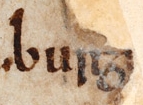
Borough
A borough is an administrative division in various English-speaking countries. In principle, the term ''borough'' designates a self-governing walled town, although in practice, official use of the term varies widely. A borough is usually smaller than a city.
History
In the Middle Ages, boroughs were settlements in England that were granted some self-government; burghs were the Scottish equivalent. In medieval England, boroughs were also entitled to elect members of parliament. The use of the word ''borough'' probably derives from the burghal system of Alfred the Great. Alfred set up a system of defensive strong points ( burhs); in order to maintain these particular settlements, he granted them a degree of autonomy. After the Norman Conquest, when certain towns were granted self-governance, the concept of the burh/borough seems to have been reused to mean a self-governing settlement.
The concept of the borough has been used repeatedly (and often differently) throughout ...

City
A city is a human settlement of a substantial size. The term "city" has different meanings around the world and in some places the settlement can be very small. Even where the term is limited to larger settlements, there is no universally agreed definition of the lower numerical boundary for their size. In a more specific sense, a city can be defined as a permanent and densely populated place with administratively defined boundaries whose members work primarily on non-agricultural tasks. Cities generally have extensive systems for housing, transportation, sanitation, utilities, land use, production of goods, and communication. Their density facilitates interaction between people, government organizations, and businesses, sometimes benefiting different parties in the process, such as improving the efficiency of goods and service distribution.
Historically, city dwellers have been a small proportion of humanity overall, but following two centuries of unprecedented and r ...