|
Lamka
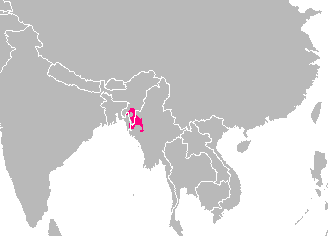
Churachandpur ( IPA: ''/tʃʊRVːˌtʃaːnɗpʊr/),'' locally known as Lamka is the second largest town in the Indian state of Manipur and the district headquarters of the Churachandpur district. The name "Churachandpur" was transferred from the earlier headquarters of the region at Songpi to the present location, and honours Churachand Singh, former maharaja of the Manipur princely state. The local people reject the name as a colonial imposition and prefer using the native name "Lamka". Churachandpur is not a statutory town and does not have a municipality. It is governed by the Autonomous District Council of the Churachandpur district. Name The name "Chura Chandpur" was originally given to the village of Songpi in 1921, where the British Raj administration had previously established a subdivision office. The name was coined in honour of Churachand Singh, the reigning maharaja of the Manipur princely state at that time. The Khuga river valley, the present site of C ... [...More Info...] [...Related Items...] OR: [Wikipedia] [Google] [Baidu] [Amazon] |
Churachandpur District
Churachandpur District (Meitei language, Meitei pronunciation: ''/tʃʊraːˌtʃaːnɗpʊr/''), is one of the 16 List of districts of Manipur, districts of the Indian state of Manipur populated mainly by Kuki-Zo people. The name honours former Maharaja Churachand Singh, Sir Churachand Singh of Manipur (princely state), Manipur. The district headquarters is located in the Churachandpur town, which is also locally known by the name Lamka. The Churachandpur district first came into being as the South-West Area hill subdivision of Manipur in 1919. It soon acquired the name "Churachandpur subdivision" based on its headquarters at Songpi, which was also called "Churachandpur". After the independence of India, it remained one of the eight subdivisions of Manipur. A "New Churachandpur" town was built at the present location to serve as its headquarters. In 1969, the subdivision was upgraded to a district, initially called "Manipur South" and later "Churachandpur district". In 2016, the ... [...More Info...] [...Related Items...] OR: [Wikipedia] [Google] [Baidu] [Amazon] |
Khuga River
Khuga River, also known as the Tuitha River, is a river in Manipur, India. It originates in the Churachandpur district and flows through the district for much of its course. It enters the Imphal Valley near Torbung, and flows east, joining the Manipur River near Ithai. The Khuga River valley in the Churachandpur district is thickly populated, with the Churachandpur town and numerous villages. Course The Khuga River originates in the southern part of the Churachandpur district, close to the border with Chin State (Myanmar), and flows north into the Imphal Valley south of Moirang. The upper course of the river is traditionally called "Tuitha" in Kuki-Chin languages. But the name is also applied to a south-flowing head stream of the river originating near Mount Mulam. British maps have noted this headstream as "Hilpi River". Another headstream flowing north from the southern borders joins this stream near Hiangtam Khul (), forming the Khuga River. The combined river flows due nor ... [...More Info...] [...Related Items...] OR: [Wikipedia] [Google] [Baidu] [Amazon] |
Songpi
Songpi, at one time called "Churachandpur", is a village in the Churachandpur district, Manipur, India. It served as the headquarters of one of the first hill subdivisions established under the British Raj in the 1920s, which also came to be called the "Churachandpur Subdivision". Later, the Songpi cum "Churachandpur" village served as the headquarters of the Christian missionary organisation, North-East India General Mission (NEIGM). After the British departure, a new headquarters was built at "New Churachandpur" 6 km to the east (which became the presen-day Churachandpur Town), and Songpi reverted to a regular village. The area around the old headquarters is called the Mission Compound and listed in the census as a separate village. Geography Songpi is 6 km west of the Churachandpur Town on the Tipaimukh Road ( National Highway 2). History During the Kuki Rebellion of 1917-1919, the chief of Songpi, Semthong Haokip, refrained from taking part in the rebellio ... [...More Info...] [...Related Items...] OR: [Wikipedia] [Google] [Baidu] [Amazon] |
Paite Language
Paite is a Sino-Tibetan language belonging to the northern sub-branch of Kuki-Chin branch. It is spoken by the Paite people in India and Tedim Chins in Myanmar. There are different Paite dialects; some notable Paite dialects are Bukpi, Lousau, Valpau, Dapzal, Tuichiap, Sukte, Dim, Lamzang and Sihzang. The language exhibits mutual intelligibility with the other languages of the region including Thadou, Hmar, Vaiphei, Simte, Kom, Gangte and other languages. Etymology The term ''Paithe'' originated in the Lushai Hills region. The Lushais used terms ''Pai'' or ''Poi'' to refer to central and southern Chin tribes, who tie their hair up. ''Paithe'' is said to be the plural of ''Pai''. The Paite themselves did not accept the term originally, but in 1948, the Paite National Council was formed to obtain the recognition of Paites as a Scheduled Tribe in India. Thus the term came to be accepted. ''Paite'' has also the meaning of "people on the move". Language This langu ... [...More Info...] [...Related Items...] OR: [Wikipedia] [Google] [Baidu] [Amazon] |
Kuki-Chin-Mizo Languages
The Kuki-Chin languages (also called Kukish or South-Central Tibeto-Burman languages) are a branch of the Sino-Tibetan language family spoken in northeastern India, western Myanmar and southeastern Bangladesh. Most notable Kuki-Chin-speaking ethnic groups are referred to collectively as the Zo people which includes the Mizo, Kuki, Chin and Zomi people. Kuki-Chin is alternatively called ''South-Central'' Trans-Himalayan (or ''South Central'' Tibeto-Burman) by Konnerth (2018), because of negative connotations of the term "Kuki-Chin" for many speakers of languages in this group. Kuki-Chin is sometimes placed under Kuki-Chin–Naga, a geographical rather than linguistic grouping. Geographical distribution * Northwestern ("Old Kuki"): Chandel district of Manipur, India; Tamu Township of Sagaing Region, Myanmar. * Northeastern ("Kuki-Zo"): Chandel district, Churachandpur district, Kangpokpi district, Noney district, Tamenglong district, and Tengnoupal districts of Manipu ... [...More Info...] [...Related Items...] OR: [Wikipedia] [Google] [Baidu] [Amazon] |
2023–2025 Manipur Violence
On 3 May 2023, ethnic violence erupted in India's Northeast India, north-eastern States and union territories of India, state of Manipur between the Meitei people, a majority that lives in the Imphal Valley, and the Kuki people, Kuki-Zo tribal community from the surrounding hills. According to government figures, as of 22 November 2024, 258 people have been killed in the violence and 60,000 people have been displaced.90 more CAPF troops to be deployed in Manipur; total death toll of ethnic violence at 258: State security advisor The New Indian Express, 22 November 2024. [...More Info...] [...Related Items...] OR: [Wikipedia] [Google] [Baidu] [Amazon] |
Kuki-Chin Languages
The Kuki-Chin languages (also called Kukish or South-Central Tibeto-Burman languages) are a branch of the Sino-Tibetan language family spoken in northeastern India, western Myanmar and southeastern Bangladesh. Most notable Kuki-Chin-speaking ethnic groups are referred to collectively as the Zo people which includes the Mizo, Kuki, Chin and Zomi people. Kuki-Chin is alternatively called ''South-Central'' Trans-Himalayan (or ''South Central'' Tibeto-Burman) by Konnerth (2018), because of negative connotations of the term "Kuki-Chin" for many speakers of languages in this group. Kuki-Chin is sometimes placed under Kuki-Chin–Naga, a geographical rather than linguistic grouping. Geographical distribution * Northwestern ("Old Kuki"): Chandel district of Manipur, India; Tamu Township of Sagaing Region, Myanmar. * Northeastern ("Kuki-Zo"): Chandel district, Churachandpur district, Kangpokpi district, Noney district, Tamenglong district, and Tengnoupal districts of Manipu ... [...More Info...] [...Related Items...] OR: [Wikipedia] [Google] [Baidu] [Amazon] |
Kuki-Zo People
The Kuki people, or Kuki-Zo people,Rakhi BoseIn Tense Manipur, Sub-Categorisation And 'Creamy Layer' Could Open A Pandora's Box Outlook, 11 September 2024. uoting general secretary of the Committee on Tribal Unity (COTU), Kangpokpi''At present, all tribal communities in Manipur (other than the Nagas) are united and organised under the banner of Kuki-Zo, and we want separate administration for our regions in Kangpokpi, Churachandpur and Tengnoupal.” are an ethnic group in the Northeastern Indian states of Manipur, Nagaland, Assam, Meghalaya, Tripura and Mizoram, as well as the neighbouring countries of Bangladesh and Myanmar. The Kukis form one of the largest hill tribe communities in this region. In Northeast India, they are present in all states except Arunachal Pradesh. The Chin people of Myanmar and the Mizo people of Mizoram are kindred tribes of the Kukis. Collectively, they are termed the Zo people. Some fifty tribes of Kuki peoples in India are recognised as schedu ... [...More Info...] [...Related Items...] OR: [Wikipedia] [Google] [Baidu] [Amazon] |
Tedim Road
Tedim (, , ( Zo: ''Tedim Khuapi'', pronounced ; is a town and the administrative seat of Tedim Township in Chin State, Myanmar. It is the second largest town in Chin State, after Hakha (the capital city of Chin State). The town's four major boroughs (''veng'') are: Sakollam, Myoma, Lawibual and Leilum. History The name "Tedim" was derived from a pool in the hills that used to twinkle in the sunlight. Therefore it was called ''te-dim'' (twinkling, shiny) in the local Tedim language (which is also called "Tedim pau"). As the Zomi lacked a formal writing system in the past, the story of Tedim mostly depends on oral tradition. Establishment of Tedim is ascribed to Gui Mang II, a powerful prince from the then ruling Guite family in the region (c. 1600). However, due to the untimely death of Gui Lun (the fifth generation from Gui Mang II), Tedim was deserted for two generations. By the time of Pum Go, Tedim was reestablished as the political base of the Guite family. At the time of ... [...More Info...] [...Related Items...] OR: [Wikipedia] [Google] [Baidu] [Amazon] |
Manipur
Manipur () is a state in northeastern India with Imphal as its capital. It borders the Indian states of Assam to the west, Mizoram to the south, and Nagaland to the north and shares the international border with Myanmar, specifically the Sagaing Region to the east and Chin State to the southeast. Covering an area of 22,330 square kilometers (8,621 mi²), the state consists mostly of hilly terrain with the 1813-square-kilometre (700 mi²) Imphal Valley inhabited by the Meitei (Manipuri) community, historically a kingdom. Surrounding hills are home to Naga and Kuki-Zo communities, who speak Tibeto-Burman languages. The official language and lingua franca, Meitei (Manipuri), also belongs to the Tibeto-Burman family. During the days of the British Raj, Manipur was one of the princely states. Prior to the British departure in 1947, Manipur acceded to the Dominion of India, along with roughly 550 other princely states. In September 1949, the ruler of Manipur signed ... [...More Info...] [...Related Items...] OR: [Wikipedia] [Google] [Baidu] [Amazon] |
Churachand Singh
Maharaja Sir Churachand Singh , also known as Churachandra or Chura Chand (1886–1941), was a ruler of the princely state of Manipur under the British Raj. He was a great-grandson of Raja Nara Singh who had ruled up to 1850 prior to Raja Chandrakirti. Churachand Singh's investiture followed the quelling of the Manipur Rebellion of 1891, when the entire ruling family was convicted. Churachand Singh enjoyed a long reign till 1941, but his power was nominal. Investiture After quelling the Manipur Rebellion of 1891, the British imprisoned Raja Kulachandra Singh and took full control of Manipur, but eventually decided to "regrant" it to Manipuris as an "act of mercy". Churachand Singh, who was the youngest son of Chowbi Yaima, in turn a grandson of Raja Nara Singh, was selected to be the next Raja. The investiture ceremony took place on 28 April 1892. Churachand Singh was five years at that time. During his minority, the British Political Agent to Manipur acted as the Su ... [...More Info...] [...Related Items...] OR: [Wikipedia] [Google] [Baidu] [Amazon] |
Tehsil
A tehsil (, also known as tahsil, taluk, or taluka () is a local unit of administrative division in India and Pakistan. It is a subdistrict of the area within a Zila (country subdivision), district including the designated populated place that serves as its administrative centre, with possible additional towns, and usually a number of village#South Asia, villages. The terms in India have replaced earlier terms, such as ''pargana'' (''pergunnah'') and ''thana''. In List of mandals in Andhra Pradesh, Andhra Pradesh and List of mandals in Telangana, Telangana, a newer unit called mandal (circle) has come to replace the tehsil system. A mandal is generally smaller than a tehsil, and is meant for facilitating local self-government in the panchayati raj in India, panchayat system. In West Bengal, Bihar, Jharkhand, community development blocks (CDBs) are the empowered grassroots administrative unit, replacing tehsils. Tehsil office is primarily tasked with land revenue administration, be ... [...More Info...] [...Related Items...] OR: [Wikipedia] [Google] [Baidu] [Amazon] |