|
Elma Campbell
Wilhelmina Allison Campbell (14 January 1901 – 28 February 1983) was a Scottish nationalist activist. Biography Born in the Cathcart area of Glasgow, Campbell attended the University of Glasgow, where she became active in the Conservative Party and was a champion debater. On graduating, she became a teacher and increasingly interested in Scottish nationalism, becoming a founder member of the National Party of Scotland The National Party of Scotland (NPS) was a centre-left political party in Scotland which was one of the predecessors of the current Scottish National Party (SNP). The NPS was the first Scottish nationalist political party, and the first which ... in 1928.''The Biographical Dictionary of Scottish Women'', pp.65-66 Campbell rapidly became the most prominent women in the NPS, jointly convening its Women's Section and sitting on the National Council and various committees, while also becoming one of its best-known public speakers. The only woman to stan ... [...More Info...] [...Related Items...] OR: [Wikipedia] [Google] [Baidu] [Amazon] |
Tom Gibson (Scottish Politician)
Thomas Hill Gibson (22 September 1893 – 23 April 1975) was a Scottish nationalist political activist. Born in Glasgow, Gibson became a supporter of home rule for Scotland through his membership of the Young Scots' Society, an affiliate of the Liberal Party. He fought in World War I, and on his return, joined the Scottish Home Rule Association. He left the group in 1924 in opposition to its support of John Maclean, and instead joined the Scots National League. He quickly became the group's leading figure, and ensured that it became the core of the National Party of Scotland, which he founded in 1928.Gibson, Thomas Hill , '' Oxford Dictionary of National Biography ...
[...More Info...] [...Related Items...] OR: [Wikipedia] [Google] [Baidu] [Amazon] |
National Party Of Scotland
The National Party of Scotland (NPS) was a centre-left political party in Scotland which was one of the predecessors of the current Scottish National Party (SNP). The NPS was the first Scottish nationalist political party, and the first which campaigned for Scottish self-determination. The National Party of Scotland was founded in 1928 by the amalgamation of the Scots National League (SNL), the Scottish National Movement (SNM) and the Glasgow University Scottish Nationalist Association (GUSNA). The NPS emerged from the consensus among members of these groups, and the Scottish Home Rule Association, that an independent political party, free of any connections to any existing parties, was the best way forward for achieving Scottish Home Rule. The NPS contested the 1929 and 1931 United Kingdom general elections, and a number of by-elections. In 1934 the NPS merged with the Scottish Party to form the Scottish National Party (SNP). Origins and history The NPS was formed in 1 ... [...More Info...] [...Related Items...] OR: [Wikipedia] [Google] [Baidu] [Amazon] |
Cathcart
Cathcart (; , ) is an area of between , Mount Florida, King's Park, Muirend and . The [...More Info...] [...Related Items...] OR: [Wikipedia] [Google] [Baidu] [Amazon] |
Glasgow
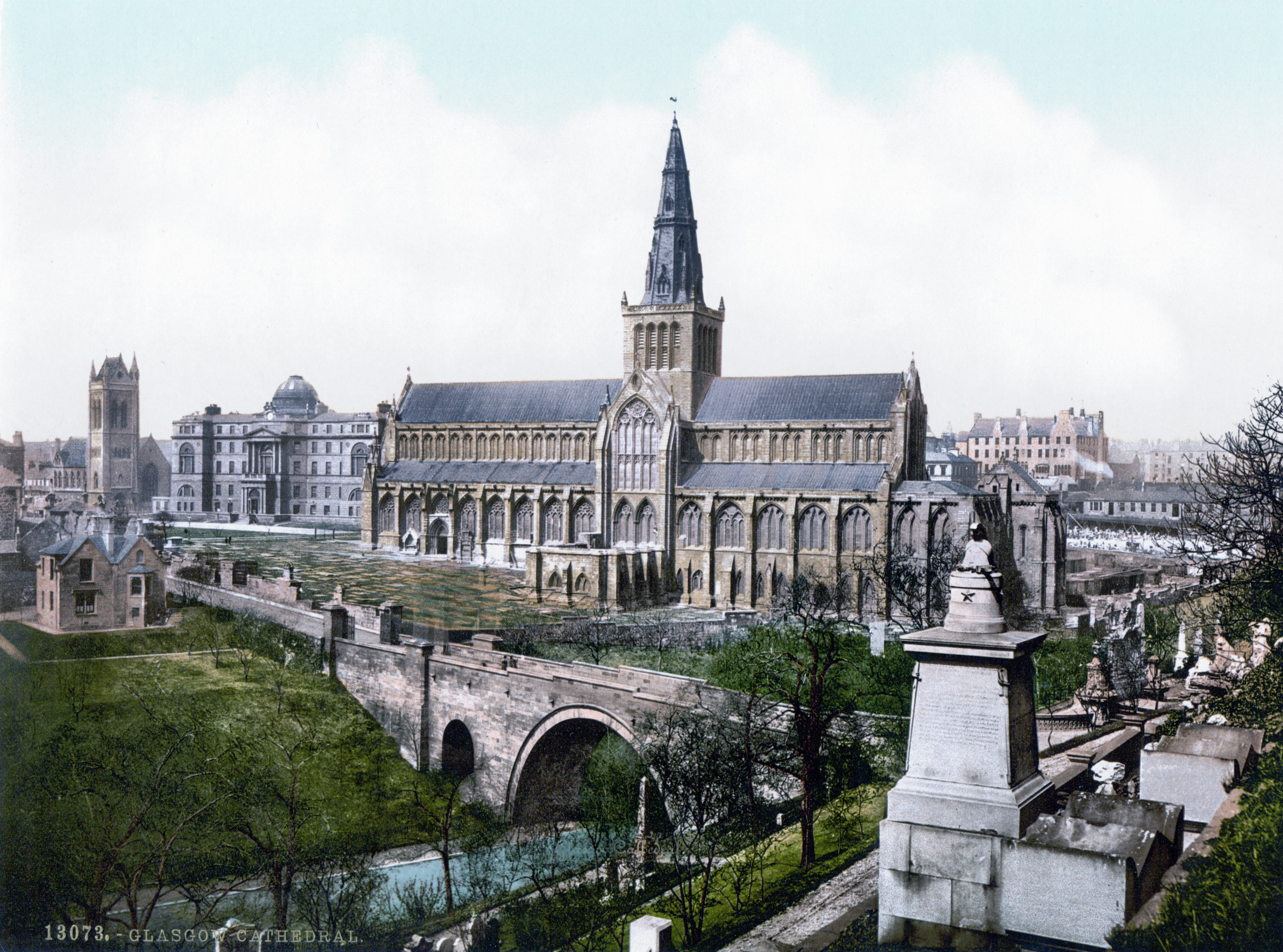
Glasgow is the Cities of Scotland, most populous city in Scotland, located on the banks of the River Clyde in Strathclyde, west central Scotland. It is the List of cities in the United Kingdom, third-most-populous city in the United Kingdom and the 27th-most-populous city in Europe, and comprises Wards of Glasgow, 23 wards which represent the areas of the city within Glasgow City Council. Glasgow is a leading city in Scotland for finance, shopping, industry, culture and fashion, and was commonly referred to as the "second city of the British Empire" for much of the Victorian era, Victorian and Edwardian eras. In , it had an estimated population as a defined locality of . More than 1,000,000 people live in the Greater Glasgow contiguous urban area, while the wider Glasgow City Region is home to more than 1,800,000 people (its defined functional urban area total was almost the same in 2020), around a third of Scotland's population. The city has a population density of 3,562 p ... [...More Info...] [...Related Items...] OR: [Wikipedia] [Google] [Baidu] [Amazon] |
Scottish Nationalist
Scottish nationalism promotes the idea that the Scottish people form a cohesive nation and national identity. Scottish nationalism began to shape from 1853 with the National Association for the Vindication of Scottish Rights, progressing into the Scottish National Movement in the 1920s maturing by the 1970s and achieved its present ideological maturity in the 1980s and 1990s.(source? The reference is from 1971 so no information about most of 70’s and 80’s and 90’s) The nation's origin, political context and unique characteristics including the Gaelic language, poetry and film maintains an individual's distinct identification and support of Scotland. Origins Scottish nationalism, the concept of Scotland as an individual nation state became prominent within Scotland in the Middle Ages. During the Anglo-Scottish Wars, the campaign led by Scotland was to obtain Scottish independence as a separate sovereign state. The campaign was successful, and following the Declaration ... [...More Info...] [...Related Items...] OR: [Wikipedia] [Google] [Baidu] [Amazon] |
University Of Glasgow
The University of Glasgow (abbreviated as ''Glas.'' in Post-nominal letters, post-nominals; ) is a Public university, public research university in Glasgow, Scotland. Founded by papal bull in , it is the List of oldest universities in continuous operation, fourth-oldest university in the English-speaking world and one of Scotland's four Ancient universities of Scotland, ancient universities. Along with the universities of University of St Andrews, St Andrews, University of Aberdeen, Aberdeen, and University of Edinburgh, Edinburgh, the university was part of the Scottish Enlightenment during the 18th century. Glasgow is the List of universities in Scotland, second largest university in Scotland by total enrolment and -largest in the United Kingdom. In common with universities of the pre-modern era, Glasgow originally educated students primarily from wealthy backgrounds; however, it became a pioneer in British higher education in the 19th century by also providing for the needs o ... [...More Info...] [...Related Items...] OR: [Wikipedia] [Google] [Baidu] [Amazon] |
Conservative Party (UK)
The Conservative and Unionist Party, commonly the Conservative Party and colloquially known as the Tories, is one of the two main political parties in the United Kingdom, along with the Labour Party (UK), Labour Party. The party sits on the Centre-right politics, centre-right to Right-wing politics, right-wing of the Left–right political spectrum, left-right political spectrum. Following its defeat by Labour at the 2024 United Kingdom general election, 2024 general election it is currently the second-largest party by the number of votes cast and number of seats in the House of Commons of the United Kingdom, House of Commons; as such it has the formal parliamentary role of His Majesty's Most Loyal Opposition. It encompasses various ideological factions including One-nation conservatism, one-nation conservatives, Thatcherism, Thatcherites and Traditionalist conservatism, traditionalist conservatives. There have been 20 Conservative Prime Minister of the United Kingdom, prime minis ... [...More Info...] [...Related Items...] OR: [Wikipedia] [Google] [Baidu] [Amazon] |
1931 Glasgow St Rollox By-election
The 1931 Glasgow St Rollox by-election was held on 7 May 1931 due to the death of the incumbent Labour MP, James Stewart James Maitland Stewart (May 20, 1908 – July 2, 1997) was an American actor and military aviator. Known for his distinctive drawl and everyman screen persona, Stewart's film career spanned 80 films from 1935 to 1991. With the strong morali .... It was retained by the Labour candidate William Leonard. References Glasgow St Rollox by-election Glasgow St Rollox by-election 1930s elections in Scotland 1930s in Glasgow Glasgow St Rollox by-election St Rollox, 1931 {{Glasgow-stub ... [...More Info...] [...Related Items...] OR: [Wikipedia] [Google] [Baidu] [Amazon] |
Glasgow St Rollox (UK Parliament Constituency)
Glasgow St. Rollox was a burgh constituency represented in the House of Commons of the Parliament of the United Kingdom from 1885 until 1950. It elected one Member of Parliament (MP) using the first-past-the-post voting system. The constituency covered Glasgow's Cowcaddens and Woodside wards. In 1950, the constituency was extended to include North Kelvin ward, and the name was changed to Glasgow Woodside. It is referenced in Franz Ferdinand's song "The Fallen" as an area where the protagonist of the story spends much of his time. Boundaries The Redistribution of Seats Act 1885 provided that the constituency was to consist of the Fifth Municipal Ward, and the Third Municipal Ward, except so much as is comprised in the Camlachie Division.Redistribution of Seats Act 1885, Sixth Schedule In 1918 the constituency consisted of "That portion of the city which is bounded by a line commencing at a point at the intersection of Springburn Road and Parliamentary Road, thence ... [...More Info...] [...Related Items...] OR: [Wikipedia] [Google] [Baidu] [Amazon] |
1931 United Kingdom General Election
The 1931 United Kingdom general election was held on Tuesday, 27 October 1931. It saw a landslide election victory for the National Government, a three-party coalition which had been formed two months previously after the collapse of the second Labour government. Journalist Ivor Bulmer-Thomas described the result as "the most astonishing in the history of the British party system". Unable to secure support from his cabinet for his preferred policy responses to the economic and social crises brought about by the Great Depression, Prime Minister Ramsay MacDonald split from the Labour Party and formed a new national government in coalition with the Conservative Party and a number of Liberals. MacDonald subsequently campaigned for a "Doctor's Mandate" to do whatever was necessary to fix the economy, running as the leader of a new party called National Labour within the coalition. Disagreement over whether to join the new government also resulted in the Liberal Party splittin ... [...More Info...] [...Related Items...] OR: [Wikipedia] [Google] [Baidu] [Amazon] |
Scots Independent
''The Scots Independent'' is a monthly Scottish political newspaper that is in favour of Scottish independence. It was formed in 1926 with William Gillies as editor, by the Scots National League (SNL) and switched its allegiance to the National Party of Scotland (NPS) when the SNL joined with them in 1928. When the NPS merged with the Scottish Party in 1934 to form the Scottish National Party (SNP) they switched to supporting them. The paper is still today largely pro-SNP. Editors of the paper have included Arthur Donaldson, Robert McIntyre, Tom H. Gibson, John L. Kinloch, Alastair Macdonald, Michael Grieve, Albert D. Mackie, David Murison, Douglas Stewart, Alwyn James, Colin Bell, W. Kenneth Fee and James and Jennifer Taggart. See also *List of newspapers in Scotland This is a list of newspapers in Scotland. Daily newspapers : Traditionally newspapers could be divided into 'quality', serious-minded newspapers (usually referred to as 'broadsheets' due to their larg ... [...More Info...] [...Related Items...] OR: [Wikipedia] [Google] [Baidu] [Amazon] |
1901 Births
December 13 of this year is the beginning of signed 32-bit computing, 32-bit Unix time, and is scheduled to end in Year 2038 problem, January 19, 2038. Summary Political and military 1901 started with the Federation of Australia, unification of multiple Crown colony, British colonies in Australia on January 1 to form the Australia, Commonwealth of Australia after a 1898–1900 Australian constitutional referendums, referendum in 1900, Subsequently, the 1901 Australian federal election, 1901 Australian election would see the first Prime Minister of Australia, Australian prime minister, Edmund Barton. On the same day, Nigeria became a Colonial Nigeria, British protectorate. Following this, the Victorian era, Victorian Era would come to a end after Queen Victoria died on January 22 after a reign of 63 years and 216 days, which was List of monarchs in Britain by length of reign, longer than those of any of her predecessors, Her son, Edward VII, succeeded her to the throne. ... [...More Info...] [...Related Items...] OR: [Wikipedia] [Google] [Baidu] [Amazon] |