|
Aslan Pasha Mosque
The Aslan Pasha Mosque () is an Ottoman Empire, Ottoman-built mosque in the city of Ioannina, Greece. The mosque was built in 1618 in the Ioannina Castle, city's castle, replacing the Church of Saint John, which was torn down after the failed anti-Ottoman revolt of 1611 led by Dionysius the Philosopher. Since 1933 it houses the Municipal Ethnographic Museum of Ioannina. A Mediterranean tropical-like cyclone#, Mediterranean Sea tropical-like cyclone damaged the minaret on the top of the mosque in September 2018, with restoration processes taking place in August 2019. See also * Islam in Greece * List of former mosques in Greece * List of mosques in Greece References Ottoman architecture in Ioannina Mosques completed in the 1610s Religious buildings and structures completed in 1618 17th-century mosques in the Ottoman Empire Former mosques in Greece Ottoman mosques in Greece 1618 establishments in the Ottoman Empire 17th-century architecture in Greece {{Greece-struct- ... [...More Info...] [...Related Items...] OR: [Wikipedia] [Google] [Baidu] [Amazon] |
Islam
Islam is an Abrahamic religions, Abrahamic monotheistic religion based on the Quran, and the teachings of Muhammad. Adherents of Islam are called Muslims, who are estimated to number Islam by country, 2 billion worldwide and are the world's Major religious groups, second-largest religious population after Christians. Muslims believe that Islam is the complete and universal version of a Fitra, primordial faith that was revealed many times through earlier Prophets and messengers in Islam, prophets and messengers, including Adam in Islam, Adam, Noah in Islam, Noah, Abraham in Islam, Abraham, Moses in Islam, Moses, and Jesus in Islam, Jesus. Muslims consider the Quran to be the verbatim word of God in Islam, God and the unaltered, final revelation. Alongside the Quran, Muslims also believe in previous Islamic holy books, revelations, such as the Torah in Islam, Tawrat (the Torah), the Zabur (Psalms), and the Gospel in Islam, Injil (Gospel). They believe that Muhammad in Islam ... [...More Info...] [...Related Items...] OR: [Wikipedia] [Google] [Baidu] [Amazon] |
List Of Former Mosques In Greece
This is a list of former mosques in Greece. It lists former mosques (, , ) and places of worship for Muslims in Greece. It lists some, but by no means all, of the old historical mosques of Greece. The term former mosque in this list includes any Muslim mosque (building) or site used for Islamic prayer (Salah) in Greece, but is no longer. For currently open, functioning mosques in Greece, see List of mosques in Greece. Mosques have existed within the modern Greece borders since the era of the Emirate of Crete (824-961). But no mosques of the Emirate remain as they were torn down and remaining Muslims were either killed, enslaved or converted to Christianity after the Byzantine reconquest of Crete (961). Therefore, currently the oldest mosque in Greece and the entire Balkan peninsula is believed to be the Çelebi Sultan Mehmed Mosque, the first in Didymoteicho (Western Thrace), built between 1389 and 1402. Most of the listed former mosques date from the late 14th century to the e ... [...More Info...] [...Related Items...] OR: [Wikipedia] [Google] [Baidu] [Amazon] |
Ottoman Mosques In Greece
Ottoman may refer to: * Osman I, historically known in English as "Ottoman I", founder of the Ottoman Empire * Osman II, historically known in English as "Ottoman II" * Ottoman Empire 1299–1922 ** Ottoman dynasty, ruling family of the Ottoman Empire *** Osmanoğlu family, modern members of the family * Ottoman Caliphate 1517–1924 * Ottoman Turks, a Turkic ethnic group * Ottoman architecture * Ottoman bed, a type of storage bed * Ottoman (furniture), padded stool or footstool * Ottoman (textile), fabric with a pronounced ribbed or corded effect, often made of silk or a mixture See also * Ottoman Turkish (other) * Osman (other) * Usman (other) * Uthman (name), the male Arabic given name from which the name and word Ottoman is derived from * Otto Mann The American animated television series ''The Simpsons'' contains a wide range of minor and supporting characters like co-workers, teachers, students, family friends, extended relatives, townspeople, l ... [...More Info...] [...Related Items...] OR: [Wikipedia] [Google] [Baidu] [Amazon] |
Former Mosques In Greece
A former is an object, such as a template, gauge or cutting die, which is used to form something such as a boat's hull. Typically, a former gives shape to a structure that may have complex curvature. A former may become an integral part of the finished structure, as in an aircraft fuselage, or it may be removable, being used in the construction process and then discarded or re-used. Aircraft formers Formers are used in the construction of aircraft fuselage, of which a typical fuselage has a series from the nose cone to the empennage, typically perpendicular to the longitudinal axis of the aircraft. The primary purpose of formers is to establish the shape of the fuselage and reduce the column length of stringers to prevent instability. Formers are typically attached to longerons, which support the skin of the aircraft. The "former-and-longeron" technique (also called stations and stringers) was adopted from boat construction, and was typical of light aircraft built until th ... [...More Info...] [...Related Items...] OR: [Wikipedia] [Google] [Baidu] [Amazon] |
17th-century Mosques In The Ottoman Empire
The 17th century lasted from January 1, 1601 (represented by the Roman numerals MDCI), to December 31, 1700 (MDCC). It falls into the early modern period of Europe and in that continent (whose impact on the world was increasing) was characterized by the Baroque cultural movement, the latter part of the Spanish Golden Age, the Dutch Golden Age, the French ''Grand Siècle'' dominated by Louis XIV, the Scientific Revolution, the world's first public company and megacorporation known as the Dutch East India Company, and according to some historians, the General Crisis. From the mid-17th century, European politics were increasingly dominated by the Kingdom of France of Louis XIV, where royal power was solidified domestically in the civil war of the Fronde. The semi-feudal territorial French nobility was weakened and subjugated to the power of an absolute monarchy through the reinvention of the Palace of Versailles from a hunting lodge to a gilded prison, in which a greatly expanded r ... [...More Info...] [...Related Items...] OR: [Wikipedia] [Google] [Baidu] [Amazon] |
Religious Buildings And Structures Completed In 1618
Religion is a range of social-cultural systems, including designated behaviors and practices, morals, beliefs, worldviews, texts, sanctified places, prophecies, ethics, or organizations, that generally relate humanity to supernatural, transcendental, and spiritual elements—although there is no scholarly consensus over what precisely constitutes a religion. It is an essentially contested concept. Different religions may or may not contain various elements ranging from the divine, sacredness, faith,Tillich, P. (1957) ''Dynamics of faith''. Harper Perennial; (p. 1). and a supernatural being or beings. The origin of religious belief is an open question, with possible explanations including awareness of individual death, a sense of community, and dreams. Religions have sacred histories, narratives, and mythologies, preserved in oral traditions, sacred texts, symbols, and holy places, that may attempt to explain the origin of life, the universe, and other phenomena. Religious pra ... [...More Info...] [...Related Items...] OR: [Wikipedia] [Google] [Baidu] [Amazon] |
Mosques Completed In The 1610s
A mosque ( ), also called a masjid ( ), is a place of worship for Muslims. The term usually refers to a covered building, but can be any place where Islamic prayers are performed; such as an outdoor courtyard. Originally, mosques were simple places of prayer for the early Muslims, and may have been open spaces rather than elaborate buildings. In the first stage of Islamic architecture (650–750 CE), early mosques comprised open and closed covered spaces enclosed by walls, often with minarets, from which the Islamic call to prayer was issued on a daily basis. It is typical of mosque buildings to have a special ornamental niche (a ''mihrab'') set into the wall in the direction of the city of Mecca (the ''qibla''), which Muslims must face during prayer, as well as a facility for ritual cleansing (''wudu''). The pulpit ('' minbar''), from which public sermons (''khutbah'') are delivered on the event of Friday prayer, was, in earlier times, characteristic of the central city mosque ... [...More Info...] [...Related Items...] OR: [Wikipedia] [Google] [Baidu] [Amazon] |
Ottoman Architecture In Ioannina
Ottoman may refer to: * Osman I, historically known in English as "Ottoman I", founder of the Ottoman Empire * Osman II, historically known in English as "Ottoman II" * Ottoman Empire 1299–1922 ** Ottoman dynasty, ruling family of the Ottoman Empire *** Osmanoğlu family, modern members of the family * Ottoman Caliphate 1517–1924 * Ottoman Turks, a Turkic ethnic group * Ottoman architecture * Ottoman bed, a type of storage bed * Ottoman (furniture), padded stool or footstool * Ottoman (textile), fabric with a pronounced ribbed or corded effect, often made of silk or a mixture See also * Ottoman Turkish (other) * Osman (other) * Usman (other) * Uthman (name) Uthman (), also spelled Othman, is a male Arabic name#Ism, Arabic given name with the literal meaning of a young bustard, Snake, serpent, or dragon. It is popular as a male given name among Muslims. It is also transliterated as Osman (name), Osma ..., the male Arabic given name from which the n ... [...More Info...] [...Related Items...] OR: [Wikipedia] [Google] [Baidu] [Amazon] |
List Of Mosques In Greece
A list is a set of discrete items of information collected and set forth in some format for utility, entertainment, or other purposes. A list may be memorialized in any number of ways, including existing only in the mind of the list-maker, but lists are frequently written down on paper, or maintained electronically. Lists are "most frequently a tool", and "one does not ''read'' but only ''uses'' a list: one looks up the relevant information in it, but usually does not need to deal with it as a whole".Lucie Doležalová,The Potential and Limitations of Studying Lists, in Lucie Doležalová, ed., ''The Charm of a List: From the Sumerians to Computerised Data Processing'' (2009). Purpose It has been observed that, with a few exceptions, "the scholarship on lists remains fragmented". David Wallechinsky, a co-author of ''The Book of Lists'', described the attraction of lists as being "because we live in an era of overstimulation, especially in terms of information, and lists help us ... [...More Info...] [...Related Items...] OR: [Wikipedia] [Google] [Baidu] [Amazon] |
Islam In Greece
Islam in Greece is represented by two distinct communities; Muslims that have lived in Greece since the times of the Ottoman Empire (primarily in East Macedonia and Thrace) and Muslim immigrants that began arriving in the last quarter of the 20th century, mainly in Athens and Thessaloniki. Today, Muslims in Greece are mainly immigrants from West Asia (Syria, Iraq, Iran, Palestine), other Balkan regions ( Türkiye, Albania), South Asia (Afghanistan, Pakistan), and North Africa (Morocco, Algeria, Libya, Egypt). Local Muslims in Greece The Muslim population in Greece is not homogeneous, since it consists of different ethnic, linguistic, and social backgrounds which often overlap. The Muslim faith is the creed of several ethnic groups living in the present territory of Greece, namely the Pomaks, ethnic Turks, certain Romani groups, and Greek Muslims particularly of Crete, Epirus, and western Greek Macedonia who converted mainly in the 17th and 18th centuries. The country's ... [...More Info...] [...Related Items...] OR: [Wikipedia] [Google] [Baidu] [Amazon] |
Mosque
A mosque ( ), also called a masjid ( ), is a place of worship for Muslims. The term usually refers to a covered building, but can be any place where Salah, Islamic prayers are performed; such as an outdoor courtyard. Originally, mosques were simple places of prayer for the early Muslims, and may have been open spaces rather than elaborate buildings. In the first stage of Islamic architecture (650–750 CE), early mosques comprised open and closed covered spaces enclosed by walls, often with minarets, from which the Adhan, Islamic call to prayer was issued on a daily basis. It is typical of mosque buildings to have a special ornamental niche (a ''mihrab'') set into the wall in the direction of the city of Mecca (the ''qibla''), which Muslims must face during prayer, as well as a facility for ritual cleansing (''wudu''). The pulpit (''minbar''), from which public sermons (''khutbah'') are delivered on the event of Friday prayer, was, in earlier times, characteristic of the central ... [...More Info...] [...Related Items...] OR: [Wikipedia] [Google] [Baidu] [Amazon] |
Minaret
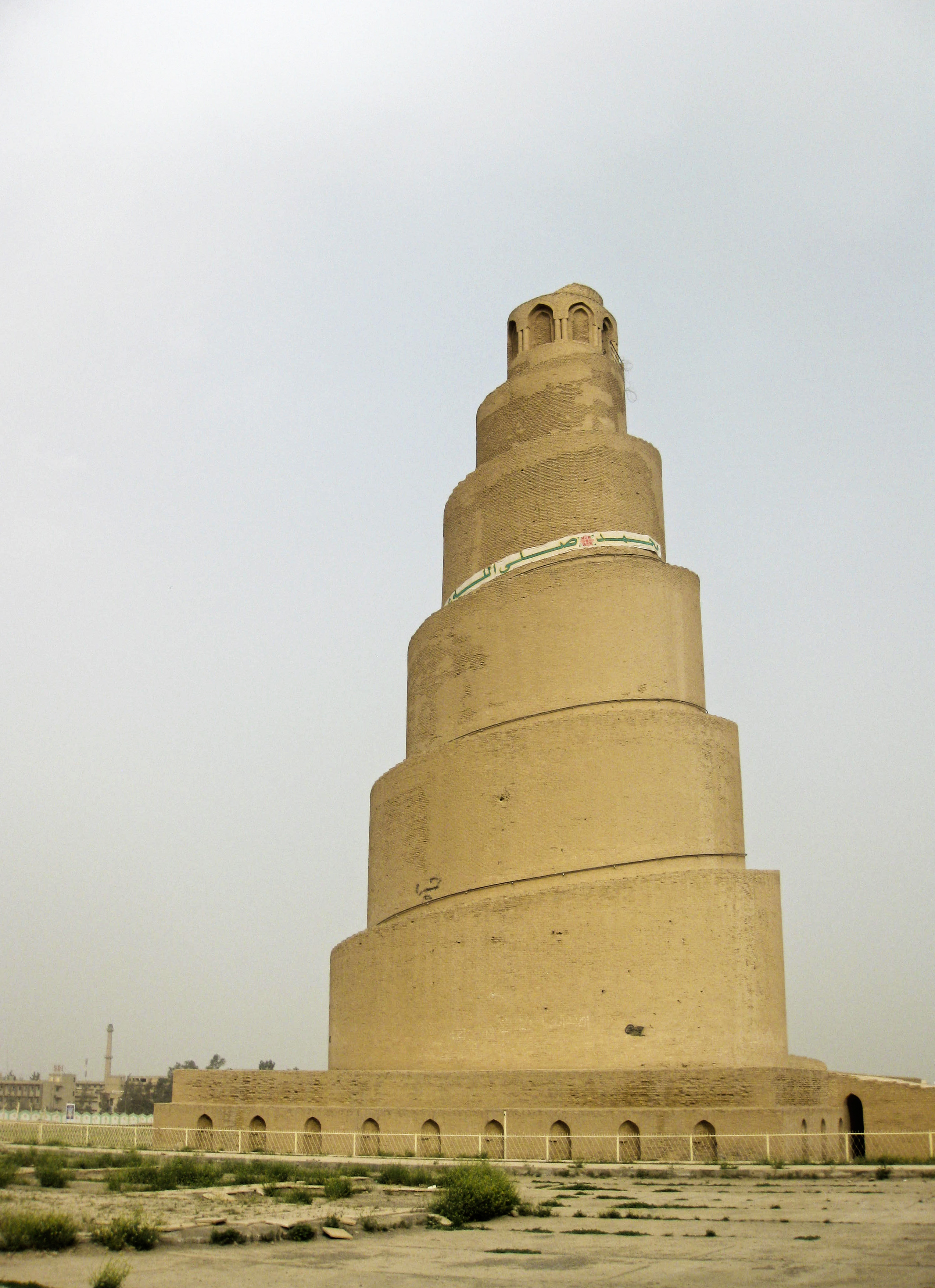
A minaret is a type of tower typically built into or adjacent to mosques. Minarets are generally used to project the Muslim call to prayer (''adhan'') from a muezzin, but they also served as landmarks and symbols of Islam's presence. They can have a variety of forms, from thick, squat towers to soaring, pencil-thin spires. Etymology Two Arabic words are used to denote the minaret tower: ''manāra'' and ''manār''. The English word "minaret" originates from the former, via the Turkish language, Turkish version (). The Arabic word ''manāra'' (plural: ''manārāt'') originally meant a "lamp stand", a cognate of Hebrew language, Hebrew ''Temple menorah, menorah''. It is assumed to be a derivation of an older Linguistic reconstruction, reconstructed form, ''manwara''. The other word, ''manār'' (plural: ''manā'ir'' or ''manāyir''), means "a place of light". Both words derive from the Arabic root ''n-w-r'', which has a meaning related to "light". Both words also had other meani ... [...More Info...] [...Related Items...] OR: [Wikipedia] [Google] [Baidu] [Amazon] |