|
Abdullah Bin Ali Al Rashid
Abdullah bin Ali Al Rashid (; 1788–1848) was the founder of the Emirate of Jabal Shammar. He founded the Emirate in 1836 and ruled it until 1848. He was called Sheikh due to his noble lineage and military ability. Biography Abdullah was the eldest son of Ali Al Rashid. The family were from the Jafar clan of the Abdih section of the Shammar tribe. He had a younger brother, Ubayd, with whom he founded the Emirate. They were both major Nabati poets. Abdullah was very influential in Ha'il which caused him to be forced out of the region by Mohammed bin Ali, his cousin and ruler of the region. Another reason for his exile was his challenging the rule of Muhammad bin Ali. Therefore, he left Ha'il and settled in Riyadh where he became a companion of Faisal bin Turki Al Saud, the ruler of the Second Saudi State. Abdullah supported Faisal against the latter's cousin Mishari bin Abdul Rahman. In fact, it was Abdullah bin Ali who murdered Mishari in 1834. Faisal bin Turki named Abdull ... [...More Info...] [...Related Items...] OR: [Wikipedia] [Google] [Baidu] [Amazon] |
Talal Bin Abdullah Al Rashid
Talal bin Abdullah Al Rashid (; 1823–11 March 1868) was the second ruler of the Emirate of Jabal Shammar. He was a skillful ruler who died by suicide. Unlike the founding ruler, Abdullah, who was titled as sheikh, the rulers of Jabal Shammar began to be referred to as emirs with the reign of Talal. In addition, Talal managed to create a state-like administration in the Emirate which had been based on the tribal alliance during the reign of Abdullah. Early life Talal bin Abdullah was born in 1823. He was the eldest of Abdullah Al Rashid's three sons, and his brothers were Mutaib and Mohammad. Reign Talal succeeded his father in 1848 without any dispute in the family. In addition, his succession was supported by the locals. Qassim region was partially controlled by the Emirate of Jabal Shammar during his reign when the leaders of Qassimi tribes asked him to protect them from the Emirate of Nejd. The alliance between the Rashidis and the Ottoman Empire also started during Tala ... [...More Info...] [...Related Items...] OR: [Wikipedia] [Google] [Baidu] [Amazon] |
Cairo
Cairo ( ; , ) is the Capital city, capital and largest city of Egypt and the Cairo Governorate, being home to more than 10 million people. It is also part of the List of urban agglomerations in Africa, largest urban agglomeration in Africa, List of largest cities in the Arab world, the Arab world, and List of largest metropolitan areas of the Middle East, the Middle East. The Greater Cairo metropolitan area is List of largest cities, one of the largest in the world by population with over 22.1 million people. The area that would become Cairo was part of ancient Egypt, as the Giza pyramid complex and the ancient cities of Memphis, Egypt, Memphis and Heliopolis (ancient Egypt), Heliopolis are near-by. Located near the Nile Delta, the predecessor settlement was Fustat following the Muslim conquest of Egypt in 641 next to an existing ancient Roman empire, Roman fortress, Babylon Fortress, Babylon. Subsequently, Cairo was founded by the Fatimid Caliphate, Fatimid dynasty in 969. It ... [...More Info...] [...Related Items...] OR: [Wikipedia] [Google] [Baidu] [Amazon] |
People From Ha'il
The term "the people" refers to the public or common mass of people of a polity. As such it is a concept of human rights law, international law as well as constitutional law, particularly used for claims of popular sovereignty. In contrast, a people is any plurality of persons considered as a whole. Used in politics and law, the term "a people" refers to the collective or community of an ethnic group or nation. Concepts Legal Chapter One, Article One of the Charter of the United Nations states that "peoples" have the right to self-determination. Though the mere status as peoples and the right to self-determination, as for example in the case of Indigenous peoples (''peoples'', as in all groups of indigenous people, not merely all indigenous persons as in ''indigenous people''), does not automatically provide for independent sovereignty and therefore secession. Indeed, judge Ivor Jennings identified the inherent problems in the right of "peoples" to self-determination, as i ... [...More Info...] [...Related Items...] OR: [Wikipedia] [Google] [Baidu] [Amazon] |
Arab People From The Ottoman Empire
Arabs (, , ; , , ) are an ethnic group mainly inhabiting the Arab world in West Asia and North Africa. A significant Arab diaspora is present in various parts of the world. Arabs have been in the Fertile Crescent for thousands of years. In the 9th century BCE, the Assyrians made written references to Arabs as inhabitants of the Levant, Mesopotamia, and Arabia. Throughout the Ancient Near East, Arabs established influential civilizations starting from 3000 BCE onwards, such as Dilmun, Gerrha, and Magan (civilization), Magan, playing a vital role in trade between Mesopotamia, and the History of the Mediterranean region, Mediterranean. Other prominent tribes include Midian, ʿĀd, and Thamud mentioned in the Hebrew Bible, Bible and Quran. Later, in 900 BCE, the Qedarites enjoyed close relations with the nearby Canaan#Canaanites, Canaanite and Aramaeans, Aramaean states, and their territory extended from Lower Egypt to the Southern Levant. From 1200 BCE to 110 BCE, powerful ... [...More Info...] [...Related Items...] OR: [Wikipedia] [Google] [Baidu] [Amazon] |
1847 Deaths
Events January–March * January 4 – Samuel Colt sells his first revolver pistol to the U.S. government. * January 13 – The Treaty of Cahuenga ends fighting in the Mexican–American War in California. * January 16 – John C. Frémont is appointed Governor of the new California Territory. * January 17 – St. Anthony Hall fraternity is founded at Columbia University, New York City. * January 30 – Yerba Buena, California, is renamed San Francisco. * February 5 – A rescue effort, called the First Relief, leaves Johnson's Ranch to save the ill-fated Donner Party of California-bound migrants who became snowbound in the Sierra Nevada earlier this winter. Some have resorted to survival by cannibalism. * February 22 – Mexican–American War: Battle of Buena Vista – 5,000 American troops under General Zachary Taylor use their superiority in artillery to drive off 15,000 Mexican troops under Antonio López de Santa Anna, defeating the Mexicans the next day. * Fe ... [...More Info...] [...Related Items...] OR: [Wikipedia] [Google] [Baidu] [Amazon] |
1790 Births
Events January–March * January 8 – United States President George Washington gives the first State of the Union address, in New York City. * January 11 – The 11 minor states of the Austrian Netherlands, which took part in the Brabant Revolution at the end of 1789, sign a Treaty of Union, creating the United States of Belgium. * January 14 – U.S. Secretary of the Treasury Alexander Hamilton submits his proposed plan for payment of American debts, starting with $12,000,000 to pay the foreign debts of the confederation, followed by $40 million for domestic debts, and $21.5 million for the war debts of the states. The plan is narrowly approved 14-12 in the Senate, and 34-28 in the House.''Harper's Encyclopaedia of United States History from 458 A. D. to 1909'', ed. by Benson John Lossing and, Woodrow Wilson (Harper & Brothers, 1910) p169 * January 15 – Fletcher Christian & 8 mutineers aboard the ''Bounty'' land on Pitcairn. * January 26 – ... [...More Info...] [...Related Items...] OR: [Wikipedia] [Google] [Baidu] [Amazon] |
19th-century Poets From The Ottoman Empire
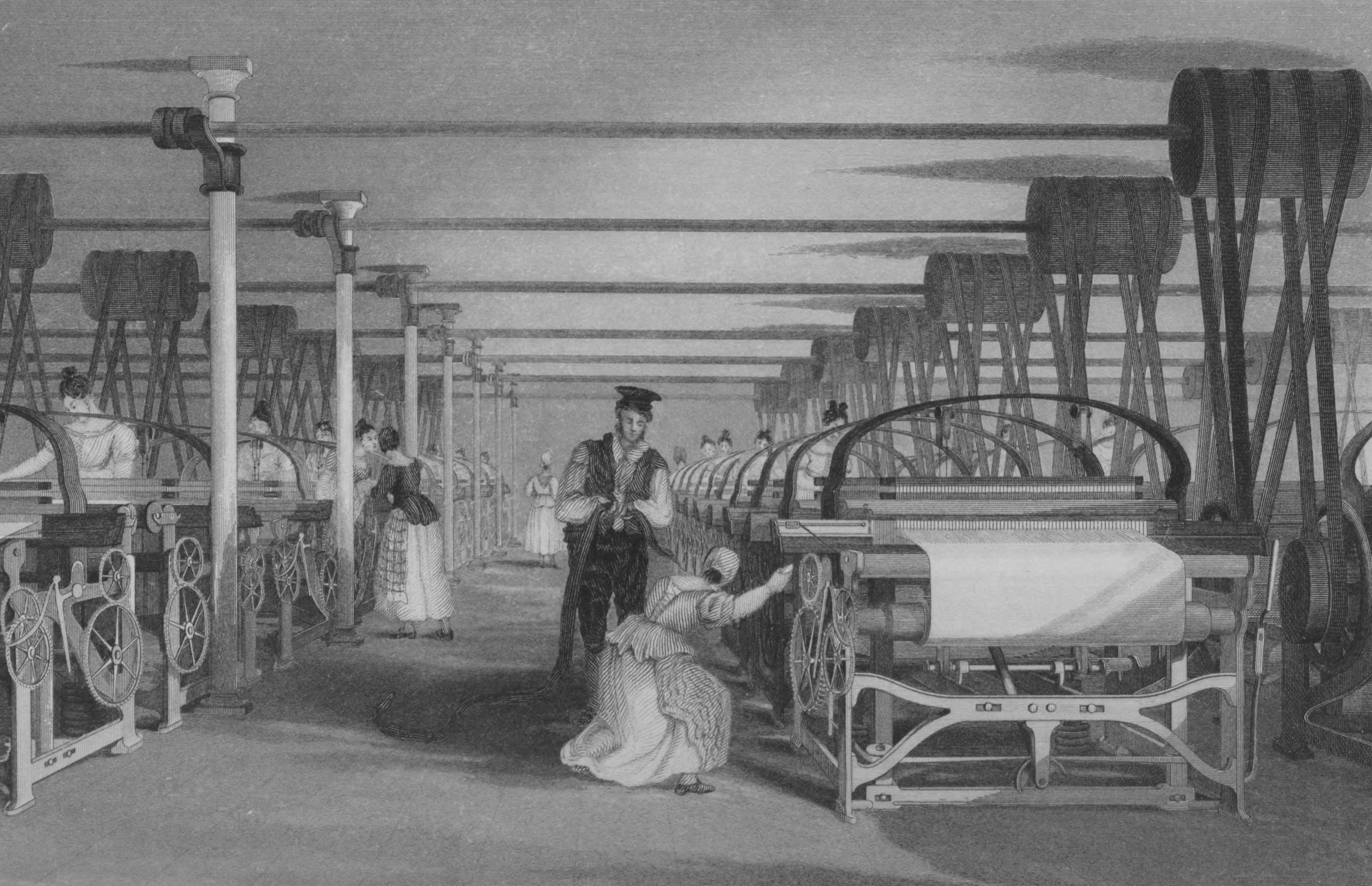
The 19th century began on 1 January 1801 (represented by the Roman numerals MDCCCI), and ended on 31 December 1900 (MCM). It was the 9th century of the 2nd millennium. It was characterized by vast social upheaval. Slavery was abolished in much of Europe and the Americas. The First Industrial Revolution, though it began in the late 18th century, expanded beyond its British homeland for the first time during the 19th century, particularly remaking the economies and societies of the Low Countries, France, the Rhineland, Northern Italy, and the Northeastern United States. A few decades later, the Second Industrial Revolution led to ever more massive urbanization and much higher levels of productivity, profit, and prosperity, a pattern that continued into the 20th century. The Catholic Church, in response to the growing influence and power of modernism, secularism and materialism, formed the First Vatican Council in the late 19th century to deal with such problems and confirm cer ... [...More Info...] [...Related Items...] OR: [Wikipedia] [Google] [Baidu] [Amazon] |
House Of Rashid
The Rashidi dynasty, also called Al Rashid or the House of Rashid ( ; ), was a historic Arabian House or dynasty that existed in the Arabian Peninsula between 1836 and 1921. Its members were rulers of the Emirate of Ha'il and the most formidable enemies of the House of Saud, rulers of the Emirate of Nejd. They were centered in Ha'il, a city in northern Najd that derived its wealth from being on the route of the Hajj pilgrimage to Mecca, and was also a commercial center. The rulers of Ha'il were the sons of Abdullah bin Rashid, founder of the dynasty. History The Rashidi dynasty derived their name from their forebear Abdullah bin Ali Al Rashid, the first emir, who began the establishment of the Emirate of Ha'il. The Rashidi emirs co-operated closely with the Ottoman Empire. However, that co-operation became problematic as the Ottoman Empire lost popularity. In 1890, Al Rashid occupied Riyadh and then defeated the Saudi tribes, who fled into exile, first to Bahrain, then to Q ... [...More Info...] [...Related Items...] OR: [Wikipedia] [Google] [Baidu] [Amazon] |
Muḥammad Bin ʿAbdullah Al Rashid
Muhammad bin Abdullah Al Rashid (, died 28 November 1897) was one of the Emirs of Jabal Shammar and is known for defeating the Saudi State, which after being defeated in the battle of Mulayda ceased to exist for a second time in 1891. His reign lasted from 1869 to 1897, and he was the most influential ruler of the Emirate of Jabal Shammar, for which he is called Muhammad the Great. Early life Muhammad was the third son of Abdullah bin Rashid, the founder of the Emirate, and the brother of the second Emir, Talal bin Abdullah, and the third Emir, Mutaib bin Abdullah. During the reign of his brothers, Muhammad functioned as the caravan leader securing the commercial activities of the Emirate and guiding the hajj. His caravan activities were between Hail and Iraq through which he acquired both wealth and popularity among locals. When the Emir Mutaib bin Abdullah was killed by his nephew Bandar who became the emir of Jabal Shammar, the older generation of the dynasty, including M ... [...More Info...] [...Related Items...] OR: [Wikipedia] [Google] [Baidu] [Amazon] |
Talāl Bin ʿAbdullah Al Rashid
Talal bin Abdullah Al Rashid (; 1823–11 March 1868) was the second ruler of the Emirate of Jabal Shammar. He was a skillful ruler who died by suicide. Unlike the founding ruler, Abdullah, who was titled as sheikh, the rulers of Jabal Shammar began to be referred to as emirs with the reign of Talal. In addition, Talal managed to create a state-like administration in the Emirate which had been based on the tribal alliance during the reign of Abdullah. Early life Talal bin Abdullah was born in 1823. He was the eldest of Abdullah Al Rashid's three sons, and his brothers were Mutaib and Mohammad. Reign Talal succeeded his father in 1848 without any dispute in the family. In addition, his succession was supported by the locals. Qassim region was partially controlled by the Emirate of Jabal Shammar during his reign when the leaders of Qassimi tribes asked him to protect them from the Emirate of Nejd. The alliance between the Rashidis and the Ottoman Empire also started during Tala ... [...More Info...] [...Related Items...] OR: [Wikipedia] [Google] [Baidu] [Amazon] |
Ottoman Empire
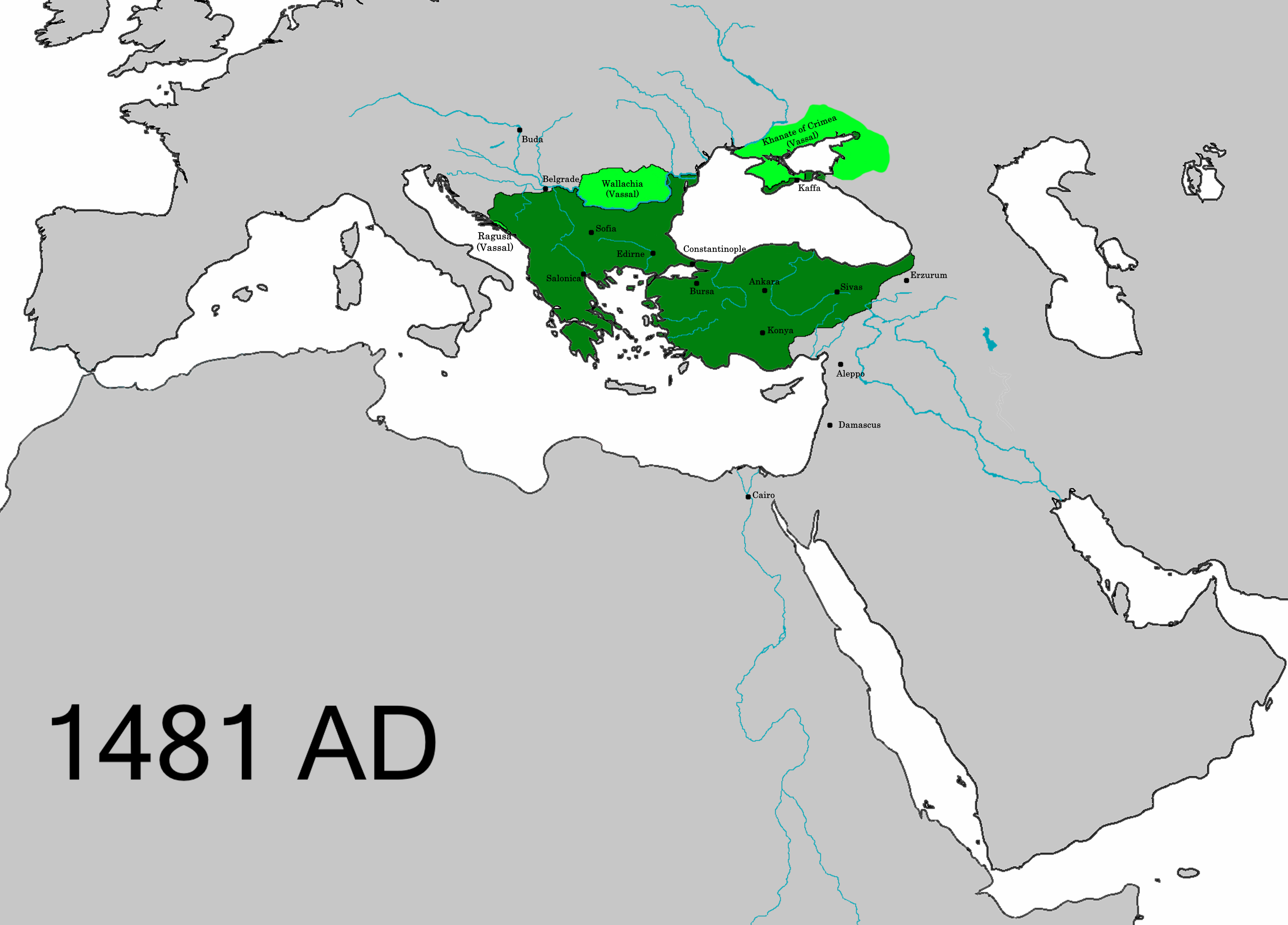
The Ottoman Empire (), also called the Turkish Empire, was an empire, imperial realm that controlled much of Southeast Europe, West Asia, and North Africa from the 14th to early 20th centuries; it also controlled parts of southeastern Central Europe, between the early 16th and early 18th centuries. The empire emerged from a Anatolian beyliks, ''beylik'', or principality, founded in northwestern Anatolia in by the Turkoman (ethnonym), Turkoman tribal leader Osman I. His successors Ottoman wars in Europe, conquered much of Anatolia and expanded into the Balkans by the mid-14th century, transforming their petty kingdom into a transcontinental empire. The Ottomans ended the Byzantine Empire with the Fall of Constantinople, conquest of Constantinople in 1453 by Mehmed II. With its capital at History of Istanbul#Ottoman Empire, Constantinople (modern-day Istanbul) and control over a significant portion of the Mediterranean Basin, the Ottoman Empire was at the centre of interacti ... [...More Info...] [...Related Items...] OR: [Wikipedia] [Google] [Baidu] [Amazon] |