 Evaporative cooling (atomic physics)Evaporative cooling is an atomic physics technique to achieve high phase space densities which optical cooling techniques alone typically can not reach.
 Laser coolingLaser cooling includes several techniques where atoms, molecules, and small mechanical systems are cooled with laser light. The directed energy of lasers is often associated with heating materials, e.g. laser cutting, so it can be counterintuitive that laser cooling often results in sample temperatures approaching absolute zero. It is routinely used in atomic physics experiments where the laser-cooled atoms are manipulated and measured.
 Optical tweezersScientific instrumentsA photograph of a nanoparticle (diameter 103 nm) trapped by an optical tweezer. The nanoparticle can be seen as the tiny bright spot in the middle.
 Condensed matter physicsCondensed matter physics is the field of physics that deals with the macroscopic and microscopic physical properties of matter, especially the solid and liquidphases, that arise from electromagnetic forces between atoms and electrons. More generally, the subject deals with condensed phases of matter: systems of many constituents with strong interactions among them.
 Quantum phase transitionIn physics, a quantum phase transition (QPT) is a phase transition between different quantum phases (phases of matter at zero temperature). Contrary to classical phase transitions, quantum phase transitions can only be accessed by varying a physical parameter—such as magnetic field or pressure—at absolute zero temperature. The transition describes an abrupt change in the ground state of a many-body system due to its quantum fluctuations.
 Quantum mechanicsDescription of physical properties at the atomic and subatomic scaleWave functions of the electron in a hydrogen atom at different energy levels. Quantum mechanics cannot predict the exact location of a particle in space, only the probability of finding it at different locations.
 SuperfluiditySuperfluidity is the characteristic property of a fluid with zero viscosity which therefore flows without any loss of kinetic energy. When stirred, a superfluid forms vortices that continue to rotate indefinitely. Superfluidity occurs in two isotopes of helium (helium-3 and helium-4) when they are liquefied by cooling to cryogenic temperatures.Bose–Einstein condensateState of matterIllustration of Bose-Einstein condensation: as the temperature of the ensemble of bosons is reduced, the overlap between the particles' wavefunctions increases as the thermal de Broglie wavelength increases.
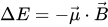 Magnetic trap (atoms)In experimental physics, a magnetic trap is an apparatus which uses a magnetic field gradient to trap neutral particles with magnetic moments. Although such traps have been employed for many purposes in physics research, they are best known as the last stage in cooling atoms to achieve Bose–Einstein condensation. The magnetic trap (as a way of trapping very cold atoms) was first proposed by David E. Pritchard.
 TemperaturePhysical quantity of hot and coldIn classical thermodynamics and kinetic theory, temperature reflects the average kinetic energy of the particles in a system, providing a quantitative measure of how energy is distributed among microscopic degrees of freedom. Temperature is measured with a thermometer. Thermometers are calibrated in various temperature scales that historically have relied on various reference points and thermometric substances for definition.
 Magneto-optical trapIn atomic, molecular, and optical physics, a magneto-optical trap (MOT) is an apparatus which uses laser cooling and a spatially varying magnetic field to create a trap which can produce samples of cold neutral atoms. Temperatures achieved in a MOT can be as low as several microkelvins, depending on the atomic species. A MOT is formed from the intersection of the zero of a weak quadrupolar magnetic field and six circularly polarizedred-detunedoptical molasses beams.
 Absolute zeroAbsolute zero is the theoretically coldest temperature, a state at which a system's internal energy, and in ideal cases entropy, reach their minimum values. The Kelvin scale is defined so that absolute zero is 0 Kelvin, equivalent to −273.15 °C on the Celsius scale, and −459.67 °F on the Fahrenheit scale. The Kelvin and Rankine temperature scales set their zero points at absolute zero by definition.Superfluid helium-4Superfluid helium-4 (helium II or He-II) is the superfluid form of helium-4, the most common isotope of the element helium. The substance, which resembles other liquids such as helium I (conventional, non-superfluid liquid helium), flows without friction past any surface, which allows it to continue to circulate over obstructions and through pores in containers which hold it, subject only to its own inertia.
*As an Amazon Associate I earn from qualifying purchases.