|
Scoring The Hales
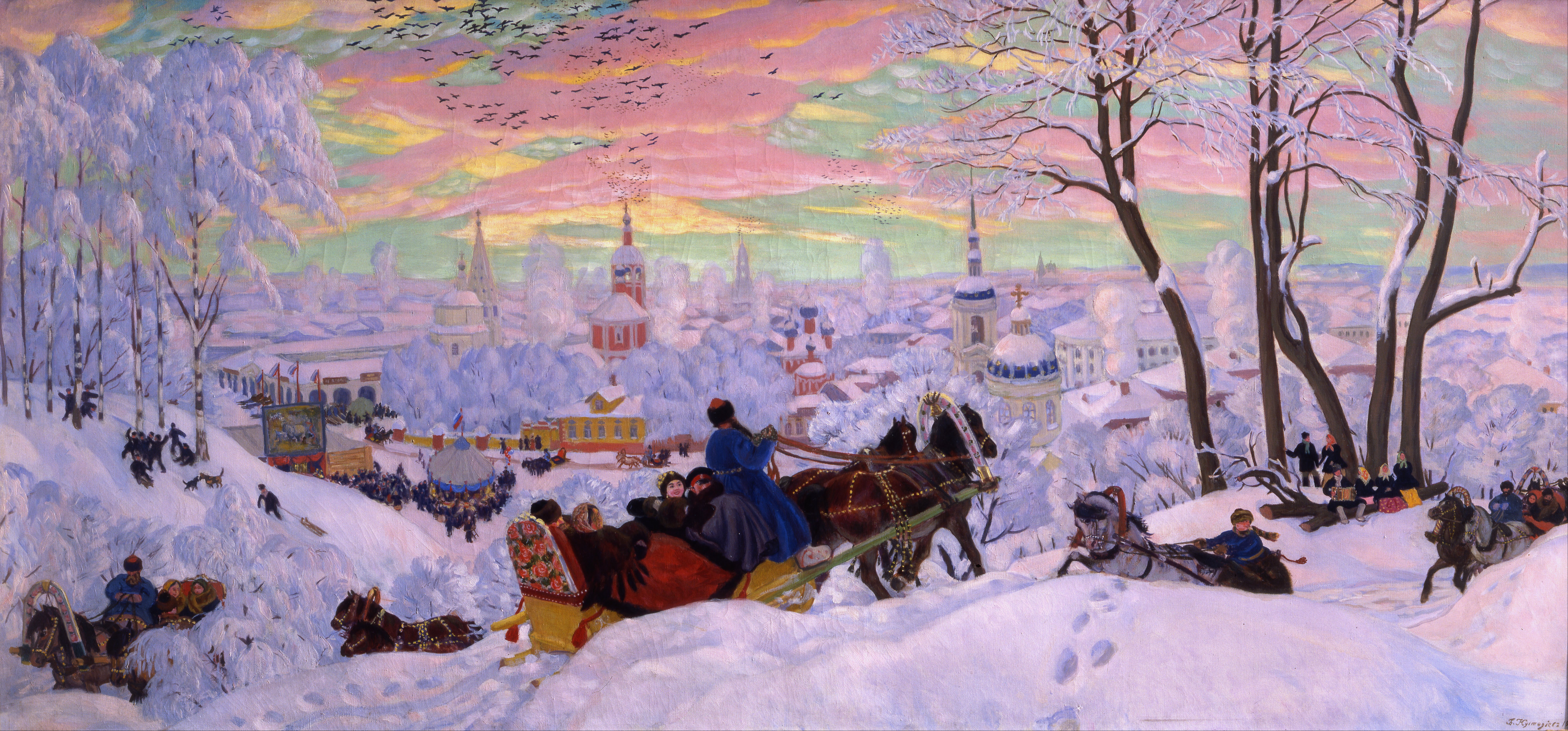
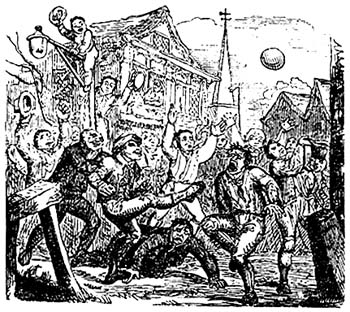
Scoring the Hales (also known as The Alnwick Shrovetide Football Match) is the name of a large scale shrovetide football match played yearly in the English market town of Alnwick, Northumberland. Once a street contest, it has now moved to a field named The Pastures across the River Aln from Alnwick Castle. The fixture between the parishes of St Michael and St Paul, first recorded in 1762, is one of the few surviving games of medieval football still being played. The game has only a few rules and involves large teams of roughly 150 persons on either side. The goals are decorated with greenery and stand about apart. As well as the large teams, the tradition attracts hundreds of spectators. The original game started with the ball being sent over the barbican of the castle to the crowd assembled below. It was then kicked through the streets of the town. Kicking the ball through the town was discontinued in the 1820s and the game was moved to the pastures. Nowadays the game is procee ... [...More Info...] [...Related Items...] OR: [Wikipedia] [Google] [Baidu] [Amazon] |
Alnwick Castle - Geograph
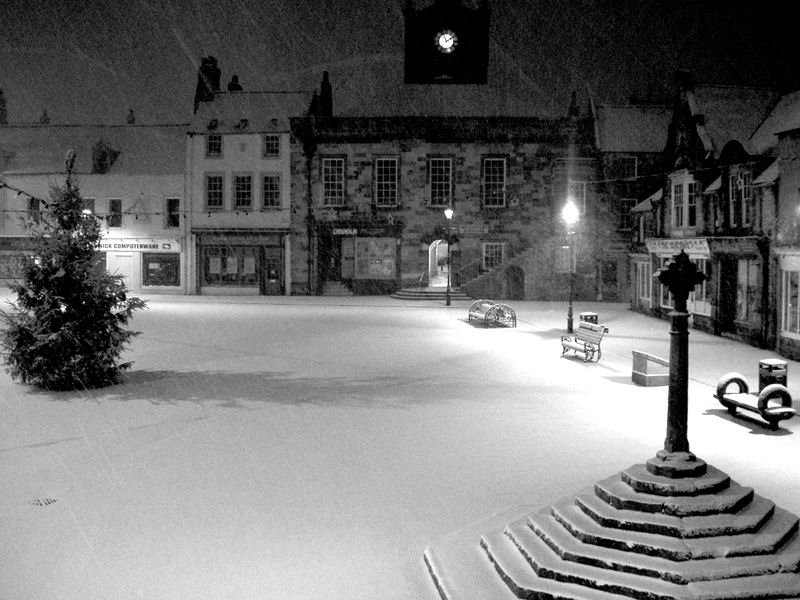
Alnwick ( ) is a market town in Northumberland, England, of which it is the traditional county town. The population at the 2011 Census was 8,116. The town is south of Berwick-upon-Tweed and the Scottish border, inland from the North Sea at Alnmouth and north of Newcastle upon Tyne; it is sited on the south bank of the River Aln. The town dates to about AD 600 and thrived as an agricultural centre. Alnwick Castle was the home of the most powerful medieval northern baronial family, the Earls of Northumberland. It was a staging post on the Great North Road between Edinburgh and London. Toponymy The name ''Alnwick'' comes from the Old English ''wic'' ('dairy farm, settlement') and the name of the river Aln. History The history of Alnwick is the history of the castle and its lords, starting with Gilbert Tyson (written variously as "Tison", "Tisson" and "De Tesson"), one of William the Conqueror's standard-bearers, upon whom this northern estate was bestowed. It was ... [...More Info...] [...Related Items...] OR: [Wikipedia] [Google] [Baidu] [Amazon] |
Shrove Tuesday
Shrove Tuesday (also known as Pancake Tuesday or Pancake Day) is the final day of Shrovetide, which marks the end of the pre-Lenten season. Lent begins the following day with Ash Wednesday. Shrove Tuesday is observed in many Christian state, Christian countries through participating in Confession (religion)#Christianity, confession, the ritual burning of the previous year's Holy Week palms, finalizing one's Lenten sacrifice, as well as eating pancakes and other sweets. Shrove Tuesday is observed by many Christians, including Anglicans, Lutherans, Methodists, Western Orthodox, Western-rite Orthodox Christians, and Roman Catholics, who "make a special point of self-examination, of considering what wrongs they need to repent, and what amendments of life or areas of spiritual growth they especially need to ask God's help in dealing with." This moveable feast is determined by date of Easter, the date of Easter. The expression "Shrove Tuesday" comes from the word ''wikt:en:shrive, shr ... [...More Info...] [...Related Items...] OR: [Wikipedia] [Google] [Baidu] [Amazon] |
Football
Football is a family of team sports that involve, to varying degrees, kick (football), kicking a football (ball), ball to score a goal (sports), goal. Unqualified, football (word), the word ''football'' generally means the form of football that is the most popular where the word is used. Sports commonly called ''football'' include association football (known as ''soccer'' in Australia, Canada, South Africa, the United States, and sometimes in Ireland and New Zealand); Australian rules football; Gaelic football; gridiron football (specifically American football, arena football, or Canadian football); International rules football; rugby league, rugby league football; and rugby union, rugby union football. These various forms of football share, to varying degrees, common origins and are known as "football codes". There are a number of references to traditional, ancient, or prehistoric ball games played in many different parts of the world. Contemporary codes of football can be t ... [...More Info...] [...Related Items...] OR: [Wikipedia] [Google] [Baidu] [Amazon] |
Market Town
A market town is a settlement most common in Europe that obtained by custom or royal charter, in the Middle Ages, a market right, which allowed it to host a regular market; this distinguished it from a village or city. In Britain, small rural towns with a hinterland of villages are still commonly called market towns, as sometimes reflected in their names (e.g. Downham Market, Market Rasen, or Market Drayton). Modern markets are often in special halls, but this is a relatively recent development. Historically the markets were open-air, held in what is usually called (regardless of its actual shape) the market square or market place, sometimes centred on a market cross ( mercat cross in Scotland). They were and are typically open one or two days a week. In the modern era, the rise of permanent retail establishments reduced the need for periodic markets. History The primary purpose of a market town is the provision of goods and services to the surrounding locality. Al ... [...More Info...] [...Related Items...] OR: [Wikipedia] [Google] [Baidu] [Amazon] |
Alnwick
Alnwick ( ) is a market town in Northumberland, England, of which it is the traditional county town. The population at the 2011 Census was 8,116. The town is south of Berwick-upon-Tweed and the Scottish border, inland from the North Sea at Alnmouth and north of Newcastle upon Tyne; it is sited on the south bank of the River Aln. The town dates to about AD 600 and thrived as an agricultural centre. Alnwick Castle was the home of the most powerful medieval northern baronial family, the Earls of Northumberland. It was a staging post on the Great North Road between Edinburgh and London. Toponymy The name ''Alnwick'' comes from the Old English ''wic'' ('dairy farm, settlement') and the name of the river Aln. History The history of Alnwick is the history of the castle and its lords, starting with Gilbert Tyson (written variously as "Tison", "Tisson" and "De Tesson"), one of William the Conqueror's standard-bearers, upon whom this northern estate was bestowed. ... [...More Info...] [...Related Items...] OR: [Wikipedia] [Google] [Baidu] [Amazon] |
Northumberland
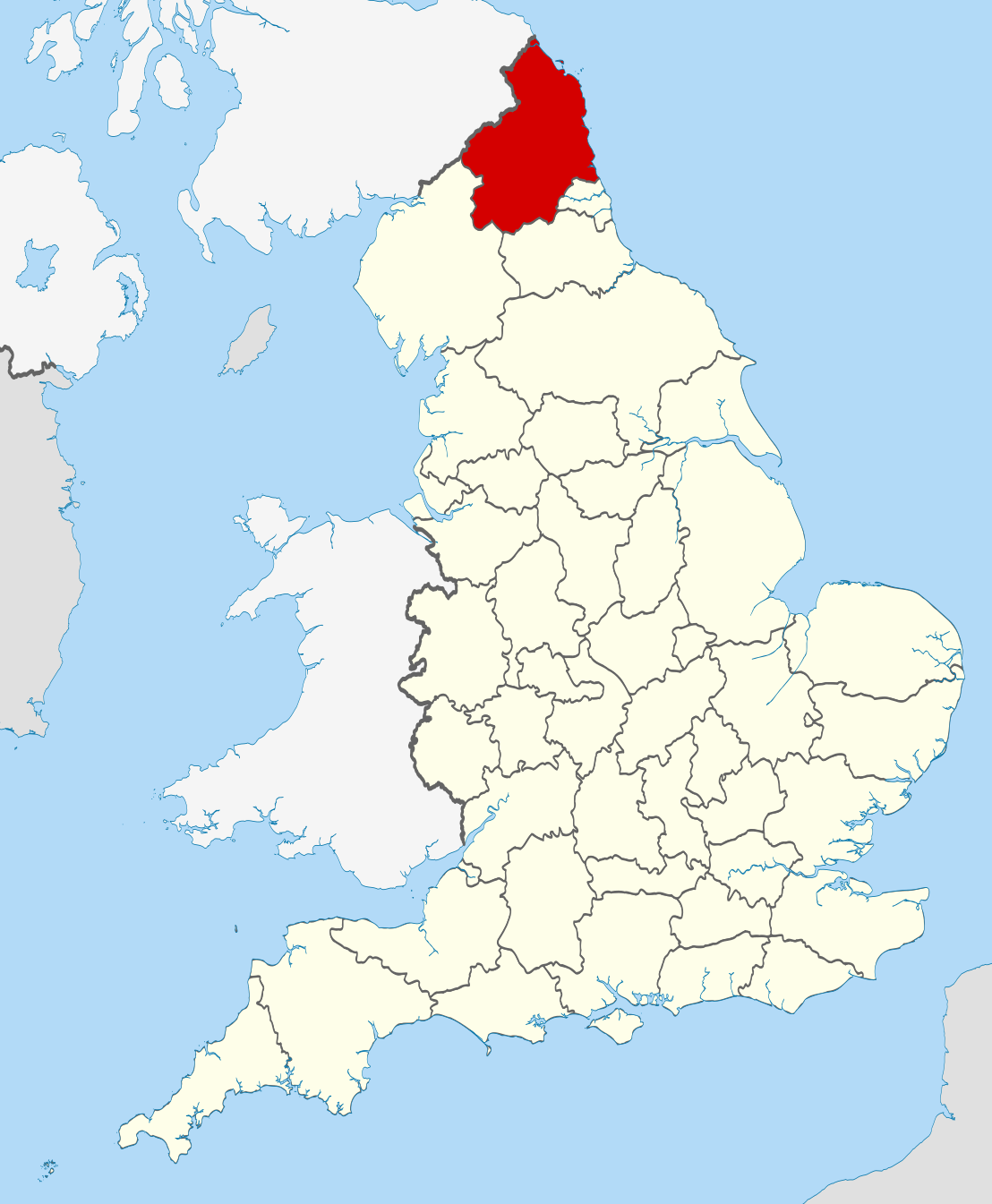
Northumberland ( ) is a ceremonial counties of England, ceremonial county in North East England, on the Anglo-Scottish border, border with Scotland. It is bordered by the North Sea to the east, Tyne and Wear and County Durham to the south, Cumbria to the west, and the Scottish Borders council area to the north. The town of Blyth, Northumberland, Blyth is the largest settlement. Northumberland is the northernmost county in England. The county has an area of and a population of 320,274, making it the least-densely populated county in England. The south-east contains the largest towns: Blyth, Northumberland, Blyth, Cramlington, Ashington, Bedlington, and Morpeth, Northumberland, Morpeth, the last of which is the administrative centre. The remainder of the county is rural, the largest towns being Berwick-upon-Tweed in the far north and Hexham in the south-west. For local government purposes Northumberland is a Unitary authorities of England, unitary authority area. The county Histo ... [...More Info...] [...Related Items...] OR: [Wikipedia] [Google] [Baidu] [Amazon] |
River Aln
The River Aln () runs through the county of Northumberland in England. It rises in Alnham in the Cheviot Hills and discharges into the North Sea at Alnmouth on the east coast of England. The river gives its name to the town of Alnwick and the villages of Alnmouth and Alnham. For part of its route, directly upstream of Alnwick, the river flows through Hulne Park. Etymology The meaning of the name ''Aln'' is uncertain, but it is generally seen as a Hydronym, river-name of the ''Alaunus, Alaunos'' or ''Alaunā''. Names of this type could derive from the Celtic root *''al''- ('feed, raise, nurture') or *''alǝ''- (to wander'), or else from the Common Brittonic, Brittonic element ''*al-'', "shining, bright" (Welsh language, Welsh ''alaw'', 'waterlilly'). Another suggestion is that the name is derived from the Brittonic root ''*Alaun-'' (‘holy one’ or ‘mighty one’). History The Aln is first mentioned in the Geography (Ptolemy), Geography of Ptolemy, a 2nd Century AD Roman ... [...More Info...] [...Related Items...] OR: [Wikipedia] [Google] [Baidu] [Amazon] |
Alnwick Castle
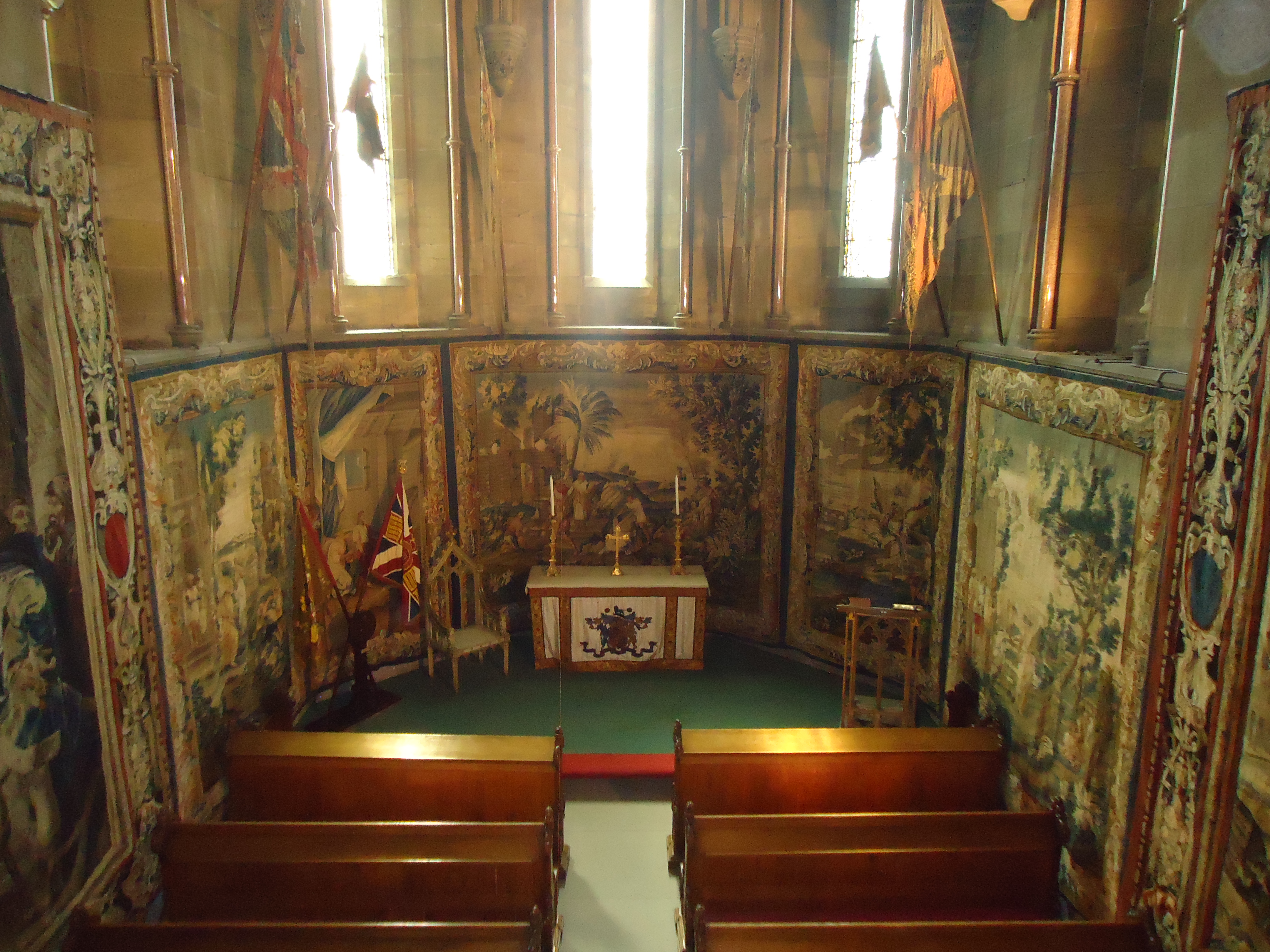
Alnwick Castle () is a castle and country house in Alnwick in the English county of Northumberland. It is the seat of the Ralph Percy, 12th Duke of Northumberland, 12th Duke of Northumberland, built following the Norman Conquest and renovated and remodelled a number of times. It is a Grade I listed building now the home of Ralph Percy, 12th Duke of Northumberland and his family. In 2016, the castle received over 600,000 visitors per year when combined with adjacent attraction the Alnwick Garden. History Alnwick Castle guards a road crossing the River Aln. Ivo de Vesci, Baron of Alnwick, a nobleman from Vassy, Calvados in Normandy, erected the first parts of the castle in about 1096. Beatrix de Vesci, the daughter of Yves de Vescy, married the Constable of Chestershire and Knaresborough, Eustace fitz John. By his marriage to Beatrix de Vesci he gained the baronies of Malton, North Yorkshire, Malton and Alnwick. The castle was first mentioned in 1136 when it was captured by King ... [...More Info...] [...Related Items...] OR: [Wikipedia] [Google] [Baidu] [Amazon] |
Medieval Football
Medieval football is a modern term used for a wide variety of the localised informal football games which were invented and played in Europe, England during the Middle Ages. Alternative names include folk football, mob football and Shrovetide football. These games may be regarded as the ancestors of modern codes of football, and by comparison with later forms of football, the medieval matches were chaotic and had few rules. The Middle Ages saw a rise in popularity of games played annually at Shrovetide (before Lent) throughout England, particularly in London. The games played in England at this time may have arrived with the Roman Britain, Roman occupation but there is little evidence to indicate this. Certainly the Ancient Rome, Romans played ball games, in particular harpastum. There is also one reference to ball games being played in southern Britain prior to the Norman Conquest. In the ninth century Nennius's ''Historia Brittonum'' tells that a group of boys were playing at b ... [...More Info...] [...Related Items...] OR: [Wikipedia] [Google] [Baidu] [Amazon] |
Barbican
A barbican (from ) is a fortified outpost or fortified gateway, such as at an outer defense perimeter of a city or castle, or any tower situated over a gate or bridge which was used for defensive purposes. Europe Medieval Europeans typically built barbicans outside, or at the edge of, a main line of defenses, and connected them to defensive walls with a walled road called ''the neck''. Barbicans would thus control the entrance to a city or castle at the "choke point". In the 15th century, as siege tactics and artillery developed, barbicans began to lose their significance, but new barbicans were built well into the 16th century. Fortified or mock-fortified gatehouses remained a feature of ambitious French and English residences well into the 17th century. Portuguese medieval fortification nomenclature uses the term "barbican" ("") for any wall outside of and lower than the main defensive wall that forms a second barrier. The barrier may be complete, extensive or only protect p ... [...More Info...] [...Related Items...] OR: [Wikipedia] [Google] [Baidu] [Amazon] |
Bagpipes
Bagpipes are a woodwind instrument using enclosed reeds fed from a constant reservoir of air in the form of a bag. The Great Highland bagpipes are well known, but people have played bagpipes for centuries throughout large parts of Europe, Northern Africa, Western Asia, around the Persian Gulf and northern parts of South Asia. The term ''bagpipe'' is equally correct in the singular or the plural, though pipers usually refer to the bagpipes as "the pipes", "a set of pipes" or "a stand of pipes". Bagpipes are part of the aerophone group because to play the instrument you must blow air into it to produce a sound. Construction A set of bagpipes minimally consists of an air supply, a bag, a chanter, and usually at least one drone. Many bagpipes have more than one drone (and, sometimes, more than one chanter) in various combinations, held in place in stocks—sockets that fasten the various pipes to the bag. Air supply The most common method of supplying air to the b ... [...More Info...] [...Related Items...] OR: [Wikipedia] [Google] [Baidu] [Amazon] |
Duke Of Northumberland
Duke of Northumberland is a noble title that has been created three times in English and British history, twice in the Peerage of England and once in the Peerage of Great Britain. The current holder of this title is Ralph Percy, 12th Duke of Northumberland. 1551 creation The title was first created in the Peerage of England in 1551 for John Dudley, 1st Duke of Northumberland, John Dudley, 1st Earl of Warwick. He had already been created Viscount Lisle in 1543 and Earl of Warwick in 1547, also in the Peerage of England. In 1553, Dudley advanced the claim of his daughter-in-law, Lady Jane Grey, to the English throne, but when she was deposed by Mary I of England, Queen Mary I, Dudley was convicted of high treason and executed. An illegitimate son of one of his younger sons, Robert Dudley, 1st Earl of Leicester, Robert Dudley, styled Earl of Warwick, Sir Robert Dudley, claimed the dukedom when in exile in Italy. On 9 March 1620 the Ferdinand II, Holy Roman Emperor, Emperor Ferdina ... [...More Info...] [...Related Items...] OR: [Wikipedia] [Google] [Baidu] [Amazon] |