|
Portrait Of A Young Man (Raphael)
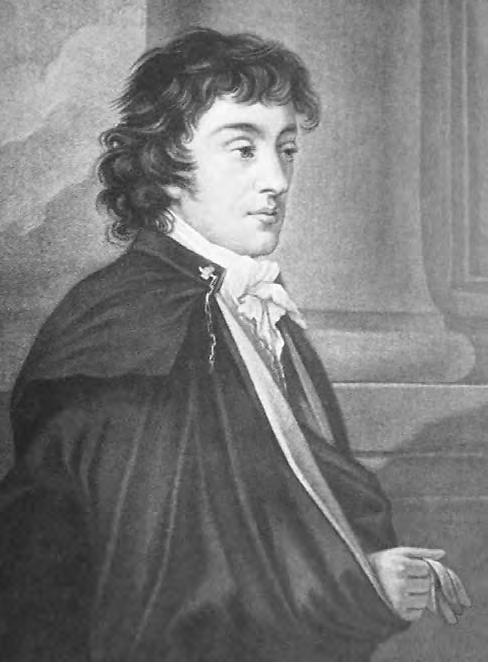
''Portrait of a Young Man'' is a painting by Raphael. It is often thought to be a self-portrait. During the Second World War the painting was stolen by the Nazis from Poland. Many historians regard it as the most important painting missing since World War II.Winid, Boguslaw"Not Lost Forever: Recovery of Polish Art Looted During WWII," Polish Art club of Buffalo. 3 April 2004. The portrait is in oil on panel, probably from 1513 to 1514, and is by the Italian High Renaissance painter and architect Raffaello Sanzio da Urbino better known simply as Raphael.Houpt, Simon ''et al.'' (2006). ''Museum of the Missing,'' p. 49. The subject's identity is unverified, but many scholars have traditionally regarded it as Raphael's self-portrait. The facial features are perceived by specialists as compatible with, if not clearly identical to, the only undoubted self-portrait by Raphael in his fresco ''The School of Athens'' at the Vatican, identified as such by Vasari. If it is a self-portrait, ... [...More Info...] [...Related Items...] OR: [Wikipedia] [Google] [Baidu] [Amazon] |
Italian Language
Italian (, , or , ) is a Romance language of the Indo-European language family. It evolved from the colloquial Latin of the Roman Empire. Italian is the least divergent language from Latin, together with Sardinian language, Sardinian. It is spoken by about 68 million people, including 64 million native speakers as of 2024. Italian is an official language in Languages of Italy, Italy, Languages of San Marino, San Marino, Languages of Switzerland, Switzerland (Ticino and the Grisons), and Languages of Vatican City, Vatican City; it has official Minority language, minority status in Minority languages of Croatia, Croatia, Slovene Istria, Romania, Bosnia and Herzegovina, and the municipalities of Santa Teresa, Espírito Santo, Santa Tereza, Encantado, Rio Grande do Sul, Encantado, and Venda Nova do Imigrante in Languages of Brazil#Language co-officialization, Brazil. Italian is also spoken by large Italian diaspora, immigrant and expatriate communities in the Americas and Austral ... [...More Info...] [...Related Items...] OR: [Wikipedia] [Google] [Baidu] [Amazon] |
Augustus Of Prima Porta
The Augustus of Prima Porta () is a full-length Roman portraiture, portrait statue of Augustus, the first Roman emperor. The statue was discovered on April 20, 1863, during archaeological excavations directed by Giuseppe Gagliardi at the Villa of Livia owned by Augustus's third and final wife, Livia, Livia Drusilla in Prima Porta. Livia had retired to the Roman villa, villa after Augustus's death in AD 14. Its discovery was first publicized by the German archeologist Wilhelm Henzen the same year. Crafted by skilled Greek sculptors, the marble statue is believed to be a copy of a lost original bronze piece displayed in Rome. It blends Ancient Greek sculpture, Greek and Roman sculpture, Roman elements to craft an idealized official image of Augustus, its execution showcasing his grasp of visual influence. While the head portrays a realistic youthful Augustus, the body diverges from reality; despite its clothed form, the body's stance reflects the heroic stance found in Greek sta ... [...More Info...] [...Related Items...] OR: [Wikipedia] [Google] [Baidu] [Amazon] |
Gestapo
The (, ), Syllabic abbreviation, abbreviated Gestapo (), was the official secret police of Nazi Germany and in German-occupied Europe. The force was created by Hermann Göring in 1933 by combining the various political police agencies of Free State of Prussia, Prussia into one organisation. On 20 April 1934, oversight of the Gestapo passed to the head of the ''Schutzstaffel'' (SS), Heinrich Himmler, who was also appointed Chief of German Police by Hitler in 1936. Instead of being exclusively a Prussian state agency, the Gestapo became a national one as a sub-office of the (SiPo; Security Police). From 27 September 1939, it was administered by the Reich Security Main Office (RSHA). It became known as (Dept) 4 of the RSHA and was considered a sister organisation to the (SD; Security Service). The Gestapo committed widespread atrocities during its existence. The power of the Gestapo was used to focus upon political opponents, ideological dissenters (clergy and religious org ... [...More Info...] [...Related Items...] OR: [Wikipedia] [Google] [Baidu] [Amazon] |
Sieniawa
Sieniawa (), is a town in southeastern Poland, in Przeworsk County in the Subcarpathian Voivodeship. It had a population of 2,127 inhabitants (02.06.2009). History Sieniawa's history dates back to the 17th century, and the town owes its existence to the once powerful Sieniawski family. It was founded in 1676, on initiative of Voivode of Volhynia and Starosta of Lwów, Mikolaj Hieronim Sieniawski, who owned enormous estates in eastern lands of the Polish–Lithuanian Commonwealth. Sieniawa was founded in the area which was covered by the village of Dybków. The Sieniawski family wanted to make it main administrative center of their estates. In ca. 1650, a brick fortress was built on a hill near contemporary Sieniawa. In the following years, the Sieniawski family built their manor house near the fortress, and began construction of the town, together with the San river port. A Dominican church and abbey was built, and in the 1660s, walls were built, to protect Sieniawa from Crimean ... [...More Info...] [...Related Items...] OR: [Wikipedia] [Google] [Baidu] [Amazon] |
Landscape With The Good Samaritan
A landscape is the visible features of an area of land, its landforms, and how they integrate with natural or human-made features, often considered in terms of their aesthetic appeal.''New Oxford American Dictionary''. A landscape includes the physical elements of geophysically defined landforms such as mountains, hills, water bodies such as rivers, lakes, ponds and the sea, living elements of land cover including indigenous vegetation, human elements including different forms of land use, buildings, and structures, and transitory elements such as lighting and weather conditions. Combining both their physical origins and the cultural overlay of human presence, often created over millennia, landscapes reflect a living synthesis of people and place that is vital to local and national identity. The character of a landscape helps define the self-image of the people who inhabit it and a sense of place that differentiates one region from other regions. It is the dynamic backdrop to ... [...More Info...] [...Related Items...] OR: [Wikipedia] [Google] [Baidu] [Amazon] |
Rembrandt
Rembrandt Harmenszoon van Rijn (; ; 15 July 1606 – 4 October 1669), mononymously known as Rembrandt was a Dutch Golden Age painter, printmaker, and Drawing, draughtsman. He is generally considered one of the greatest visual artists in the history of Art of Europe, Western art.Gombrich, p. 420. It is estimated that Rembrandt's surviving works amount to about three hundred paintings, three hundred etchings and several hundred drawings. Unlike most Dutch painters of the 17th century, Rembrandt's works depict a wide range of styles and subject matter, from portrait painting, portraits and self-portraits to landscapes, genre scenes, allegorical and historical scenes, biblical and mythological subjects and animal studies. His contributions to art came in a period that historians call the Dutch Golden Age. Rembrandt never went abroad but was considerably influenced by the work of the Italian Old Masters and Bentvueghels, Dutch and Flemish artists who had studied in Italy. A ... [...More Info...] [...Related Items...] OR: [Wikipedia] [Google] [Baidu] [Amazon] |
Augustyn Józef Czartoryski
Prince Augustyn Józef Czartoryski (10 October 1907 – 1 July 1946) was a Polish noble (szlachcic). He was the son of Prince Adam Ludwik Czartoryski (and grandson of Princess Marguerite Adélaïde of Orléans) and Countess Maria Ludwika Krasińska. After the death of his father, Prince Augustyn took over the running of the Family Museum and became ordynat of the Sieniawa Ordynacja properties. On 12 August 1937, he married Princess Maria de los Dolores of Borbon y Orleans, daughter of Prince Carlos of Bourbon, Infante of Spain and Princess Louise of Orléans. Due to the prospect of war, the most precious objects were transported to Sieniawa Palace and walled up: During his exile in Spain Prince Augustyn was very active in the Polish resistance, but his poor health and his desperation had its toll on his life. He died at the age of 39, leaving his young son Adam Karol to be brought up in Spain. In 1946, Prince Augustyn died and was buried in the crypt of the Silesian ... [...More Info...] [...Related Items...] OR: [Wikipedia] [Google] [Baidu] [Amazon] |
German Invasion Of Poland
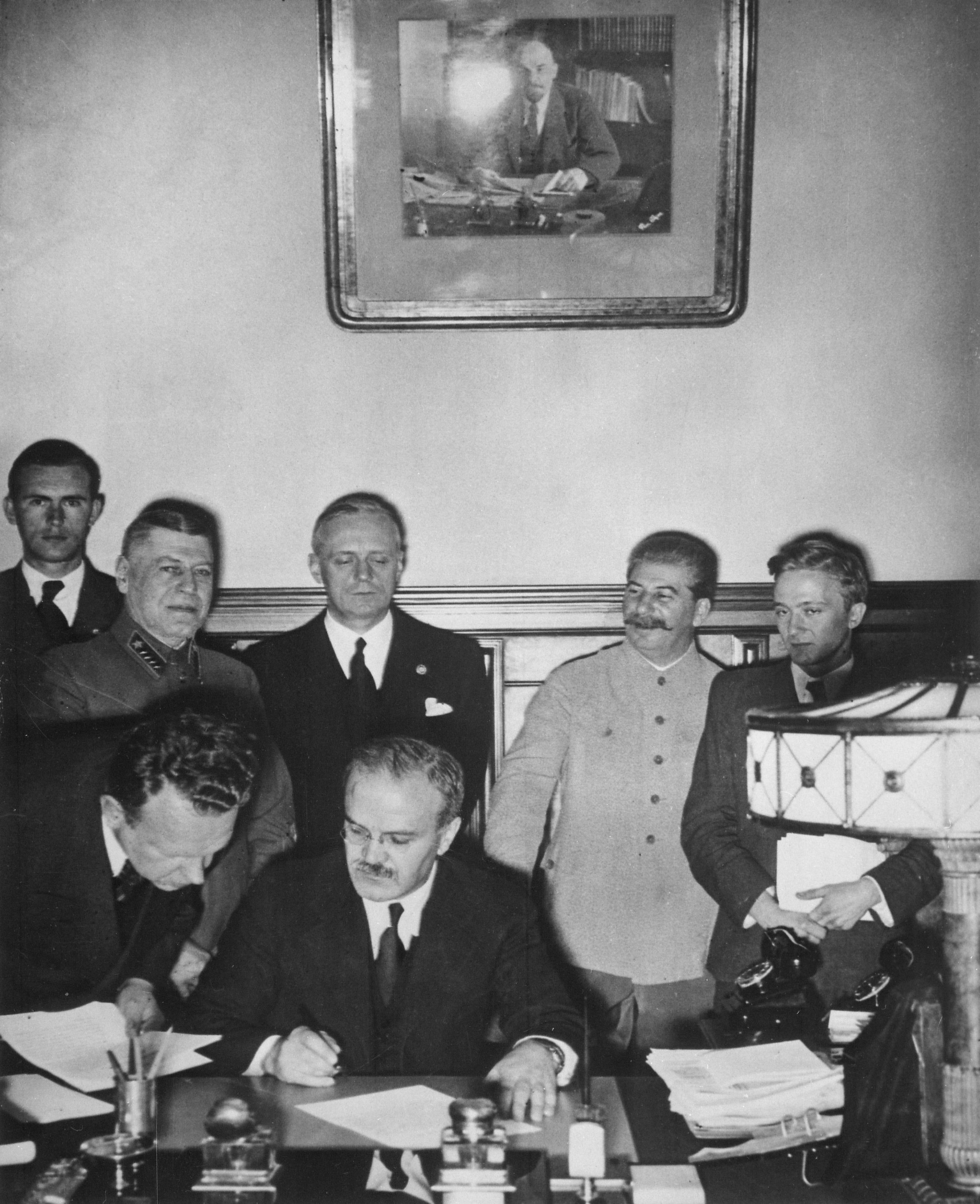
The invasion of Poland, also known as the September Campaign, Polish Campaign, and Polish Defensive War of 1939 (1 September – 6 October 1939), was a joint attack on the Second Polish Republic, Republic of Poland by Nazi Germany, the Slovak Republic (1939–1945), Slovak Republic, and the Soviet Union, which marked the beginning of World War II. The German invasion began on 1 September 1939, one week after the signing of the Molotov–Ribbentrop Pact between Germany and the Soviet Union, and one day after the Supreme Soviet of the Soviet Union had approved the pact. The Soviet invasion of Poland, Soviets invaded Poland on 17 September. The campaign ended on 6 October with Germany and the Soviet Union dividing and annexing the whole of Poland under the terms of the German–Soviet Frontier Treaty. The aim of the invasion was to disestablish Poland as a sovereign country, with its citizens destined for The Holocaust, extermination. German and Field Army Bernolák, Slovak forces ... [...More Info...] [...Related Items...] OR: [Wikipedia] [Google] [Baidu] [Amazon] |
Nazi Germany

Nazi Germany, officially known as the German Reich and later the Greater German Reich, was the German Reich, German state between 1933 and 1945, when Adolf Hitler and the Nazi Party controlled the country, transforming it into a Totalitarianism, totalitarian dictatorship. The Third Reich, meaning "Third Realm" or "Third Empire", referred to the Nazi claim that Nazi Germany was the successor to the earlier Holy Roman Empire (800–1806) and German Empire (1871–1918). The Third Reich, which the Nazis referred to as the Thousand-Year Reich, ended in May 1945, after 12 years, when the Allies of World War II, Allies defeated Germany and entered the capital, Berlin, End of World War II in Europe, ending World War II in Europe. After Hitler was appointed Chancellor of Germany in 1933, the Nazi Party began to eliminate political opposition and consolidate power. A 1934 German referendum confirmed Hitler as sole ''Führer'' (leader). Power was centralised in Hitler's person, an ... [...More Info...] [...Related Items...] OR: [Wikipedia] [Google] [Baidu] [Amazon] |
Izabela Czartoryska
Elżbieta "Izabela" Dorota Czartoryska ( Flemming; 31 March 1745 – 15 July 1835) was a Polish princess, writer, art collector, and prominent figure in the Polish Enlightenment. She was the wife of Adam Kazimierz Czartoryski and a member of the influential '' Familia'' political party. She is also known for having founded Poland's first museum, the Czartoryski Museum, now located in Kraków. Life She was the daughter of Count Georg Detlev von Flemming () and Princess Antonina Czartoryska. On 18 November 1761, in Wołczyn, she married Prince Adam Kazimierz Czartoryski, thus becoming a princess. Her son Adam Jerzy Czartoryski wrote in his memoirs that prior to the marriage, Izabela fell ill with smallpox and that his aunt, Elżbieta Izabela Lubomirska, in horror at the bride's pockmarked face, tried in vain to prevent the marriage to her brother. She was rumored to have had an affair with the Russian ambassador to Poland, Nikolai Vasilyevich Repnin, who was alleg ... [...More Info...] [...Related Items...] OR: [Wikipedia] [Google] [Baidu] [Amazon] |
Adam George Czartoryski
Adam Jerzy Czartoryski (14 January 1770 – 15 July 1861), also known as Adam George Czartoryski, was a Polish nobleman, statesman, diplomat and author who served as Chairman of the Council of Ministers of the Russian Empire. The son of a wealthy prince, he began his political career as a foreign minister to Emperor Alexander I of Russia after Poland was partitioned by Russia, Prussia and Austria. He later became a leader of the Polish government in exile during and after the failed November Uprising (1830–1831) and a bitter opponent of Alexander's successor, Nicholas I. In exile, he advocated for the reestablishment of a sovereign Polish state, which also stimulated early Balkan and Belgian nationalism, and intensified their desire for independence. Czartoryski was a dedicated patron of arts and greatly contributed to the Czartoryski Collection. In 1798, he purchased one of Poland's most important national treasures – Leonardo da Vinci's ''Lady with an Ermine'', ... [...More Info...] [...Related Items...] OR: [Wikipedia] [Google] [Baidu] [Amazon] |