|
Portrait Of Pope Julius II
''Portrait of Pope Julius II'' is an oil painting of 1511–1512 by the Italian High Renaissance painter Raphael. The portrait of Pope Julius II was unusual for its time and would carry a long influence on papal portraiture. From early in its life, it was specially hung at the pillars of the church of Santa Maria del Popolo, on the main route from the north into Rome, on feast and high holy days. Giorgio Vasari, writing long after Julius' death, said that "it was so lifelike and true it frightened everyone who saw it, as if it were the living man himself". The painting exists in many versions and copies, and for many years, a version of the painting which now hangs in the Uffizi Gallery in Florence was believed to be the original or prime version, but in 1970 opinion shifted. The original is currently believed to be the version located in the National Gallery, London. Composition The presentation of the subject was unusual for its time. Previous papal portraits showed them fron ... [...More Info...] [...Related Items...] OR: [Wikipedia] [Google] [Baidu] [Amazon] |
Raphael
Raffaello Sanzio da Urbino (; March 28 or April 6, 1483April 6, 1520), now generally known in English as Raphael ( , ), was an Italian painter and architect of the High Renaissance. List of paintings by Raphael, His work is admired for its clarity of form, ease of composition, and visual achievement of the Platonism in the Renaissance, Neoplatonic ideal of human grandeur. Together with Leonardo da Vinci and Michelangelo, he forms the traditional trinity of great masters of that period. His father Giovanni Santi was court painter to the ruler of the small but highly cultured city of Urbino. He died when Raphael was eleven, and Raphael seems to have played a role in managing the family workshop from this point. He probably trained in the workshop of Pietro Perugino, and was described as a fully trained "master" by 1500. He worked in or for several cities in north Italy until in 1508 he moved to Rome at the invitation of Pope Julius II, to work on the Apostolic Palace at Vatican ... [...More Info...] [...Related Items...] OR: [Wikipedia] [Google] [Baidu] [Amazon] |
Raphael Rooms
The four Raphael Rooms () form a suite of reception rooms in the Apostolic Palace, now part of the Vatican Museums, in Vatican City. They are famous for their frescoes, painted by Raphael and his workshop. Together with Michelangelo's Sistine Chapel ceiling frescoes, they are the grand fresco sequences that mark the High Renaissance in Rome. The ''Stanze'', as they are commonly called, were originally intended as a suite of apartments for Pope Julius II. He commissioned Raphael, then a relatively young artist from Urbino, and his studio in 1508 or 1509 to redecorate the existing interiors of the rooms entirely. It was possibly Julius' intent to outshine the apartments of his predecessor (and rival) Pope Alexander VI, as the ''Stanze'' are directly above Alexander's Borgia Apartment. They are on the second floor, overlooking the south side of the Belvedere Courtyard. Running from east to west, as a visitor would have entered the apartment, but not following the sequence in which ... [...More Info...] [...Related Items...] OR: [Wikipedia] [Google] [Baidu] [Amazon] |
Johann David Passavant
Johann David Passavant (18 September 1787 – 17 August 1861) was a German painter, curator and artist. Biography Passavant was born in 1787 in the Free City of Frankfurt, now part of Germany. His interest in the arts was evident by an early correspondence with the artist Franz Pforr (1788–1812). He moved to Paris in 1809 to further his business interests. He returned to Frankfurt in 1824 where art history evermore occupied his interest. His ''Tour of a German artist in England'' (1833 in German; 1836 translated into English by Lady Eastlake) remains a significant source for art historians, as do his catalogues of old master prints, whose numbering is still followed by some collections. In the year 1839 he became Inspektor (curator) of the Städelsches Kunstinstitut in Frankfurt. There he acquired important works in the prints and drawing area, mounted exhibitions, and taught. Passavant developed the three principal genres of art writing important for the next two ... [...More Info...] [...Related Items...] OR: [Wikipedia] [Google] [Baidu] [Amazon] |
Michelangelo
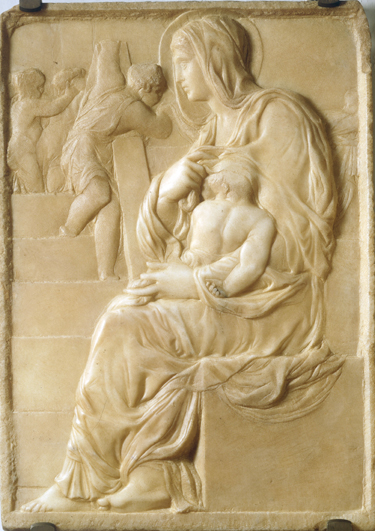
Michelangelo di Lodovico Buonarroti Simoni (6March 147518February 1564), known mononymously as Michelangelo, was an Italian sculptor, painter, architect, and poet of the High Renaissance. Born in the Republic of Florence, his work was inspired by models from classical antiquity and had a lasting influence on Western art. Michelangelo's creative abilities and mastery in a range of artistic arenas define him as an archetypal Renaissance man, along with his rival and elder contemporary, Leonardo da Vinci. Given the sheer volume of surviving correspondence, sketches, and reminiscences, Michelangelo is one of the best-documented artists of the 16th century. He was lauded by contemporary biographers as the most accomplished artist of his era. Michelangelo achieved fame early. Two of his best-known works, the ''Pietà (Michelangelo), Pietà'' and ''David (Michelangelo), David'', were sculpted before the age of 30. Although he did not consider himself a painter, Michelangelo created ... [...More Info...] [...Related Items...] OR: [Wikipedia] [Google] [Baidu] [Amazon] |
Acorn
The acorn is the nut (fruit), nut of the oaks and their close relatives (genera ''Quercus'', ''Notholithocarpus'' and ''Lithocarpus'', in the family Fagaceae). It usually contains a seedling surrounded by two cotyledons (seedling leaves), enclosed in a tough Nutshell, shell known as the pericarp, and borne in a cup-shaped Calybium, cupule. Acorns are long and on the fat side. Acorns take between 5 and 24 months (depending on the species) to mature; see the List of Quercus species, list of ''Quercus'' species for details of oak classification, in which acorn morphology (biology), morphology and phenology are important factors. Etymology The word ''acorn'' (earlier ''akerne'', and ''acharn'') is related to the gothic language, Gothic name ''akran'', which had the sense of "fruit of the unenclosed land". The word was applied to the most important forest produce, that of the oak. Geoffrey Chaucer, Chaucer spoke of "achornes of okes" in the 14th century. By degrees, popular etym ... [...More Info...] [...Related Items...] OR: [Wikipedia] [Google] [Baidu] [Amazon] |
Della Rovere
The House of Della Rovere (; literally "of the oak tree") was a powerful Italian noble family. It had humble origins in Savona, in Liguria, and acquired power and influence through nepotism and ambitious marriages arranged by two Della Rovere popes: Francesco Della Rovere, who ruled as Sixtus IV from 1471 to 1484 and his nephew Giuliano, who became Julius II in 1503. Sixtus IV built the Sistine Chapel, which was named after him. Julius II was patron to Michelangelo, Raphael and many other Renaissance artists and started the modern rebuilt of St. Peter's Basilica. Also the Basilica of San Pietro in Vincoli in Rome was the family church of the Della Rovere. Members of the family were influential in the Church of Rome, and as dukes of Urbino, dukes of Sora and lords of Senigallia; the title of Urbino was extinguished with the death of Francesco Maria II in 1631, and the family died out with the death of his granddaughter Vittoria, Grand Duchess of Tuscany. History Fran ... [...More Info...] [...Related Items...] OR: [Wikipedia] [Google] [Baidu] [Amazon] |
Papal Tiara
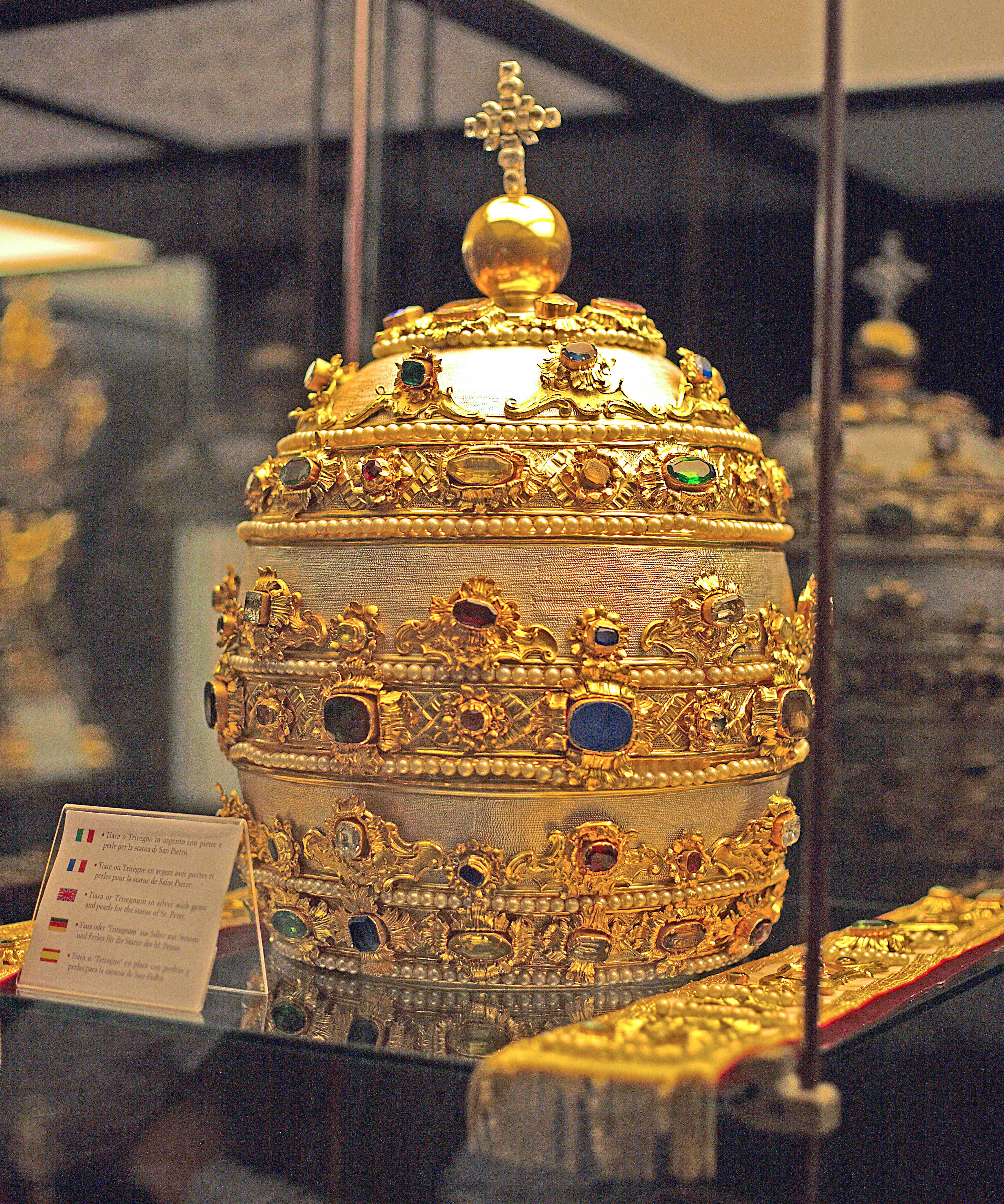
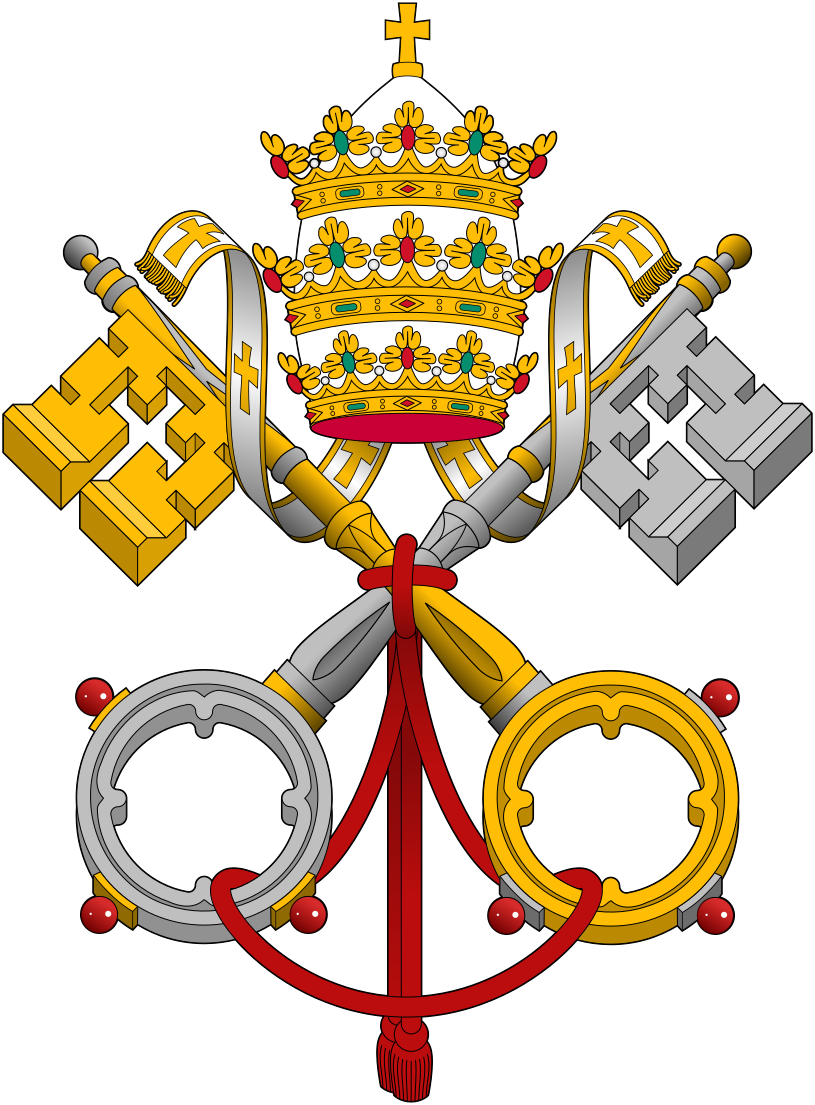
The papal tiara is a crown that was worn by popes of the Catholic Church from as early as the 8th century to the mid–20th century. It was last used by Pope Paul VI in 1963, and only at the beginning of his reign. The name ''tiara'' refers to the entire headpiece, including the various crowns, circlets, and diadems that have adorned it through the ages, while the three-tiered form that it took in the 14th century is also called the triregnum or the triple crown, and sometimes as the triple tiara. From 1143 to 1963, the papal tiara was solemnly placed on the pope's head during a papal coronation. The surviving papal tiaras are all in the triple form, the oldest from 1572. A representation of the triregnum combined with two crossed keys of Saint Peter is used as a symbol of the papacy and appears on papal documents, buildings and insignia, and on the flag of Vatican City. Actual use of the papal tiara has declined since the reign of Pope Paul VI, the last pope to have a corona ... [...More Info...] [...Related Items...] OR: [Wikipedia] [Google] [Baidu] [Amazon] |
Keys Of Heaven
The Keys of Heaven, also called Saint Peter's keys, refers to the metaphorical keys of the office of Saint Peter, the keys of the Gates of Heaven in Christianity, Heaven, or the keys of the kingdom of Heaven. It is explicitly referenced in the Bible in Matthew 16:19. In Catholicism According to Catholic teaching, Jesus promised the keys to heaven to Saint Peter, empowering him to take binding actions. In the Gospel of Matthew 16:19, Jesus says to Peter, "I will give you the keys of the kingdom of heaven, and whatever you bind on Earth shall be bound in heaven, and whatever you loose on Earth shall be loosed in heaven." Saint Peter is often depicted in Catholic Church, Catholic, Eastern Orthodoxy, Eastern Orthodox, and Oriental Orthodox Churches, Oriental Orthodox paintings and other artwork as holding a key or a set of keys. The keys of heaven or keys of Saint Peter are seen as a symbol of papal authority and are seen on papal coats of arms (those of individual popes) and th ... [...More Info...] [...Related Items...] OR: [Wikipedia] [Google] [Baidu] [Amazon] |
Embroidery
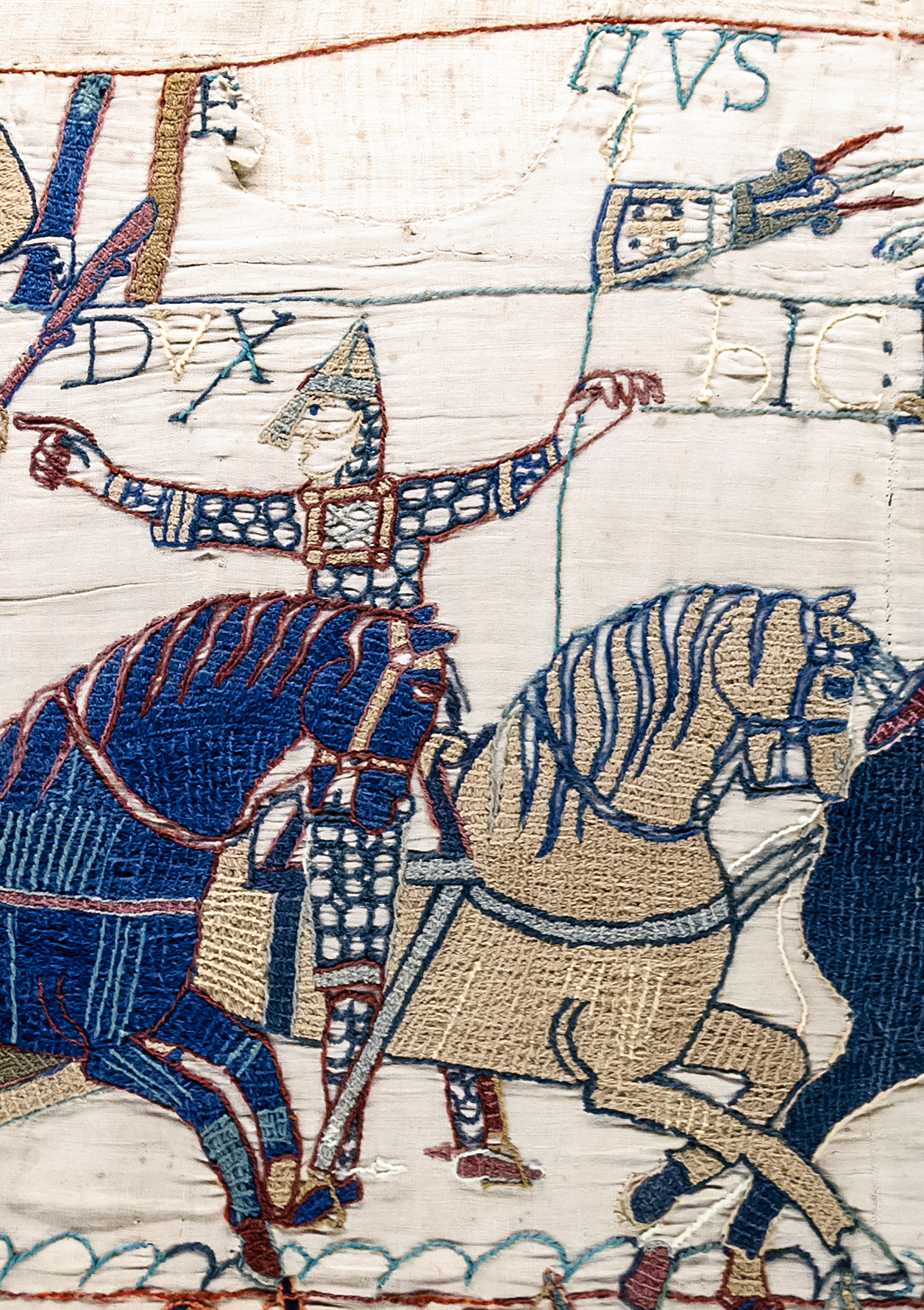
Embroidery is the art of decorating Textile, fabric or other materials using a Sewing needle, needle to stitch Yarn, thread or yarn. It is one of the oldest forms of Textile arts, textile art, with origins dating back thousands of years across various cultures. Common Embroidery stitch, stitches found in early embroidery include the chain stitch, Buttonhole stitch, buttonhole or blanket stitch, running stitch, satin stitch, and cross stitch. Modern embroidery continutes to utilize traditional techniques, though many contemporary stitches are exclusive to machine embroidery. Embroidery is commonly used to embellish accessories and garments is usually seen on quilts, clothing, and accessories. In addition to thread, embroidery may incorporate materials such as Pearl, pearls, Bead, beads, Quill, quills, and Sequin, sequins to highlight texture and design. Today, embroidery serves both decorative and functional purposes and is utilized in fashion expression, cultural identity, and ... [...More Info...] [...Related Items...] OR: [Wikipedia] [Google] [Baidu] [Amazon] |
Sistine Madonna
The ''Sistine Madonna'', also called the ''Madonna di San Sisto'', is an oil painting by the Italian artist Raphael. The painting was commissioned in 1512 by Pope Julius II for the church of San Sisto, Piacenza, and probably executed ''c.'' 1513–1514. The canvas was one of the last Madonnas painted by Raphael. Giorgio Vasari called it "a truly rare and extraordinary work". The painting was moved to Dresden from 1754 and is well known for its influence in the German and Russian art scene. After World War II, it was relocated to Moscow for a decade before being returned to Germany. Composition The oil on canvas painting measures 265 cm by 196 cm. In the painting the Madonna, holding Christ Child and flanked by Saint Sixtus and Saint Barbara, stands on clouds before dozens of obscured putti, while two distinctive winged putti rest on their elbows beneath her. Painting materials Pigment analysis of Raphael's masterpiece reveals the usual pigments of the renaiss ... [...More Info...] [...Related Items...] OR: [Wikipedia] [Google] [Baidu] [Amazon] |
Stanza Della Segnatura
The four Raphael Rooms () form a suite of reception rooms in the Apostolic Palace, now part of the Vatican Museums, in Vatican City. They are famous for their frescoes, painted by Raphael and his workshop. Together with Michelangelo's Sistine Chapel ceiling frescoes, they are the grand fresco sequences that mark the High Renaissance in Rome. The ''Stanze'', as they are commonly called, were originally intended as a suite of apartments for Pope Julius II. He commissioned Raphael, then a relatively young artist from Urbino, and his studio in 1508 or 1509 to redecorate the existing interiors of the rooms entirely. It was possibly Julius' intent to outshine the apartments of his predecessor (and rival) Pope Alexander VI, as the ''Stanze'' are directly above Alexander's Borgia Apartment. They are on the second floor, overlooking the south side of the Belvedere Courtyard. Running from east to west, as a visitor would have entered the apartment, but not following the sequence in which ... [...More Info...] [...Related Items...] OR: [Wikipedia] [Google] [Baidu] [Amazon] |
Jurisprudence
Jurisprudence, also known as theory of law or philosophy of law, is the examination in a general perspective of what law is and what it ought to be. It investigates issues such as the definition of law; legal validity; legal norms and values; and the relationship between law and other fields of study, including Law and economics, economics, Applied ethics, ethics, Legal history, history, Sociology of law, sociology, and political philosophy. Modern jurisprudence began in the 18th century and was based on the first principles of natural law, Civil law (legal system), civil law, and the law of nations. Contemporary philosophy of law addresses problems internal to law and legal systems and problems of law as a social institution that relates to the larger political and social context in which it exists. Jurisprudence can be divided into categories both by the type of question scholars seek to answer and by the theories of jurisprudence, or schools of thought, regarding how those ... [...More Info...] [...Related Items...] OR: [Wikipedia] [Google] [Baidu] [Amazon] |