|
Liberation Of Saint Peter (Raphael)
The ''Liberation of Saint Peter'' is a fresco painting by the Italian High Renaissance artist Raphael.(Arnold NESSELRATH "RAPHAEL ET PINTURICCHIO" Louvre éditions page 177 "cette oeuvre peinte entièrement par l'artiste lui même") It was painted in 1514 as part of Raphael's commission to decorate with frescoes the rooms now known as the '' Stanze di Raffaello'', in the Apostolic Palace in the Vatican. It is located in the ''Stanza di Eliodoro'', which is named after ''The Expulsion of Heliodorus from the Temple''. The painting shows how Saint Peter was liberated from Herod's prison by an angel, as described in Acts 12. It is technically an overdoor An "overdoor" (or "Supraporte" as in German, or "sopraporte" as in Italian) is a painting, bas-relief or decorative panel, generally in a horizontal format, that is set, typically within ornamental mouldings, over a door, or was originally intend .... The fresco shows three scenes in symmetrical balance formed by the fictive arch ... [...More Info...] [...Related Items...] OR: [Wikipedia] [Google] [Baidu] [Amazon] |
Raphael
Raffaello Sanzio da Urbino (; March 28 or April 6, 1483April 6, 1520), now generally known in English as Raphael ( , ), was an Italian painter and architect of the High Renaissance. List of paintings by Raphael, His work is admired for its clarity of form, ease of composition, and visual achievement of the Platonism in the Renaissance, Neoplatonic ideal of human grandeur. Together with Leonardo da Vinci and Michelangelo, he forms the traditional trinity of great masters of that period. His father Giovanni Santi was court painter to the ruler of the small but highly cultured city of Urbino. He died when Raphael was eleven, and Raphael seems to have played a role in managing the family workshop from this point. He probably trained in the workshop of Pietro Perugino, and was described as a fully trained "master" by 1500. He worked in or for several cities in north Italy until in 1508 he moved to Rome at the invitation of Pope Julius II, to work on the Apostolic Palace at Vatican ... [...More Info...] [...Related Items...] OR: [Wikipedia] [Google] [Baidu] [Amazon] |
The Expulsion Of Heliodorus From The Temple
''The Expulsion of Heliodorus from the Temple'' is a fresco of the Italian renaissance painter Raphael. It was painted between 1511 and 1512 as part of Raphael's commission to decorate with frescoes the rooms that are now known as the Stanze di Raffaello, in the Apostolic Palace in the Vatican. It is located in the room that takes its name from it, the ''Stanza di Eliodoro''. ''The Expulsion of Heliodorus from the Temple'' illustrates the biblical episode from 2 Maccabees (3:21-28). Heliodorus is ordered by Seleucus IV Philopator, the king of Syria, to seize the treasure preserved in the Temple in Jerusalem. Answering the prayers of the high priest Onias III, God sends a horseman assisted by two youths to drive Heliodorus out. At the left, Raphael's patron Julius II witnesses the scene from his litter. The money had been reserved for widows and orphans and a priest had seen and prayed and God sent down a horseman to drive him from the temple. The composition is divided into tw ... [...More Info...] [...Related Items...] OR: [Wikipedia] [Google] [Baidu] [Amazon] |
Overdoor
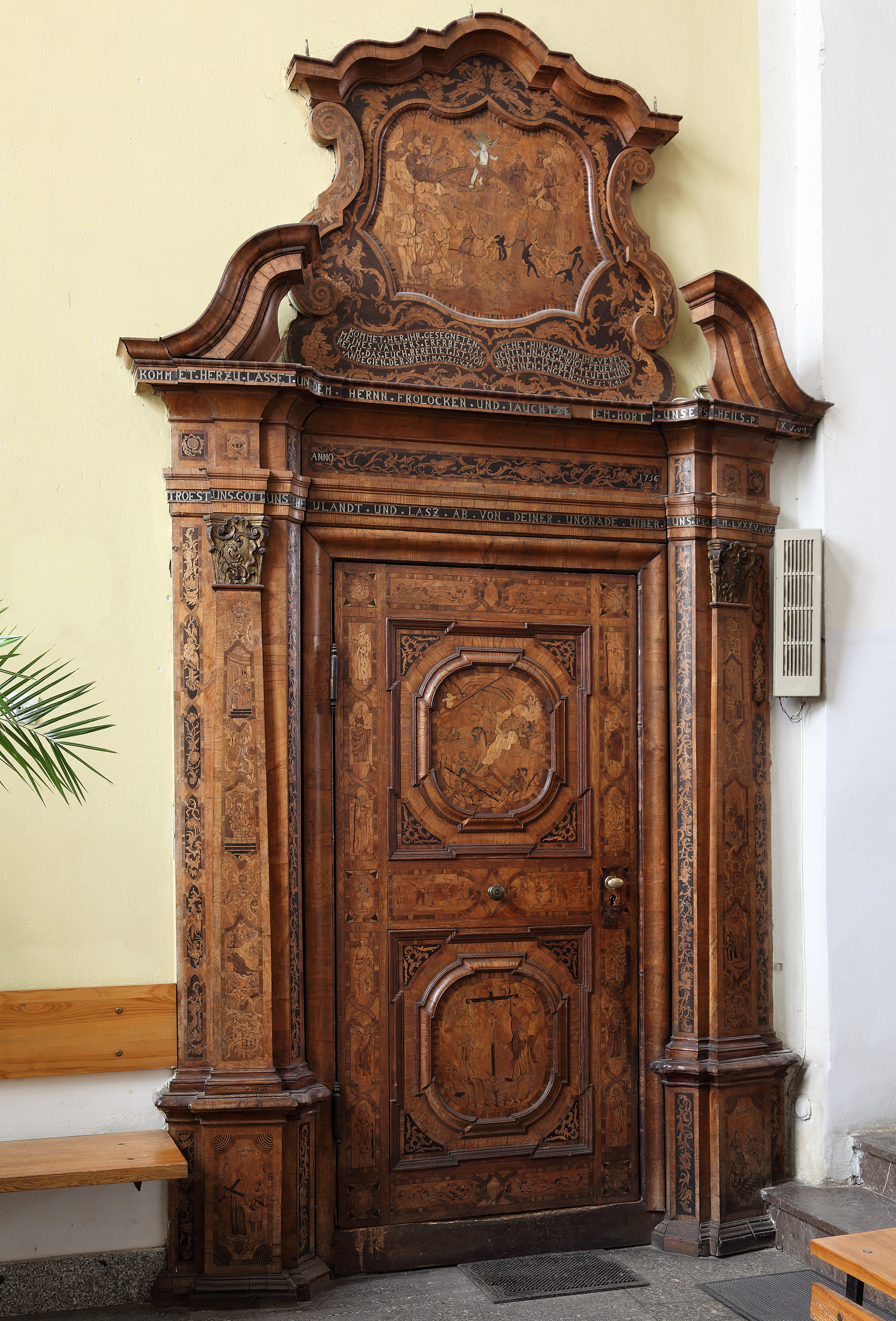
An "overdoor" (or "Supraporte" as in German, or "sopraporte" as in Italian) is a painting, bas-relief or decorative panel, generally in a horizontal format, that is set, typically within ornamental mouldings, over a door, or was originally intended for this purpose. Description The overdoor is usually architectural in form, but may take the form of a cartouche in Rococo settings, or it may be little more than a moulded shelf for the placement of ceramic vases, busts or curiosities. An overmantel serves a similar function above a fireplace mantel. From the end of the 16th century, at first in interiors such as the Palazzo Sampieri, Bologna, where Annibale Carracci provided overdoor paintings, they developed into a minor genre of their own, in which the ''trompe-l'œil'' representations of stone bas-reliefs, or vases of flowers, in which Jean-Baptiste Monnoyer specialized, were heightened by '' sotto in su'' perspective, in which the light was often painted to reproduce the light, ... [...More Info...] [...Related Items...] OR: [Wikipedia] [Google] [Baidu] [Amazon] |
Acts Of The Apostles
The Acts of the Apostles (, ''Práxeis Apostólōn''; ) is the fifth book of the New Testament; it tells of the founding of the Christian Church and the spread of The gospel, its message to the Roman Empire. Acts and the Gospel of Luke make up a two-part work, Luke–Acts, by the same anonymous author. Traditionally, the author is believed to be Luke the Evangelist, a doctor who travelled with Paul the Apostle. It is usually dated to around 80–90 AD, although some scholars suggest 110–120 AD.Tyson, Joseph B., (April 2011)"When and Why Was the Acts of the Apostles Written?" in: The Bible and Interpretation: "...A growing number of scholars prefer a late date for the composition of Acts, i.e., c. 110–120 CE. Three factors support such a date. First, Acts seems to be unknown before the last half of the second century. Second, compelling arguments can be made that the author of Acts was acquainted with some materials written by Josephus, who completed his Antiquities of the J ... [...More Info...] [...Related Items...] OR: [Wikipedia] [Google] [Baidu] [Amazon] |
Angel
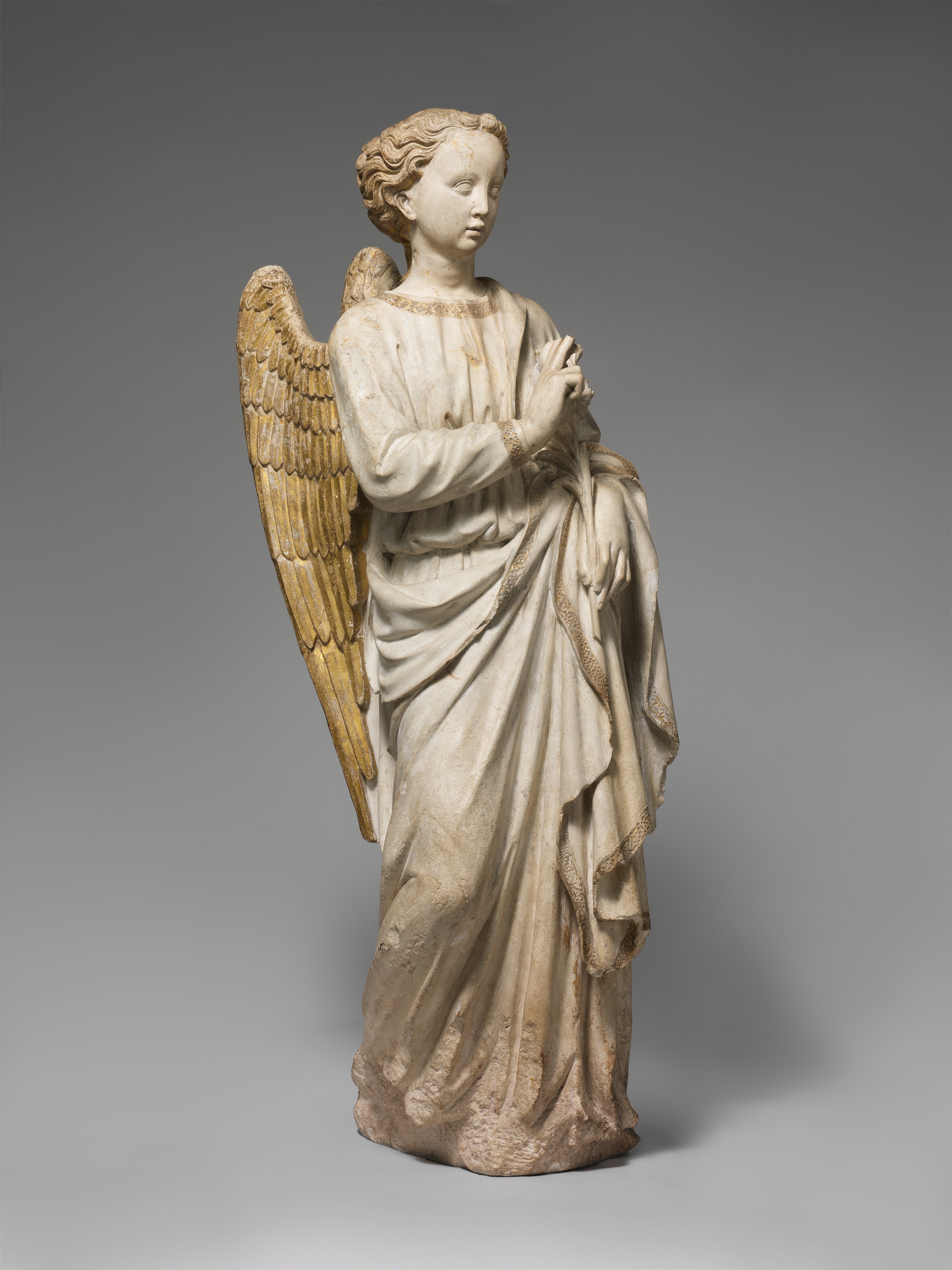
An angel is a spiritual (without a physical body), heavenly, or supernatural being, usually humanoid with bird-like wings, often depicted as a messenger or intermediary between God (the transcendent) and humanity (the profane) in various traditions like the Abrahamic religions. Other roles include protectors and guides for humans, such as guardian angels and servants of God. In Western belief-systems the term is often used to distinguish benevolent from malevolent intermediary beings. Emphasizing the distance between God and mankind, revelation-based belief-systems require angels to bridge the gap between the earthly and the transcendent realm. Angels play a lesser role in monistic belief-systems, since the gap is non-existent. However, angelic beings might be conceived as aid to achieve a proper relationship with the divine. Abrahamic religions describe angelic hierarchies, which vary by religion and sect. Some angels have specific names (such as Gabriel or Mich ... [...More Info...] [...Related Items...] OR: [Wikipedia] [Google] [Baidu] [Amazon] |
Agrippa I
Herod Agrippa I ( Roman name: Marcus Julius Agrippa; ), also simply known as Herod Agrippa, Agrippa I, () or Agrippa the Great, was the last king of Judea. He was a grandson of Herod the Great and the father of Herod Agrippa II, the last known king from the Herodian dynasty.Agrippa II held a title of king but he reigned over other territories in the Eastern Mediterranean, not over Judea. He was an acquaintance or friend of Roman emperors and played crucial roles in internal Roman politics. He spent his childhood and youth at the imperial court in Rome where he befriended the imperial princes Claudius and Drusus. He suffered a period of disgrace following the death of Drusus which forced him to return to live in Judea. Back in Rome around 35, Tiberius made him the guardian of his grandson Tiberius Gemellus, and Agrippa approached the other designated heir, Caligula. The advent of Caligula to the throne allowed Agrippa to become king of Batanea, Trachonitis, Gaulanitis, Auran ... [...More Info...] [...Related Items...] OR: [Wikipedia] [Google] [Baidu] [Amazon] |
Liberation Of Saint Peter
The liberation of the apostle Peter is an event described in chapter 12 of the Acts of the Apostles, in which the apostle Peter is rescued from prison by an angel. Although described in a short textual passage, the tale has given rise to theological discussions and has been the subject of a number of artworks. Biblical narrative says that Peter was put into prison by King Herod, but the night before his trial an angel appeared to him, and told him to leave. Peter's chains fell off, and he followed the angel out of prison, thinking it was a vision (verse 9). The prison doors opened of their own accord, and the angel led Peter into the city. When the angel suddenly left him, Peter came to himself and returned to the house of Mary, the mother of John Mark. A servant girl called Rhoda came to answer the door, and when she heard Peter's voice she was so overjoyed that she rushed to tell the others, and forgot to open the door for Peter (verse 14). Eventually Peter is let in a ... [...More Info...] [...Related Items...] OR: [Wikipedia] [Google] [Baidu] [Amazon] |
Saint Peter
Saint Peter (born Shimon Bar Yonah; 1 BC – AD 64/68), also known as Peter the Apostle, Simon Peter, Simeon, Simon, or Cephas, was one of the Twelve Apostles of Jesus and one of the first leaders of the Jewish Christian#Jerusalem ekklēsia, early Christian Church. He appears repeatedly and prominently in Gospel#Canonical gospels, all four New Testament gospels, as well as the Acts of the Apostles. Catholic Church, Catholic and Eastern Orthodoxy, Orthodox tradition treats Peter as the first bishop of Rome – or List of popes, pope – and also as the first bishop of Antioch. Peter's History of the papacy, leadership of the early believers is estimated to have spanned from AD 30 or 33 to his death; these dates suggest that he could have been the longest-reigning pope, for anywhere from 31 to 38 years; however, this has never been verified. According to Apostolic Age, Christian tradition, Peter was crucified in Rome under Emperor Nero. The ancient Christian churches all venera ... [...More Info...] [...Related Items...] OR: [Wikipedia] [Google] [Baidu] [Amazon] |
Raphael Rooms
The four Raphael Rooms () form a suite of reception rooms in the Apostolic Palace, now part of the Vatican Museums, in Vatican City. They are famous for their frescoes, painted by Raphael and his workshop. Together with Michelangelo's Sistine Chapel ceiling frescoes, they are the grand fresco sequences that mark the High Renaissance in Rome. The ''Stanze'', as they are commonly called, were originally intended as a suite of apartments for Pope Julius II. He commissioned Raphael, then a relatively young artist from Urbino, and his studio in 1508 or 1509 to redecorate the existing interiors of the rooms entirely. It was possibly Julius' intent to outshine the apartments of his predecessor (and rival) Pope Alexander VI, as the ''Stanze'' are directly above Alexander's Borgia Apartment. They are on the second floor, overlooking the south side of the Belvedere Courtyard. Running from east to west, as a visitor would have entered the apartment, but not following the sequence in which ... [...More Info...] [...Related Items...] OR: [Wikipedia] [Google] [Baidu] [Amazon] |
Fresco
Fresco ( or frescoes) is a technique of mural painting executed upon freshly laid ("wet") lime plaster. Water is used as the vehicle for the dry-powder pigment to merge with the plaster, and with the setting of the plaster, the painting becomes an integral part of the wall. The word ''fresco'' () is derived from the Italian adjective ''fresco'' meaning "fresh", and may thus be contrasted with fresco-secco or secco mural painting techniques, which are applied to dried plaster, to supplement painting in fresco. The fresco technique has been employed since antiquity and is closely associated with Italian Renaissance painting. The word ''fresco'' is commonly and inaccurately used in English to refer to any wall painting regardless of the plaster technology or binding medium. This, in part, contributes to a misconception that the most geographically and temporally common wall painting technology was the painting into wet lime plaster. Even in apparently '' buon fresco'' technology ... [...More Info...] [...Related Items...] OR: [Wikipedia] [Google] [Baidu] [Amazon] |
High Renaissance
In art history, the High Renaissance was a short period of the most exceptional artistic production in the Italian states, particularly Rome, capital of the Papal States, and in Florence, during the Italian Renaissance. Most art historians state that the High Renaissance started between 1490 and 1500, and ended in 1520 with the death of Raphael, although some say the High Renaissance ended about 1525, or in 1527 with the Sack of Rome (1527), Sack of Rome by the mutinous army of Charles V, Holy Roman Emperor, or about 1530. The best-known exponents of painting, sculpture and architecture of the High Renaissance include Leonardo da Vinci, Michelangelo, Raphael, and Bramante. In the 21st century, the use of the term has been frequently criticized by some academic art historians for oversimplifying artistic developments, ignoring historical context, and focusing only on a few iconic works. Origin of term The art historian Jill Burke was the first to trace the historical origins of t ... [...More Info...] [...Related Items...] OR: [Wikipedia] [Google] [Baidu] [Amazon] |
Italians
Italians (, ) are a European peoples, European ethnic group native to the Italian geographical region. Italians share a common Italian culture, culture, History of Italy, history, Cultural heritage, ancestry and Italian language, language. Their predecessors differ regionally, but generally include populations such as the Etruscan civilization, Etruscans, Rhaetians, Ligurians, Adriatic Veneti, Magna Graecia, Ancient Greeks and Italic peoples, including Latins (Italic tribe), Latins, from which Roman people, Romans emerged and helped create and evolve the modern Italian identity. Legally, Italian nationality law, Italian nationals are citizens of Italy, regardless of ancestry or nation of residence (in effect, however, Italian nationality law, Italian nationality is largely based on ''jus sanguinis'') and may be distinguished from ethnic Italians in general or from people of Italian descent without Italian citizenship and ethnic Italians living in territories adjacent to the I ... [...More Info...] [...Related Items...] OR: [Wikipedia] [Google] [Baidu] [Amazon] |