|
Dhammakaya Movement
The Dhammakaya tradition or Dhammakaya movement (sometimes spelled Thammakaai) is a Thai Buddhist tradition founded by Luang Pu Sodh Candasaro in the early 20th century. It is associated with several temples descended from Wat Paknam Bhasicharoen in Bangkok. The tradition is distinguished from other Thai Buddhist traditions by its teachings on the Buddhist concept of '' Dhammakaya'' and the practice of Dhammakaya meditation (''Vijja Dhammakaya''), a method which scholars have connected to the Yogavacara tradition, which predates the 19th-century reform of Thai Buddhism. The Dhammakaya tradition is known for its teaching that there is a "true self" connected with Nirvana, which was notably criticized in the 1990s as an alleged contradiction of the Buddhist doctrine of ''anattā'' (not-self). The Dhammakaya tradition is seen by its followers as a form of Buddhist revivalism pioneered by Luang Pu Sodh Candasaro. Buddhist Studies scholars have described aspects of its practice ... [...More Info...] [...Related Items...] OR: [Wikipedia] [Google] [Baidu] [Amazon] |
Wat Phra Dhammakaya
Wat Phra Dhammakaya (, , ) is a Buddhist temple (''wat'') in Khlong Luang district, in the Pathum Thani province north of Bangkok, Thailand. It was founded in 1970 by the ''maechi'' (nun) Chandra Khonnokyoong and Luang Por Dhammajayo. It is the best-known and the fastest growing temple of the Dhammakaya tradition. This tradition, teaching Dhammakaya meditation (''Vijja Dhammakaya''), was started by the meditation master Luang Pu Sodh Candasaro in the early 20th century. Wat Phra Dhammakaya is one of the temples that emerged from this tradition and is part of the Maha Nikaya, Mahā Nikāya fraternity. The temple is legally represented by the Dhammakaya Foundation. It aims to adapt traditional Buddhist values in modern society, doing so through modern technology and marketing methods. The temple has faced controversy and a government crackdown. Wat Phra Dhammakaya plays a leading role in Thai Buddhism, with theologian Edward Irons describing it as "the face of modern Thai Buddhism". ... [...More Info...] [...Related Items...] OR: [Wikipedia] [Google] [Baidu] [Amazon] |
Pathum Thani Province
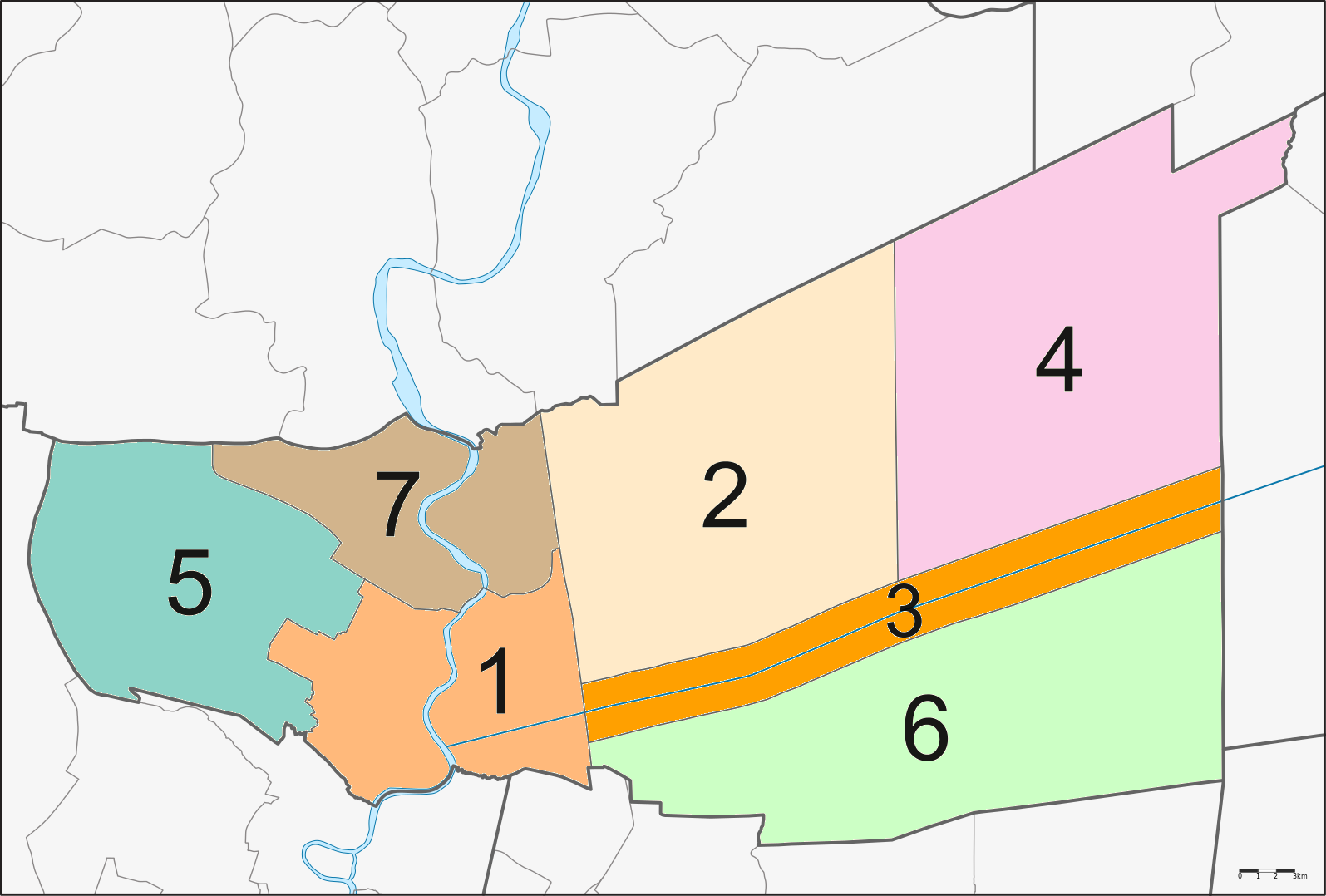
Pathum Thani (, ) is one of the central provinces (''changwat'') of Thailand. Neighboring provinces are (from north clockwise): Phra Nakhon Si Ayutthaya, Saraburi, Nakhon Nayok, Chachoengsao, Bangkok, and Nonthaburi. The province is north of Bangkok and is part of the Bangkok metropolitan area. In many places, the boundary between the two provinces is not noticeable as both sides of the boundary are equally urbanized. Pathum Thani town is the administrative seat, but Ban Rangsit, seat of Thanyaburi district, is the largest populated place in the province. Pathum Thani is an old province, heavily populated by the Mon people, dotted with 186 temples and parks. The Dream World amusement park is here. Geography The province lies on the low alluvial flats of the Chao Phraya River that flows through the capital. Many canals (''khlongs'') cross the province and feed the rice paddies. There is no forest area in the province. History The city dates back to a settlement founded by ... [...More Info...] [...Related Items...] OR: [Wikipedia] [Google] [Baidu] [Amazon] |
Anattā
In Buddhism, the term ''anattā'' () or ''anātman'' () is the doctrine of "no-self" – that no unchanging, permanent self or essence can be found in any phenomenon. While often interpreted as a doctrine denying the existence of a self, ''anatman'' is more accurately described as a strategy to attain non-attachment by recognizing everything as impermanent, while staying silent on the ultimate existence of an unchanging essence. In contrast, dominant schools of Hinduism assert the existence of Ātman as pure awareness or witness-consciousness, "reify ngconsciousness as an eternal self". Etymology and nomenclature ''Anattā'' is a composite Pali word consisting of ''an'' (not) and ''attā'' (self-existent essence). The term refers to the central Buddhist concept that there is no phenomenon that has a permanent, unchanging "self" or essence. It is one of the three characteristics of all existence, together with '' dukkha'' (suffering, dissatisfaction) and '' anicca'' (imperm ... [...More Info...] [...Related Items...] OR: [Wikipedia] [Google] [Baidu] [Amazon] |
Buddha-nature
In Buddhist philosophy and soteriology, Buddha-nature ( Chinese: , Japanese: , , Sanskrit: ) is the innate potential for all sentient beings to become a Buddha or the fact that all sentient beings already have a pure Buddha-essence within themselves.Heng-Ching ShihThe Significance Of 'Tathagatagarbha' – A Positive Expression Of 'Sunyata'/ref> "Buddha-nature" is the common English translation for several related Mahāyāna Buddhism, Buddhist terms, most notably ''tathāgatagarbha'' and ''buddhadhātu'', but also ''sugatagarbha,'' and ''buddhagarbha''. ''Tathāgatagarbha'' can mean "the womb" or "embryo" (''garbha'') of the "thus-gone one" (''Tathagata, tathāgata''), and can also mean "containing a ''tathāgata''"''. Buddhadhātu'' can mean "buddha-element", "buddha-realm", or "buddha-substrate". Buddha-nature has a wide range of (sometimes conflicting) meanings in Indian Buddhism and later in East Asian Buddhism, East Asian and Tibetan Buddhism, Tibetan Buddhist literatur ... [...More Info...] [...Related Items...] OR: [Wikipedia] [Google] [Baidu] [Amazon] |
Mystical Experience
A religious experience (sometimes known as a spiritual experience, sacred experience, mystical experience) is a subjective experience which is interpreted within a religious framework. The concept originated in the 19th century, as a defense against the growing rationalism of Western society. William James popularised the concept. In some religions, this is said to sometimes result in unverified personal gnosis. Many religious and mystical traditions see religious experiences (particularly the knowledge which comes with them) as revelations caused by divine agency rather than ordinary natural processes. They are considered real encounters with God or gods, or real contact with higher-order realities of which humans are not ordinarily aware. Skeptics may hold that religious experience is an evolved feature of the human brain amenable to normal scientific study. The commonalities and differences between religious experiences across different cultures have enabled scholars to ca ... [...More Info...] [...Related Items...] OR: [Wikipedia] [Google] [Baidu] [Amazon] |
Mantra
A mantra ( ; Pali: ''mantra'') or mantram (Devanagari: मन्त्रम्) is a sacred utterance, a numinous sound, a syllable, word or phonemes, or group of words (most often in an Indo-Iranian language like Sanskrit or Avestan) believed by practitioners to have religious, magical or spiritual powers. Feuerstein, Georg (2003), ''The Deeper Dimension of Yoga''. Shambala Publications, Boston, MA Some mantras have a syntactic structure and a literal meaning, while others do not. ꣽ, ॐ (Aum, Om) serves as an important mantra in various Indian religions. Specifically, it is an example of a seed syllable mantra ( bijamantra). It is believed to be the first sound in Hinduism and as the sonic essence of the absolute divine reality. Longer mantras are phrases with several syllables, names and words. These phrases may have spiritual interpretations such as a name of a deity, a longing for truth, reality, light, immortality, peace, love, knowledge, and action. Examples of lo ... [...More Info...] [...Related Items...] OR: [Wikipedia] [Google] [Baidu] [Amazon] |
Chakra
A chakra (; ; ) is one of the various focal points used in a variety of ancient meditation practices, collectively denominated as Tantra, part of the inner traditions of Hinduism and Buddhism. The concept of the chakra arose in Hinduism. Beliefs differ between the Indian religions: Buddhist texts mention four or five chakras, while Hindu sources often have six or seven. The modern "Western chakra system" arose from multiple sources, starting in the 1880s with H. P. Blavatsky and other Theosophists, followed by Sir John Woodroffe's 1919 book ''The Serpent Power'', and Charles W. Leadbeater's 1927 book ''The Chakras''. Psychological and other attributes, rainbow colours, and a wide range of correspondences with other systems such as alchemy, astrology, gemstones, homeopathy, Kabbalah and Tarot were added later. Etymology Lexically, ''chakra'' is the Indic reflex of an ancestral Indo-European languages, Indo-European form ''*kʷékʷlos'', whence also "wheel" and "cycl ... [...More Info...] [...Related Items...] OR: [Wikipedia] [Google] [Baidu] [Amazon] |
Exoteric
{{Short pages monitor ... [...More Info...] [...Related Items...] OR: [Wikipedia] [Google] [Baidu] [Amazon] |
Ayutthaya Kingdom
The Ayutthaya Kingdom or the Empire of Ayutthaya was a Thai people, Thai kingdom that existed in Southeast Asia from 1351 to 1767, centered around the city of Phra Nakhon Si Ayutthaya (city), Ayutthaya, in Siam, or present-day Thailand. European travellers in the early 16th century called Ayutthaya one of the three great powers of Asia (alongside Vijayanagara Empire, Vijayanagara and China). The Ayutthaya Kingdom is considered to be the precursor of modern Thailand, and its developments are an important part of the history of Thailand. The name Ayutthaya originates from Ayodhya (Ramayana), Ayodhya, a Sanskrit word. This connection stems from the Ramakien, Thailand's national epic. The Ayutthaya Kingdom emerged from the Mandala (political model), mandala or merger of three maritime city-states on the Lower Chao Phraya Valley in the late 13th and 14th centuries (Lopburi province, Lopburi, Suphan Buri province, Suphanburi, and Ayutthaya). The early kingdom was a maritime confedera ... [...More Info...] [...Related Items...] OR: [Wikipedia] [Google] [Baidu] [Amazon] |
Mahayana Buddhism
Mahāyāna ( ; , , ; ) is a term for a broad group of Buddhist traditions, texts, philosophies, and practices developed in ancient India ( onwards). It is considered one of the three main existing branches of Buddhism, the others being Theravāda and Vajrayāna.Harvey (2013), p. 189. Mahāyāna accepts the main scriptures and teachings of early Buddhism but also recognizes various doctrines and texts that are not accepted by Theravada Buddhism as original. These include the Mahāyāna sūtras and their emphasis on the ''bodhisattva'' path and ''Prajñāpāramitā''. Vajrayāna or Mantra traditions are a subset of Mahāyāna which makes use of numerous tantric methods Vajrayānists consider to help achieve Buddhahood. Mahāyāna also refers to the path of the bodhisattva striving to become a fully awakened Buddha for the benefit of all sentient beings, and is thus also called the "Bodhisattva Vehicle" (''Bodhisattvayāna''). Damien Keown (2003), A Dictionary of Buddhism', ... [...More Info...] [...Related Items...] OR: [Wikipedia] [Google] [Baidu] [Amazon] |
Yogachara
Yogachara (, IAST: ') is an influential tradition of Buddhist philosophy and psychology emphasizing the study of cognition, perception, and consciousness through the interior lens of meditation, as well as philosophical reasoning (hetuvidyā). Yogachara was one of the two most influential traditions of Mahayana, Mahayana Buddhism in India, along with Madhyamaka. The compound ''Yogācāra'' literally means "practice of yoga", or "one whose practice is yoga", hence the name of the school is literally "the school of the yogins". Yogācāra was also variously termed ''Vijñānavāda'' (the doctrine of consciousness), ''Vijñaptivāda'' (the doctrine of ideas or percepts) or ''Vijñaptimātratā-vāda'' (the doctrine of 'mere representation'), which is also the name given to its major theory of mind which seeks to deconstruct how we perceive the world. There are several interpretations of this main theory: various forms of Idealism, as well as a Phenomenology (philosophy), phenomen ... [...More Info...] [...Related Items...] OR: [Wikipedia] [Google] [Baidu] [Amazon] |